

Audio By Carbonatix
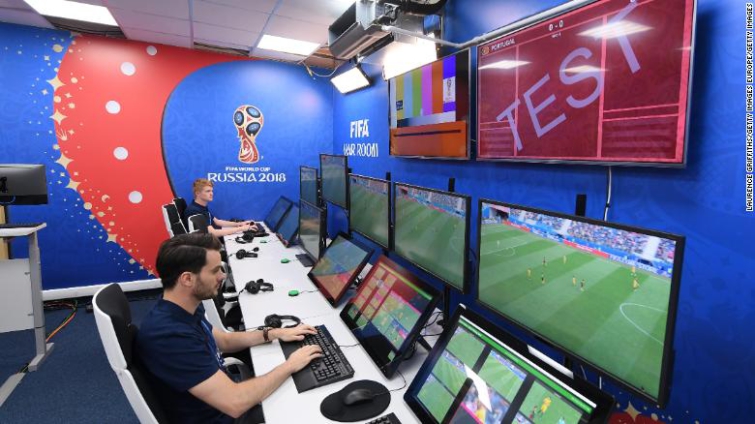
FIFA wants VAR video reviews to be applied in the same way across all competitions, as they take over direct responsibility for the system.
Issues concerning VAR have been handled primarily by IFAB, the game's law-making body, during the system's two-year experimental phase and its introduction as part of the laws of the game.
Soccer's global governing body FIFA, however, took over the role of supporting competition organisers with the implementation of VAR from July 1.
Pierluigi Collina, the Italian former World Cup referee and chairman of FIFA's Referees' Committee, told Reuters the move was a "natural transition".
"IFAB as an organisation has the duty to govern the laws of football, including VAR and the protocol and regulations. Once the laws of the game are set, IFAB’s job is over," he said.
"It is then FIFA that deals with referees' education around the world supporting all the member associations."
There have been some variations in the use of VAR in different competitions and national leagues, but Collina said there should be a uniform approach.
"Another responsibility of FIFA’s is to have the laws of the game implemented all over the world in the same way, there cannot be different implementation of the laws of the game in different continents or different countries. Our responsibility is to ensure that football is played in the same way all over the world.
"Can you imagine in international competition played by teams who are used to having different interpretations of the laws of the game in their domestic competition? Saying that VAR should be used in the same way all over the world is something obvious.
"Of course there can be some small differences, but the general implementation should be the same.
"It is FIFA and IFAB's responsibility to have the game played the same way across the world, for the benefit of those who are playing," he said.
The Premier League has not used VAR to check for encroachment off the line by goalkeepers during penalty kicks despite that element being part of the protocol.
Speaking generally, Collina said FIFA wanted to avoid situations where players in an international tournament faced surprise decisions.
"If something is written in the laws of the game, it has to be implemented everywhere, otherwise can you imagine the surprise of someone who is penalised for something in an international game that he is not penalised for at home?
"Maybe they would not be aware of what they can do? If something in the laws of the game doesn’t work, then it is discussed and eventually changed by IFAB," he said.
Latest Stories
-
Engineers and Planners Ltd secures Damang Mining Lease after grueling $500m competitive tender
3 minutes -
I never went to university – Tommy Annan Forson
12 minutes -
NACOC concludes four-day anti-drug operation in Eastern, Greater Accra regions
29 minutes -
Cedi dips further as external shocks intensify; one dollar equals GH¢11.70 at forex bureaus
41 minutes -
Sampa chieftaincy dispute: Sammordua dragged to court for contempt
48 minutes -
Okyere Baafi calls for suspension of Publican AI system over ‘serious flaws’
51 minutes -
Fuel fraud: OSP uncovers “secret collusion” between 5 oil companies and 3 state entities
57 minutes -
VIP Transport defends fare increase over rising fuel and maintenance costs
1 hour -
LGBTQ+ issues not a priority for Ghanaians – Felix Kwakye Ofosu
1 hour -
Kwakye Ofosu rejects NPP Minority’s call for apology over anti-LGBTQ bill
2 hours -
Music giant Universal gets $64bn takeover offer
2 hours -
NPP criticism of anti-LGBTQ Bill ‘nothing more than political posturing’ — Kwakye Ofosu
2 hours -
Joy FM was birthed over a bowl of fufu’ – Tommy Annan-Forson shares interesting story
2 hours -
World Athletics to introduce standalone World Marathon Championships from 2030
2 hours -
Africa’s voice in global journalism grows as funding, AI and misinformation shape newsrooms
2 hours