

Audio By Carbonatix
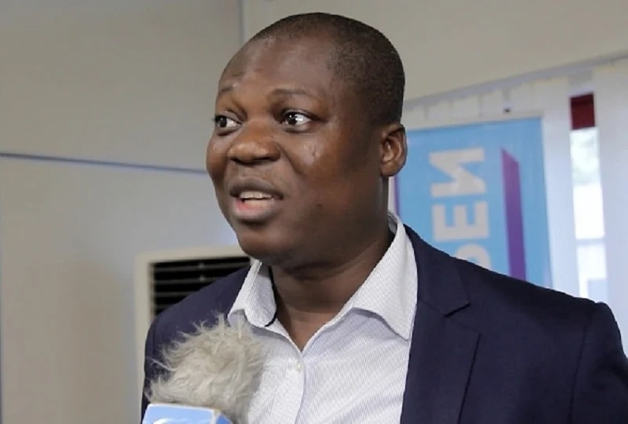
The Dean of the University of Cape Coast Business School, Professor John Gatsi, has described the Finance Ministry's suggestion to the President not to sign the recently passed anti-LGBTQ+ bill into law as a lobbying attempt.
According to him, there is no portion of the deal with the International Monetary Fund that says that if Ghana enacted such legislation, it would be a breach of contract.
Speaking on JoyNews’ the Pulse on March 4, he elaborated that upon close examination of the country, no advocacy group was potent enough to obstruct the President from assenting to the bill.
Therefore, this was somewhat a form of blackmail from the Finance Ministry, anticipating potential hindrances to securing funds.
Again, he added that this was also a way to justify the President’s intention not to sign the bill.
“This thing is just trying to keep the momentum about lobbying. We do not have those things as conditions in engaging with the World Bank or IMF. There are other minority issues, there are other vulnerable issues in our countries. It is based on those things that we are getting development funding from the World Bank to fund all these classes of people.
“So, the World Bank cannot say that because of the anti-LGBTQ+ issues they will not extend money to us, which of course is a loan that will be paid – I do not see that.
“What I see is a strong force of lobbying that the law should not be passed. That is where we are now. I am not sure that there is any pressure on us about that. It is all about lobbying. So lobbying is scaling up seriously at the last hour because the bill is on its way to the presidency.
“The President made statements to the extent that he has not seen a force in the country built up in relation to LGBTQ. So if we can have something measured in this form that the Finance Ministry has done then that will be understandable for the President to say, I will not sign the law.
"And for me, that is how I see it. We don’t have a legal relation that says that if you pass anti –LGBTQ then we will not give you money,” he said.
In a press release issued on Monday, March 4, the Finance Ministry cautioned that such action could lead to severe repercussions on the country's financial support from international organisations like the Bretton Woods Institutions.
The statement highlighted concerns that the expected US$300 million financing from the First Ghana Resilient Recovery Development Policy Operation (Budget Support), currently awaiting Parliamentary approval, might not be disbursed if the bill is signed into law.
Latest Stories
-
The Ghanaian prophet and the mysterious death of his scottish wife Charmain Speirs
29 minutes -
Nearly 400 sentenced in Nigeria for links to militant Islamists
51 minutes -
Ghana’s recovery supported by gold strength despite global oil price pressures – Standard Bank Research
58 minutes -
Kwaku Azar writes: A-G vs OSP
2 hours -
Mfantsipim–Adisadel rivalry built excellence, not division – Sam Jonah
2 hours -
Vice President launches Mfantsipim’s 150 years of shaping Ghana’s greatest mind
2 hours -
I assure Otumfuo, Mahama will join him to commission KNUST Teaching Hospital by end of this year – Haruna Iddrisu
3 hours -
Barcelona dominate derby to extend La Liga lead
3 hours -
Gov’t to roll out free special education for persons with disabilities from July 1 – Education Minister
3 hours -
Importers and Exporters Association declares full support for Publican AI port system
4 hours -
“We used it to test our officiating officials’ readiness” – Bawah Fuseini after CAA Athletics event
4 hours -
Volleyball emerges as Ghana’s fastest rising sport
4 hours -
National Sports Fund needs strong leadership from the top – Administrator David Wuaku
4 hours -
JoySports Exclusive: Steve McLaren in talks with GFA after expressing interest in Black Stars job
4 hours -
Fire guts auto parts warehouse at Bubuashie, one fire officer injured
4 hours