

Audio By Carbonatix
The Monetary Policy Committee of the Bank of Ghana believes fiscal measures implemented by government and captured in the International Monetary Fund (IMF) Staff Level Agreement (SLA) will help restore fiscal and debt sustainability, bring down inflation and help stabilise the currency.
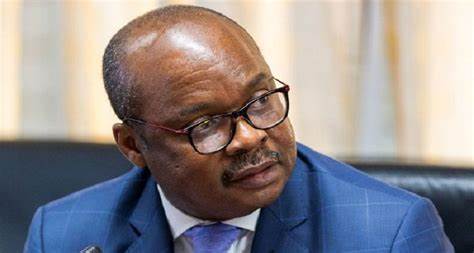
Briefing Financial Journalists on developments in the Ghanaian economy, the Governor of the Bank of Ghana, Dr. Ernest Addison said revenue-enhanced measures such as the VAT increase of 2.5%, the complete removal of benchmark values on imports, and the review of the Electronic Transaction Levy should help improve the revenue outlook.
On the expenditure side, the Chairman of the MPC said the lower capping on transfers to earmarked funds from 25 to 17.5%, and the reduction of budgetary allocation to goods and services, as well as rationalisation of executive compensation should help contain expenditures in 2023, adding, “The concerns being expressed in the public domain relating to high government expenditures have been addressed in the SLA and reflected in the 2023 Budge”.
“The SLA is also contingent on the Domestic Debt Exchange Programme and external debt restructuring, which when concluded and the necessary financial commitment obtained, will allow the presentation of the SLA to the IMF Board.”
The MPC, the Governor, pointed out, said it sees the need to remain vigilant and moderate liquidity in the system to underpin macroeconomic adjustments taking place to drive inflation on a downward path.
Fiscal deficit to GDP stood at 9.8% in 11-months of 2023
Meanwhile, provisional data on budget execution for the period January to November 2022 indicated an overall broad fiscal deficit (cash) of 9.8% of Gross Domestic Product, against the programmed target of 6.7% of GDP.
The corresponding primary balance for the period was a deficit of ¢18.8 billion (3.1%of GDP), against a deficit target of ¢3.1 billion (0.5% of GDP).
Over the review period, total revenue and grants was ¢81.8 billion (13.3% of GDP), short of the projected target of GH¢84.0 billion (13.6% of GDP).
Total expenditure of ¢142.2 billion (23.1% of GDP) was above the programmed target of ¢125.4 billion (20.4% of GDP).
The deficit of ¢60.4 billion was financed mainly from the domestic sector.
Latest Stories
-
Health Ministry partners private sector to boost public education on safe healthcare practices
11 minutes -
GhIE demands independent audit of GH¢110bn Big Push road programme
12 minutes -
Heavy rainstorm causes power outages in Ashanti Region – ECG
12 minutes -
Abuakwa MP supports constituents to mark Easter celebration
14 minutes -
CAF U-17 AFCON: Ghana handed tricky opponents in Group D
16 minutes -
Manhyia South MP decries unchecked commercialisation of residential areas, warns of extinction
17 minutes -
U-17 AFCON 2026: Ghana drawn in tough group as Black Starlets eye World Cup return
19 minutes -
NRSA recommends strict enforcement of laws banning right-hand drive imports
26 minutes -
‘Don’t belittle our intelligence’ – Methodist Bishop criticises Kwakye Ofosu over LGBTQ comment
26 minutes -
Ghana’s crude oil output declines for 6th consecutive year – PIAC
29 minutes -
$434m in oil revenue allocated to Big Push Programme — PIAC
30 minutes -
Ghana’s oil production hits 694 million barrels since 2010 – PIAC report
38 minutes -
Ghana records 7.5% economic growth in January 2026, services sector leads expansion
42 minutes -
One-cedi levy essential to keep power sector afloat- Ben Boakye
44 minutes -
Nii Noi marks Easter with donation of medical equipment to Taifa Polyclinic
45 minutes