

Audio By Carbonatix
Ghana’s aquaculture is projected to have lost about $50 million in the past five years due to the challenges in the sector. One of the fish farms that has been affected is Flosell Farm, reducing production of about 1500 tons a year to 300 tons.
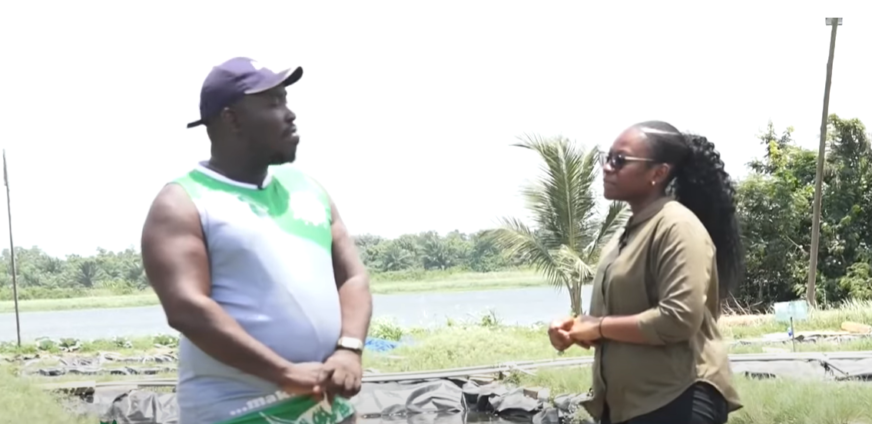
Evans Danso is the Chief Executive of Flosell Farm. The farm sits on over 100 acres of land. Evans disclosed that due to the challenges faced by the sector and the slow response by government to them, he has reduced production from 1,500 tons a year to 300 tons.
“The unfortunate fish farmer was left to their fate unlike the poultry farmer that gets some form of support. However, there was some kind of intervention by government to introduce vaccines for ISKVN as well as streptococcus. This was a good intervention but it was wrongly timed,” he said.
Evans won the national best fish farmer in 2020 just four years after quitting as a packaging manager with Nestle Ghana. Seven years down the line, he describes the experience as very fulfilling.
“It’s been seven years now since I became a fish farmer. I love what I do. It is fulfilling to see fish go through the stages of growth and knowing that the consumer bites the fish with a smile is satisfactory,” he said.
Ghana’s new Aquaculture Development Plan aims to increase fish farming output from about 89,000 tons from 2021 to about 200,000 tons in 2027. Evans shares in the hope of the plan but says it may not be achieved in due time due to the challenges in the sector.
“Till today, the disease remains a record holder in causing the setback in the industry for close to five years. We’ve had various fish diseases that have impacted the industry, two major ones were streptococcus affecting fishes weighing 80 grams and above. Across farms the loss were about 10 to 15 tonnes a day. Altogether during that period, the sector lost about $50 million. Then when that was phasing out, we came into contact with another disease called the ISKNV which is the big belly disease.
Fish is a preferred source of animal protein in Ghana where about 75 percent of the total domestic production of fish is consumed locally, representing about 60 percent of animal protein intake.
Evans outlines the life stages of a fish saying “we keep them in a ratio of 1:3, every male has three wives. We spawn them and after 8-14 days we catch the females, take the eggs out of their mouths, hatch them and put them into ponds. 200,000 fries in each pond then we grow them into fingerlings. With the fingerlings, we grow some into the big fishes or sell them to other fish farmers”.
The global fish farming market size is expected to reach about 3 million by 2025. The sector has potential, especially to address unemployment in Ghana if proper attention is given it.
Latest Stories
-
Reconstruct, Don’t Refurbish: Terminal 2 and the high cost of policy misjudgement
4 minutes -
Starmer arrives in Saudi Arabia after US-Iran ceasefire deal
5 minutes -
Maxwell Kwame Odoom-Tsibu
10 minutes -
Health NGOs warn of imminent family planning crisis over delayed UNFPA supplies at Tema Port
10 minutes -
President Mahama begins Paris visit with French Senate talks, meets Macron later today
11 minutes -
World is lining up for Russian energy, the Kremlin says
14 minutes -
Don’t force reconciliation during pregnancy – Counsellor Angie warns amid unresolved trauma
31 minutes -
Libya: Aliou Cisse leaves national team role after salary row
34 minutes -
NRSA declares commercial use of Toyota Voxy illegal
38 minutes -
Police hunt suspects after gunfire triggers chaos at Kotoku Onion Market
41 minutes -
Health Ministry partners private sector to boost public education on safe healthcare practices
52 minutes -
GhIE demands independent audit of GH¢110bn Big Push road programme
53 minutes -
Heavy rainstorm causes power outages in Ashanti Region – ECG
53 minutes -
Abuakwa MP supports constituents to mark Easter celebration
55 minutes -
CAF U-17 AFCON: Ghana handed tricky opponents in Group D
58 minutes