

Audio By Carbonatix
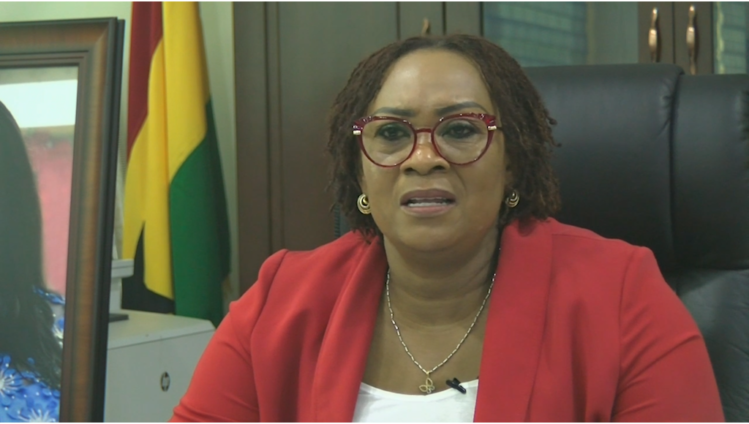
Fisheries and Aquaculture Development Minister Mavis Hawa Koomson has announced Ghana’s first Marine Protected Areas (MPA).
The MPA covers some 700km2 of biodiversity-rich coastal waters. The communities will manage and implement the protected area, slated for formal establishment in 2026.
Ministers from Ghana, Guinea-Bissau and several other African countries gathered at Our Ocean Conference in Athens to Pledge Support for Community-led Marine Conservation and Sustainable Fisheries Management.
Speaking at the conference, Mavis Hawa Koomson stated, “Between our ongoing commitment to fisheries transparency and this new commitment towards marine conservation, Ghana is demonstrating a strong commitment to the conservation and sustainability of its rich marine resources for the good of the country and its people.”
Several African nations, at the Our Ocean conference in Athens, have reaffirmed their commitment to combating industrial overfishing and addressing the pressing challenges of climate breakdown in African waters during an event co-hosted by Blue Ventures and Le Partenariat Régional pour la Conservation de la zone côtière et Marine (PRCM), in collaboration with Bloomberg Ocean Initiative and the Organisation of African, Caribbean and Pacific States (OACPS).
The leaders have been disclosing a series of major commitments, including establishing one of Africa’s largest community-led marine protected areas (MPAs) in Ghana and an ambition to exceed international targets to protect 30% of the ocean by 2030 in Guinea-Bissau.
Viriato Luís Soares Cassamá, Guinea-Bissau’s Minister of Environment, Biodiversity, and Climate Action, shed light on recent conservation and fisheries achievements in the country.
He expressed Guinea-Bissau's aspirations to surpass the globally acknowledged 30x30 target for conservation efforts.
Cassamá outlined various initiatives, such as proposing the Bijagós Archipelago for inclusion on the UNESCO World Natural Heritage Site list and establishing the second Biosphere Reserve in the Cacheu Complex and the coastal islands of Geta-Pixice.
“Currently, Guinea-Bissau has achieved a significant milestone, with 26.3% of its territory designated as protected areas, of which 12.6% are marine protected areas,” he said.
“We are confident that if we continue on this path, we will not only achieve but significantly exceed the 30×30 target.”
Industrial overfishing, pollution, and climate breakdown are unprecedentedly changing African waters, jeopardizing marine ecosystems and threatening the food security of millions of livelihoods across the continent.
Illegal, Unregulated and Unreported (IUU) fishing continues to decimate fish stocks, resulting in an annual loss of over US$11 billion in Africa.
Recognizing the urgency of the situation, organizations such as the Fisheries Transparency Initiative (FiTI) are gaining momentum, urging governments to enhance transparency and ensure meaningful participation of stakeholders, including small-scale fishers, in decision-making.
Countries like Madagascar and Cabo Verde have also made significant strides in enhancing fisheries governance, progressing to candidate status under the FiTI standard.
The Union of Comoros, for example, is accelerating efforts to join these ranks, with a dedicated roadmap for full membership by the year’s end.
In recent years, global agreements like the Kunming-Montreal Global Biodiversity Framework, adopted in 2022, have emphasized the importance of marine protected areas (MPAs).
These agreements commit the world to safeguarding 30% of both land and water by 2030, a goal known as 30x30.
When effectively managed and adequately funded, with communities taking the lead, MPAs offer a win-win solution for both people and nature.
They help replenish fisheries, support local livelihoods, and play a vital role in addressing climate change, coastal poverty, and the negative impacts of industrial fishing.
The historic High Seas Treaty provides a clear roadmap for establishing MPAs in international waters, which is crucial for reaching the 30x30 target and preserving biodiversity in the oceans.
Yet, only 17% of African waters are designated protected areas, highlighting the need for accelerated action.
The commitments made by Ghana and Guinea-Bissau at the Our Ocean conference signify a crucial step forward in addressing this pressing issue and safeguarding the future of Africa’s marine ecosystems.
Latest Stories
-
Ghana must value skilled trades, build resilient learners — Ibn Chambas
8 minutes -
Ghana must rethink education around relevance, resilience and responsibility — Ibn Chambas
10 minutes -
Prince Harry faces defamation lawsuit from charity he co-founded
12 minutes -
South Korea deploys thermal cameras to track escaped zoo wolf
14 minutes -
Calls for royal meeting with Epstein survivors grow ahead of US visit
17 minutes -
Ibn Chambas advocates blend of technology and human values in education
19 minutes -
UMA improves healthcare access in Asutifi North with GH₵700k ‘Kim Taylor Legacy’ Walkway
24 minutes -
Scholarships Authority and Fanaka University offer sponsorship for procurement and supply chain studies
27 minutes -
Bisa Kdei drops new single ‘Go N Look’ featuring Medikal
33 minutes -
Benin facing rising terrorism in north as French military presence faces growing criticism
34 minutes -
UEW Public Lecture Series 2026: Education debate ‘about the soul of Ghana’s future’ — Dr Ibn Chambas
35 minutes -
EU fingerprint and photo travel rules come into force from today
1 hour -
Anti-LGBTQ+ Bill: Ghanaians demand expedited passage, not dialogue – Ntim Fordjour to Mahama
1 hour -
EU airline industry warns of fuel shortages if Strait of Hormuz stays closed
1 hour -
White House staff told not to place bets on prediction markets
1 hour