


Audio By Carbonatix
Five countries in West Africa have decided to stop importing "dirty fuels" from Europe, the UN Environment Programme says.
A recent report revealed that European companies were exploiting weak regulations in West Africa to export fuels with high levels of sulphur.
Nigeria, Benin, Togo, Ghana, and Cote d'Ivoire agreed on the import ban.
The UN says the move will help more than 250 million people breathe safer and cleaner air.
The sulphur particles emitted by a diesel engine are considered to be a major contributor to air pollution and are ranked by the World Health Organization (WHO) as one of the top global health risks.
It is associated with heart disease, lung cancer and respiratory problems.
In a statement, the UN environment programme says the West African group, in addition to banning the import of dirty fuels, has also agreed to upgrade the operations of their national refineries.
The upgrade, which will concern both public and privately owned refineries, is meant to boost standards in the oil produced in the five countries.
The report into Europe oil exports released in September particularly criticised the Swiss for their links to the African trade in diesel that has toxin levels illegal in Europe.
The study was by the campaign group, Public Eye, which said retailers were exploiting weak regulatory standards.
Erik Solheim, the head of UN Environment Programme, hailed the import ban.
"West Africa is sending a strong message that it is no longer accepting dirty fuels from Europe," Mr Solheim said.
"Their decision to set strict new standards for cleaner, safer fuels and advanced vehicle emission standards shows they are placing the health of their people first," he added
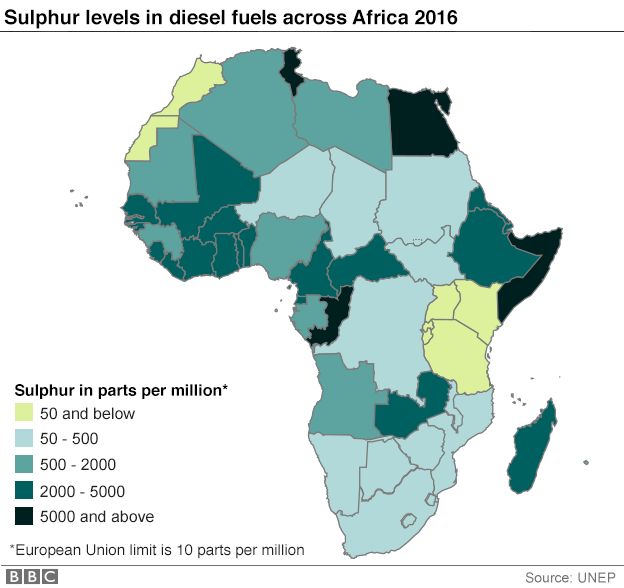
For a long time African countries relied on colonial-era standards, which have only been revised in recent years.
Nigeria's Environment Minister Amina Mohamed said: "For 20 years, Nigeria has not been able to address the vehicle pollution crisis due to the poor fuels we have been importing.
"Today we are taking a huge leap forward - limiting sulphur in fuels from 3,000 parts per million to 50 parts per million."
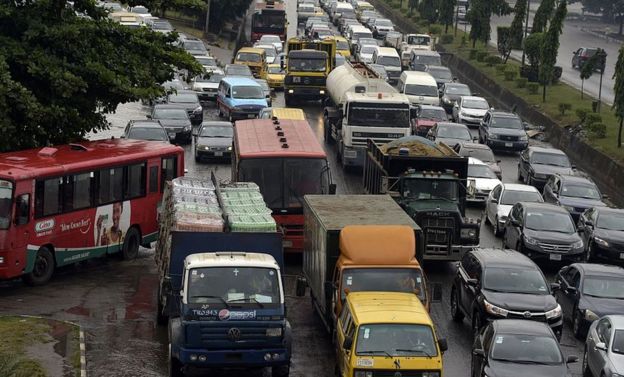
Nigeria's environment minister said the move would result in major air quality benefits
She said the move would result in major air quality benefits in Nigerian cities and would allow the country to set modern vehicle standards.
The WHO says that pollution is particularly bad in low and middle-income countries.
Latest Stories
-
Guinea-Bissau transporters strike over higher fuel prices
37 minutes -
Iran ceasefire deal a partial win for Trump – but at a high cost
48 minutes -
Oil slides below $100 after Trump announces two-week ceasefire
57 minutes -
Madagascar declares state of emergency over energy situation due to Iran war
1 hour -
Ex-Meta worker investigated for downloading 30,000 private Facebook photos
1 hour -
World Bank says Nigerian economy to grow in 2026 but Iran war lifts inflation
1 hour -
In Ghana Town, a ‘stateless’ future for hundreds born and raised in Gambia
4 hours -
Russia confirms 16 Cameroonian soldiers killed in Ukraine war
5 hours -
USA striker Patrick Agyemang ruled out of World Cup due to injury
5 hours -
Los Angeles Stadium workers urge FIFA to bar ICE from World Cup
5 hours -
Vinicius hails Lamine Yamal for condemning anti-Muslim fan chants
5 hours -
Barcelona’s Flick to defend ’emotional’ teen Lamine Yamal against criticism
5 hours -
FIFA opens disciplinary probe against Spanish FA after Islamaphobic chants
6 hours -
‘We’ve become quite experienced in negativity’ – Liverpool’s Slot
6 hours -
Legendary manager Lucescu dies days after resigning
6 hours