

Audio By Carbonatix
Ford Foundation’s grantee partners across Nigeria, Senegal, and Ghana are developing innovative solutions to address the impacts of extractive industries, climate change, and energy transitions on community rights, livelihoods, and ecosystems in the region.
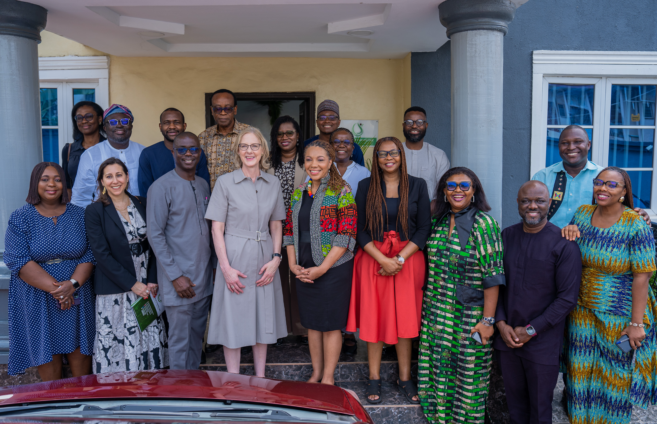
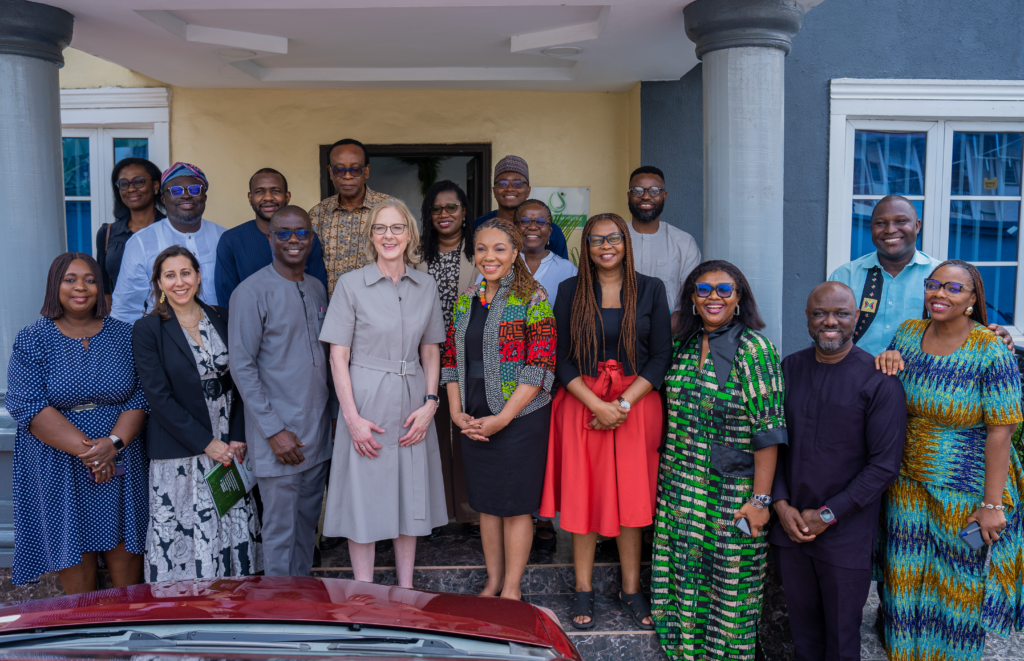
At a meeting hosted by the Ford Foundation in Lagos, Nigeria, several partners gathered to share how their work is empowering communities and driving sustainable solutions for a fairer energy future.
The exchange, attended by Ford Foundation President Heather Gerken, explored the importance of partnerships and local leadership in shaping Africa’s energy future.
"West Africa’s communities face overlapping climate, social, and economic pressures, and the region’s energy transition presents both opportunities and risks," said Dr Chi Chi Aniagolu, Regional Director for West Africa at the Ford Foundation.
"These discussions with our partners highlight concrete approaches to ensure that the shift to clean energy strengthens community rights, promotes accountability, and delivers sustainable benefits for both people and the environment."
Emmanuel Kuyole, NRCJ Programme Officer for the Ford Foundation’s West Africa office, guided discussions on green industrialisation, energy access, and the just transition from fossil fuels, helping partners identify practical solutions that balance economic growth, community rights, and climate accountability.
Partners highlighted tangible achievements advancing justice across West Africa, demonstrating how their work intersects to support a fair energy transition.
Victoria Ibezim-Ohaeri, Executive Director of Spaces for Change (S4C), underscored the links between energy poverty and gender-based violence in Nigeria’s extractive communities.
"Our research shows that energy poverty exposes women to health risks, domestic burdens, and economic vulnerability. "By advocating for clean cooking fuels and safer energy alternatives, we are not only cutting emissions but also reducing risks to women and girls."
Lanre Shasore, Senior Advisor for Africa at Sustainable Energy for All (SEforALL), highlighted initiatives expanding clean energy access for small businesses and agricultural communities.
"Energy access is not just about megawatts," Shasore said. "It is about whether a woman can process her farm produce, whether a small business can operate, and whether a community can earn a living. Reliable, affordable energy strengthens dignity, productivity, and resilience."
Nnimmo Bassey, Executive Director of the Health of Mother Earth Foundation (HOMEF), emphasised the need for justice for communities historically impacted by fossil fuel extraction.
"A transition must begin with justice for those who have already borne the cost of oil extraction," he said. "Without repairing damaged land, water, and livelihoods, a green future remains incomplete and unfair to frontline communities."
Benjamin Boakye, Executive Director of the Africa Centre for Energy Policy (ACEP), spoke to the importance of transparency and local engagement in energy governance.
"When communities understand contracts and revenues, they can hold governments and companies accountable, turning energy from a source of conflict into a tool for shared prosperity," he said
Oluseun Onigbinde, Global Director of BudgIT, highlighted the role of fiscal transparency in ensuring communities benefit from oil revenues.
"Transparency ensures that oil revenues translate into schools, clinics, and livelihoods," he said.
"By helping communities engage and track the Host Community Development Trust Funds, we make reforms meaningful for ordinary citizens."
Fatima Diallo, Executive Director of the Centre for Research and Action on Economic, Social, and Cultural Rights, stressed the value of regional collaboration in shaping equitable energy transition policies.
"Countries face similar pressures from debt, climate risk, and energy poverty, and they are stronger when they act together.
"Our platforms help governments and civil society learn from each other and push for policies that leave no one behind," she said.
Daryl Bosu, Deputy National Director of A Rocha Ghana, underscored the need to align energy transition with environmental protection.
"An energy transition that destroys ecosystems or sidelines local people is not sustainable," he said.
"By equipping communities with information and advocacy tools, we ensure development respects both nature and human wellbeing."
Latest Stories
-
‘We don’t have time’ – Fianoo calls for Schäfer to lead Black Stars temporarily
36 minutes -
CAF will not favour any country – President Motsepe
41 minutes -
Otto Addo was appointed through the backdoor – Kudjoe Fianoo slams GFA
41 minutes -
UG Corporate Football League back from the Easter break
45 minutes -
CGI orders motorbike training at tactical school in Kyebi
2 hours -
Sachet water producers in Berekum defy gov’t directives, increase prices
2 hours -
Critical commodities stuck at port, CSOs warn of family planning crisis
2 hours -
Gender Ministry mourns victims of Volta Lake boat tragedy, deploys support for affected families
2 hours -
MPs undergo training on human trafficking and gender dimensions
2 hours -
Don’t expect instant relief – COMAC CEO warns fuel price drops will be gradual
2 hours -
GIS to unveil comprehensive plans to enhance officers’ welfare and infrastructure
2 hours -
Right move, wrong timing? – COMAC CEO questions govt’s delay on fuel price relief
2 hours -
IMF urges Central Banks to keep inflation in check
3 hours -
NRSA stands firm on Toyota Voxy ban despite transport operators’ opposition
3 hours -
H. Kwasi Prempeh raises concerns over Supreme Court’s handling of OSP constitutionality case
3 hours