

Audio By Carbonatix
During high-level engagements with Nigerian traditional leaders, civil society organisations, and development partners, the president of the Ford Foundation, Heather Gerken, applauded the foundation’s long-standing commitment to advancing democracy, human rights, and social justice in West Africa.
The engagements were part of Gerken’s official first visit to Nigeria, during which she participated in a conference that convened more than 180 traditional and community leaders from across Africa working to advance solutions to gender-based violence and community engagement.
Gerken also met with several grantees working on climate justice issues, including Spaces for Change, Health of Mother Earth Foundation, Socio- Economic Rights and Accountability Project, Africa Climate Foundation, Africa Centre for Energy Policy, BudGIT Foundation, Centre for Research and Action on Economic, Social, and Cultural Rights and Sustainable Energy for All, who discussed the need for equitable energy access, accountable governance and strengthening civil society to deliver sustainable development outcomes.
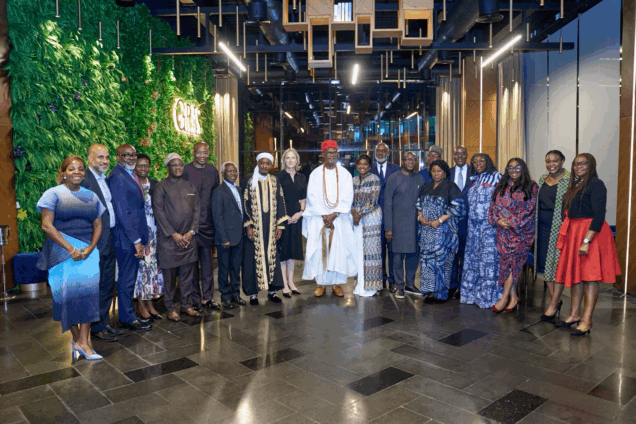
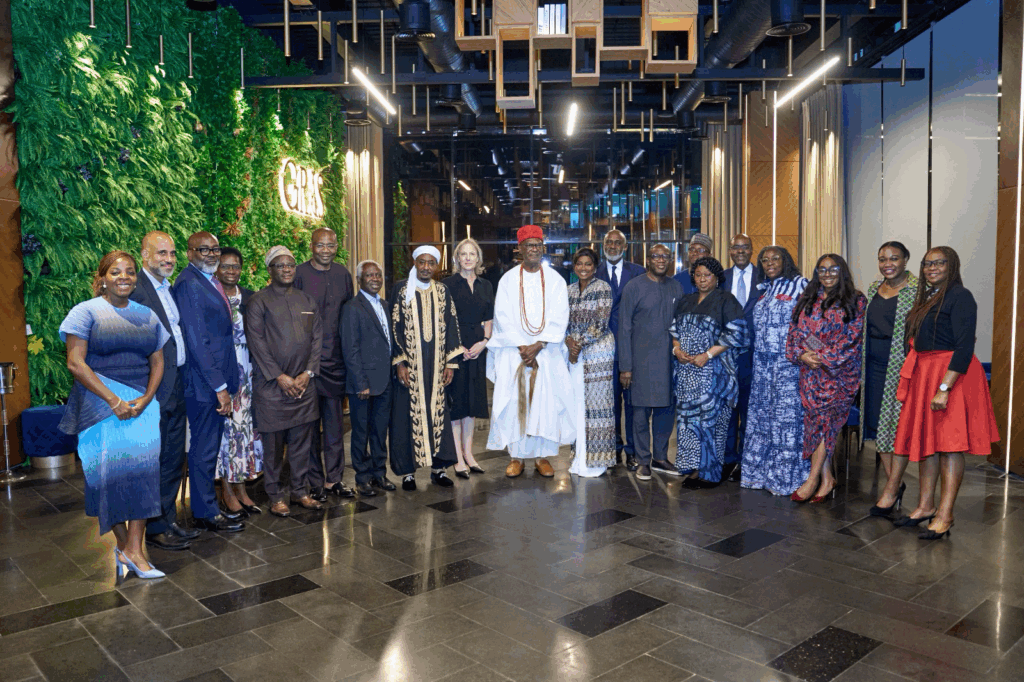
The visit also featured a dinner hosted by Ford Foundation Board member, Gbenga Oyebode, and attended by distinguished Nigerians, including His Royal Majesty Igwe Alfred Nnaemeka Achebe, Dr Muhammadu Sanusi II, former Governor of Ekiti State Dr Kayode Fayemi, former First Lady of Ekiti State Erelu Bisi Fayemi, and Aigboje Aig-Imoukhuede, Chairman of Access Holdings, alongside leaders from civil society and Heads of Foundations.
Speaking at the dinner, Gerken thanked hosts and guests for the warm reception, describing the gathering as a reflection of Nigeria’s leadership and civic strength.
“When I saw the list of people here tonight, I was struck by the depth of wisdom and experience in this room,” she said.
“These are voices shaping how Nigeria and the world think about justice, democracy, and development.”
Gerken noted that her visit was especially meaningful, as the Foundation has maintained an unbroken partnership with Nigeria for 65 years.
“Coming to Nigeria matters enormously. Our relationship with this country has been one of the most important in the history of the Ford Foundation.”
She also praised the Ford Foundation’s Office of West Africa team and its leadership under Dr ChiChi Aniagolu‑Okoye, Regional Director, for strengthening the Foundation’s impact in the region.
“At critical moments in history, the Ford Foundation has stood up for justice and democratic values, even under pressure,” Gerken said.
She commended the Foundation’s board for continuing to support work that defends democracy, the rule of law, and human rights worldwide, despite increasing global challenges.
Gerken concluded by thanking guests for their insights and hospitality, calling her conversations in Nigeria deeply energising. “From the bottom of my heart, thank you. I will be coming back very soon,” she said.
Also speaking at the dinner, the 16th Emir of Kano, Muhammadu Sanusi II, commended the Ford Foundation for its sustained support to Nigeria, noting that its interventions are helping to ease social and economic hardships in local communities.
“Nigeria is proud of Ford and grateful for what the Foundation is doing,” he said. “In the past, social challenges in many local areas were reflected in troubling data. Today, because of these interventions, those numbers are beginning to fall.”
While acknowledging Nigeria’s challenges, Sanusi said the country remains a land of opportunity due to its population, natural resources, and long-term potential.
Drawing on his experience as a traditional ruler, he said that living closely with communities had given him a firsthand understanding of their struggles.
“That is why I value the Ford Foundation’s efforts to reach people at the grassroots and improve their lives,” he said.
Sanusi also warned that global funding cuts have real human consequences.
“Every time a dollar is cut, it is a human being that is affected — through lost nutrition, health care, maternal and child services, education, and security,” he said.
He commended the Foundation for maintaining its support despite shrinking global resources and appealed for continued engagement.
“This is a period of darkness, but we will see the light if people like you continue to shine a torch into the grey areas,” he said.
Latest Stories
-
Over 38,000 commercial, 150,000 residential customers unbilled – Ghana Water MD
20 minutes -
Several injured as Sprinter bus collides with ‘trotro’ at Odorkor
21 minutes -
Ghana records progress on reparatory justice agenda – Ablakwa
38 minutes -
Mahama commissions Christian Tetteh Yohuno Ward Complex at Police Hospital
53 minutes -
Vice President calls for wider access to Ghana’s political party histories
53 minutes -
Republic Bank JoyNews Habitat Fair to connect prospective homeowners with exhibitors in Ho from October 16 to 18
1 hour -
Obaasima Summit: ‘AI is not a spiritual attack’ — Rev. Dr. Ofori-Boateng urges young women to embrace technology
1 hour -
GHS to distribute 80,000 pairs of locally-made protective footwear to health workers
1 hour -
GoldBod boosts local jobs as 90% of gold undergoes refining in Ghana – Sammy Gyamfi
1 hour -
The search for the politically unblemished: Are we asking the impossible of public appointees?
1 hour -
Ghana seeks climate finance access for debt-restructuring countries
2 hours -
Afenyo-Markin urges stronger media scrutiny of public institutions
2 hours -
GoldBod recovers GH¢38.7m in legacy PMMC debts, targets remaining arrears
2 hours -
62 out of every 100 commercial meters inspected missing from Ghana Water database – MD
2 hours -
GoldBod gets BoG authorisation to sell forex, Sammy Gyamfi tells PAC
2 hours