

Audio By Carbonatix
France has reaffirmed its commitment to constructive international dialogue on reparatory justice following its abstention from a recent United Nations General Assembly resolution led by Ghana on the transatlantic slave trade.
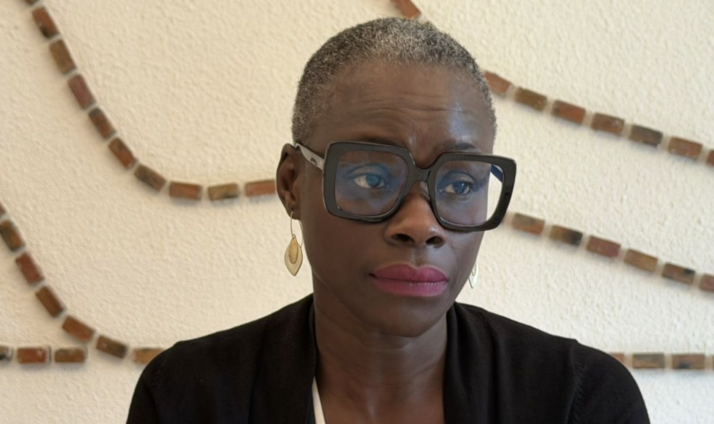
Madam Diarra Dimé-Labille, Ambassador of France to Ghana, said while France fully recognised slavery as a crime against humanity within its legal framework, certain legal considerations influenced its position on the wording of the resolution.
Addressing journalists at her first press briefing in Accra, she explained that France, together with other European Union member states, supported the broader intent of the resolution but sought a more consensual formulation aligned with established classifications under international law.
France was the first country to formally recognise slavery as a crime against humanity more than two decades ago, she noted, adding that its abstention should be understood within a legal and procedural context rather than as opposition to the cause.
The resolution, adopted on March 25, 2026, with strong support at the UN General Assembly, was spearheaded by Ghana on behalf of the African Union, with backing from Caribbean states.
It calls for recognition of the transatlantic slave trade as the gravest crime against humanity and encourages efforts toward reparatory justice.
Madam Dimé-Labille described the outcome as a significant milestone, noting that more than 120 countries voted in favour, reflecting growing global consensus on the need to address historical injustices.
“This was an overwhelming success,” she said, emphasising that the process itself demonstrated increasing international awareness of the enduring impact of slavery.
She, however, underscored that resolutions of the General Assembly were not legally binding, explaining that the adoption of the motion marked the beginning of a broader process of engagement rather than a final determination.
According to her, discussions on reparatory justice were multifaceted and extended beyond financial compensation to include structural and historical considerations.
“Reparation is not only about financial compensation,” she said, pointing to areas such as reform of global financial systems, debt considerations, education, and historical research as part of the wider conversation.
The Ambassador disclosed that President John Dramani Mahama and President Emmanuel Macron discussed the issue during the Ghanaian leader’s recent visit to Paris, with both sides expressing willingness to continue engagement on the matter.
She indicated that France was prepared to contribute meaningfully to future discussions, including a proposed coalition of states expected to explore practical pathways towards reparatory justice in Ghana.
Drawing on her background in international law, Madam Dimé-Labille explained that establishing a clear legal basis for reparations at the global level remained complex.
She noted that, unlike other historical cases where compensation frameworks were backed by binding international mechanisms, there was currently no specific legal instrument governing reparations for the transatlantic slave trade at the international level.
As a result, she said, progress was likely to be driven by dialogue, cooperation, and political consensus among states.
She explained that Ghana’s approach at the United Nations focused on securing broad support, particularly given that a vote had been called, making consensus unattainable.
In such circumstances, she said, achieving a strong majority was key to advancing the issue on the global stage.
The Ambassador highlighted the evolving nature of the reparations discourse, noting that countries and institutions were increasingly exploring diverse approaches, including national initiatives, educational programmes, and historical accountability measures.
She said the next phase would likely involve structured engagements among stakeholders, including the African Union and the Caribbean Community, to define actionable outcomes.
Ghana has taken a leading role in advancing the reparations agenda internationally, positioning itself at the forefront of calls for historical justice and equitable global systems.
Madam Dimé-Labille reiterated France’s broader commitment to addressing historical issues, noting ongoing efforts to acknowledge aspects of its past and support the return of African cultural artefacts.
She emphasised that continued dialogue and partnership would be essential in shaping a shared understanding of reparatory justice and its implications.
“The resolution is not the end, it is the beginning,” she said, expressing optimism about the way forward.
Latest Stories
-
3rd Republic Bank-JoyNews Habitat Fair Clinic ends on a high note after three days of strong patronage
18 seconds -
Ten climbers missing after avalanche hits Himalayan base camp
37 minutes -
NPP had more permanent fuel relief measures than current GH¢2 diesel cut – Amin Adam
1 hour -
Photos from the 3rd Republic Bank-JoyNews Habitat Fair Clinic
1 hour -
Ethiopia’s army promises restraint amid fears of new civil war
1 hour -
Amin Adam calls for review of fuel taxes as diesel prices remain above GH¢18
2 hours -
World Vision Ghana, Ahafo districts sign MoU for universal WASH coverage
2 hours -
When the gold engine stutters: What Ghana’s Cedi and reserves are telling us about the new economic architecture
3 hours -
Two reportedly die after being trapped in mining pit at Juaboso
3 hours -
Petrosol cleans up Wa Municipal Hospital, to donate medical equipment
3 hours -
‘If NPP was ‘insensitive’ over fuel prices, NDC must accept same description now’ — Amin Adam
3 hours -
KiDi brings the hits to London in sold-out UK headline concert
3 hours -
The last goodbye of Ghanaian shot dead in the US
3 hours -
MCC opens door to Ghana again as MiDA revives development partnership
4 hours -
CSIR moves to turn scientific research into jobs, national growth
4 hours