

Audio By Carbonatix
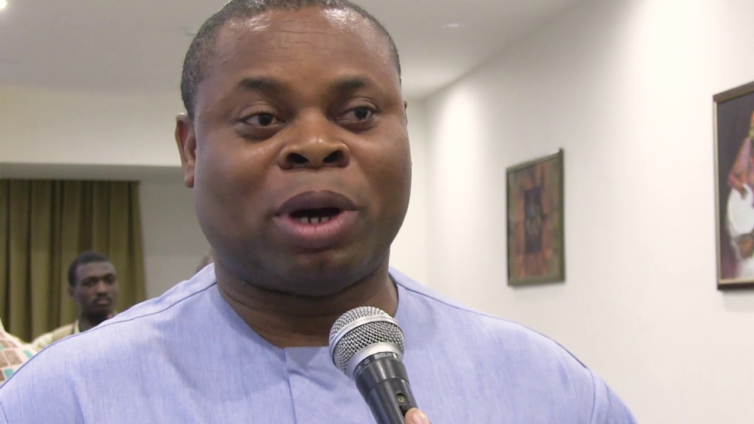
As geopolitical shocks from the Middle East send tremors through global energy markets, Franklin Cudjoe, President of IMANI Africa, has called on the government to cease the political exploitation of the Tema Oil Refinery (TOR).
With U.S. and Israeli strikes against Iranian assets sparking fears of a global oil supply crunch, Mr. Cudjoe argues that Ghana can no longer afford the luxury of mismanagement at its primary refining facility.
Speaking on Channel One TV on Saturday, March 7, the policy expert cautioned that the refinery is currently a sitting duck in a volatile global market. He warned that unless the government pivots toward genuine private sector partnerships, the facility’s strategic value will continue to erode under the weight of bureaucratic stagnation and political patronage.
Mr. Cudjoe’s critique centred on the danger of past administrative decisions that he claims nearly crippled the refinery. He explicitly condemned the "chronic capitalist" arrangements that he believes have prioritised political interests over national energy security.
“It is important that we treat TOR as a vital asset. It is important that we find resources; probably now we should run faster because each day you wait, there is a problem. TOR must be used for what we actually wanted to do and not politicians milking it. It was almost sold for scraps during the last administration,” Mr. Cudjoe stated.
With regional tensions escalating, marked by reports of retaliatory strikes by Iran against countries hosting U.S. bases, the pressure on fuel prices is expected to mount. For the IMANI President, the solution is not more state-led intervention but the injection of serious, long-term investment.
“The best thing to do is to have hard private capital, not the chronic capitalist arrangement that nearly sold it for scraps. We need real private sector people,” he added.
The warning comes as the global community monitors the stability of oil supply chains in the aftermath of the Gulf hostilities. With nearly one-third of the world’s seaborne oil moving through critical chokepoints, experts have warned that even minor disruptions could trigger rapid inflation in net-importing nations like Ghana.
By positioning TOR as a "vital asset" rather than a political tool, Mr. Cudjoe believes Ghana can build a buffer against the energy price spikes currently threatening the country’s macroeconomic stability.
As the 31 March deadline for broader regulatory reforms in the energy sector approaches, the call for a "real private sector" approach to TOR remains a flashpoint in national policy discourse.
Latest Stories
-
We can tackle multiple priorities – Sam George defends Anti-LGBTQ Bill push
17 minutes -
Statement: Ghana Chamber of Mines’ Response to Claims in Joe Jackson’s “Ananse Stories about the Economy of Ghana”
18 minutes -
GES opens 2026 teacher recruitment for licensed B.Ed graduates
20 minutes -
Ghana must value skilled trades, build resilient learners — Ibn Chambas
28 minutes -
Ghana must rethink education around relevance, resilience and responsibility — Ibn Chambas
31 minutes -
Prince Harry faces defamation lawsuit from charity he co-founded
33 minutes -
South Korea deploys thermal cameras to track escaped zoo wolf
35 minutes -
Calls for royal meeting with Epstein survivors grow ahead of US visit
38 minutes -
Ibn Chambas advocates blend of technology and human values in education
40 minutes -
UMA improves healthcare access in Asutifi North with GH₵700k ‘Kim Taylor Legacy’ Walkway
45 minutes -
Scholarships Authority and Fanaka University offer sponsorship for procurement and supply chain studies
48 minutes -
Bisa Kdei drops new single ‘Go N Look’ featuring Medikal
54 minutes -
Benin facing rising terrorism in north as French military presence faces growing criticism
55 minutes -
UEW Public Lecture Series 2026: Education debate ‘about the soul of Ghana’s future’ — Dr Ibn Chambas
56 minutes -
EU fingerprint and photo travel rules come into force from today
1 hour