

Audio By Carbonatix
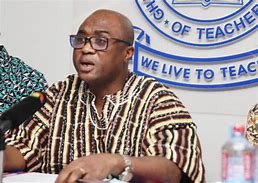
The General Secretary of the Ghana National Association of Teachers (GNAT), Thomas Musah, has welcomed the proposal to cover academic user fees for first-year tertiary students but has expressed concern about sustainability.
While he acknowledges the benefits of easing the financial burden on students and parents, he warns that the country’s stretched education budget may not be able to bear the weight of such an initiative without careful planning.
Speaking on JoyNews’ AM Show, he recognised the proposal by Haruna Iddrisu, the Minister of Education nominee, as a step in the right direction, offering much-needed support for new students.
However, he stressed that while the idea is commendable, the reality of financing it could pose significant challenges for the already fragile national budget.
"While it's a great move for students, we need to ask ourselves: how much do we actually have to fund these initiatives?" he asked, underscoring the importance of a sustainable funding strategy.
He highlighted the ongoing financial struggles within the education sector, including arrears owed to the West African Examinations Council (WAEC), unpaid bills to school feeding suppliers, and long-overdue payments to food vendors in Senior High Schools (SHS).
To make matters worse, capitation grants have been in arrears for over two years, raising serious concerns about the government's ability to meet its educational commitments.
Mr Musah also pointed to the need for a broader, more long-term strategy to secure reliable funding for education in Ghana, something GNAT has long advocated for but has yet to see fully implemented.
Without this, he warned that any effort to support first-year students could be short-lived and add even more strain on the system.
Mr Musah agreed that paying first-year university students’ fees is a positive development, and emphasised that its success hinges on the government’s ability to secure sustainable funding.
"Without a solid financial plan, the initiative could face significant challenges and deepen the financial pressures already plaguing the education sector" he concluded.
Latest Stories
-
Explosion reported outside US embassy in Oslo, police say
6 minutes -
Trump accuses UK PM of seeking to ‘join wars after we’ve already won’
10 minutes -
See the areas that will be affected by ECG’s planned maintenance today, March 8
30 minutes -
First Lady champions ‘Give to Gain’ spirit for International Women’s Day
1 hour -
Ghana@69: Ghana mission in Canada promotes investments and partnerships
1 hour -
Lebanon condemns ‘grave breach’ as missiles strike Ghanaian UN base
2 hours -
Franklin Cudjoe demands urgent TOR overhaul as Middle East crisis threatens fuel security
2 hours -
10 injured in three-vehicle crash on Konongo–Kumasi road
2 hours -
UK aircraft carrier given five days to be ready to deploy
3 hours -
Ghana to replicate digital innovation success in Malawi
3 hours -
Iranian ambassador warns UK to be ‘very careful’ about further involvement in war
3 hours -
She Gives: The ripple effect of women who choose to give
3 hours -
Nadowli-Kaleo District observes 69th Independence Day with cultural exhibition and academic awards
3 hours -
Chambas Team of Red Alert, Narcotics Commission join forces to combat drug abuse
3 hours -
Tano North MCE launches 75 km road project under DRIP initiative
4 hours