

Audio By Carbonatix
Ghana like most developing countries in Africa is vulnerable to climate change impacts and drastic action is required to turn the tide.
Emissions in Ghana are expected to rise from 28 Mt CO2e in 2021 to over 140 Mt in 2050, with the bulk of emissions growth coming from transport, driven by population growth, GDP per capita growth, and vehicle ownership.
Over the past decade, the oil sector has contributed around $6.5 billion of direct revenue to Ghana’s budget. This sector is an indicator and driver in the growth of the economy and for decades the country still depends heavily on this sector to run its industries, transportation, economy and a determinant of prices of goods and services in the country.
Determined to achieve her Sustainable Development Goals 7 (Affordable and Clean Energy) and 13 (Climate Action) by 2030, while demonstrating action against climate change it is possible to bring the energy-sector-related carbon emissions to net zero without serious effects on the economy Ghana’s Energy Transition and Investment Plan was recently launched by the President recently, describing the plan as, “Ghana’s journey to achieve net-zero emissions by 2060 based on the latest data and evidence, ensuring that as the economy thrives, it does so in harmony with the environment.”
Energy experts have described this plan as ambitious than the previous energy transition framework as this plan reflects its clear and comprehensive strategy for achieving significant carbon emissions reduction and transitioning to cleaner energy sources.
The use of sustainable sources or alternative sources of energy is still in its budding stages. Oil reserves in Ghana are very limited hence the country relies heavily on imported petroleum fuel. The import of oil puts a strain on the country’s economy. The dependence on fossil fuels makes energy security very fragile in supply. Environmental sanitation is a topical issue in Ghana as the sanitation value chain has serious gaps which renders it ineffective and needs to be addressed. According to the World Bank as of 2021, only 25.3% (PHC 2021) of the national population had access to improved sanitation that is not shared.
About 17.7% of Ghanaians still practice open defecation. Poor sanitation costs Ghana $290 million annually, underscoring the need for improved infrastructure and practices. Faecal sludge is an environmental nuisance from the sanitation service chain. It is estimated that 36,685 m3 of faecal sludge is generated on a daily basis in Accra alone.
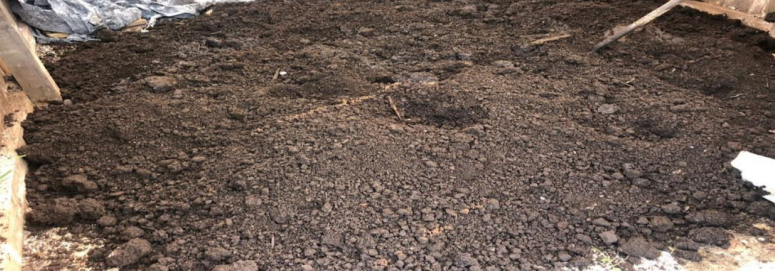
Infrastructure for sanitation service chain is insufficient and hardly accessible in a lot of cities, an estimated 72% and 43% of the sludge produced in Accra and Kumasi ends up untreated in the environment or the sea.
The intersections of escalating poor sanitation services, transitioning to sustainable energy sources and the deepening climate crisis presents a triple challenge of high significance to a developing country like Ghana. To achieve SDGs and transform the economy, it's crucial to transition to sustainable, affordable, and green energy sources, reducing emissions and promoting renewable energy to fuel economic growth and development.
Conversion of Faecal Sludge to biofuels such charcoal briquettes, biomethane and biodiesel as a source of energy presents an alternative and innovative solution to the looming economic and sanitation issue.
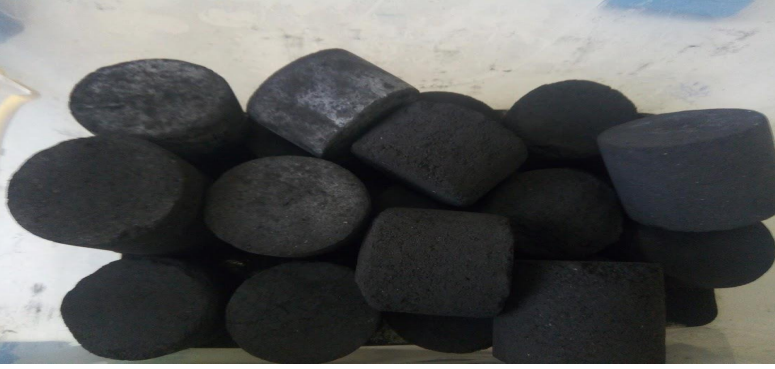
A car powered by human waste completed a 2,000 km European road trip, showcasing Germany’s Fraunhofer Institute's technology to produce 50,000 liters of biocrude oil from 500 tons of sewage sludge. Moreover, Columbia University's Engineering School, Waste Enterprisers Ltd working with Kwame Nkrumah University of Science and Technology (KNUST), and the Kumasi Metropolitan Assembly, launched a pilot facility in 2017 to convert faecal sludge into biodiesel fuel.
The largest Faecal Sludge Treatment facility in Accra is presently in the production of charcoal briquettes from Faecal Sludge for the local market and this was aired on CNN on its Innovative Cities Documentary. Through proper planning and investment into production of biofuels the nation has the potential to address and win the battle against Climate Change and solve to a larger extent the poor sanitation problem and emissions and this would not only reduce our emissions but mitigate the sanitation problem and solve the upsurge and dependency on imports of petroleum products.
The author Felix Safo Danquah (PE-GhIE) is a Master’s Candidate in Climate Project Management at Peoples Friendship University of Russia (RUDN).
Contact: fsdanquah@gmail.com Russia
Latest Stories
-
Ghana, Egypt deepen security ties following high-level meeting
2 minutes -
Every neurodivergent child deserves to thrive – AWARE 2026 walk set for North Legon
9 minutes -
Ghana-Russia Centre, ATF donate to Princess Marie Louise Children’s Hospital
12 minutes -
NPP increases polling station coverage per election committee from 10 to 25
17 minutes -
Ghana card cannot be used for financial transactions – NIA debunks false reports
17 minutes -
Successful conviction secured for illegal fish processing operation in Watford
22 minutes -
Bowen: Ceasefire means respite for civilians, but it might not last long
23 minutes -
Ofori-Atta not yet formally notified of any charges – Frank Davies
23 minutes -
Asanko Gold supports road rehabilitation to ease transport challenges in Amansie West
35 minutes -
Serial killer pleads guilty to eight murders in case that haunted Long Island, New York
39 minutes -
NPP used Bosomtwe road as ‘election machine’ but failed to dedicate funds for its completion – Dr Amoakohene
45 minutes -
CSOs warns of contraceptive crisis as $500k UNFPA supplies stall at port
50 minutes -
Africa’s youth bulge a ‘defining moment’ that requires urgent action – NYA CEO Osman Ayariga
58 minutes -
No looming power crisis; Ghana’s electricity supply remains stable – Energy Ministry PRO insists
1 hour -
Mahama should reset his stance on LGBTQ -Clinton Baffour
1 hour