


Audio By Carbonatix
Voting in Gambia is unlike anywhere else. Instead of casting a paper ballot, Gambians cast a marble instead. But plans to do away with the traditional practice have sparked a heated debate in the country.
When Gambians step into a voting booth, they don't put a cross on a piece of paper. Instead, they stand before multi-colored drums, deciding which one they will throw their glass marble into.
For easy identification, the drums are painted different colors for different candidates. Casting the marble sets off a little bell, to discourage people from trying to smuggle in extra marbles and vote more than once.
A dictator ousted with marbles
The system was introduced in the 1960's to ensure that everyone had their say in a country with very high illiteracy rates.
The iconic glass marbles have since become a curiosity for the rest of the world. But the system proved to work well for Gambia. It was good enough to vote out long-time dictator Yahya Jammeh in 2016, despite his best efforts to rig the elections. While he tried to resist his ousting, he ultimately bowed to the weight of the marbles and conceded defeat to current President Adama Barrow.
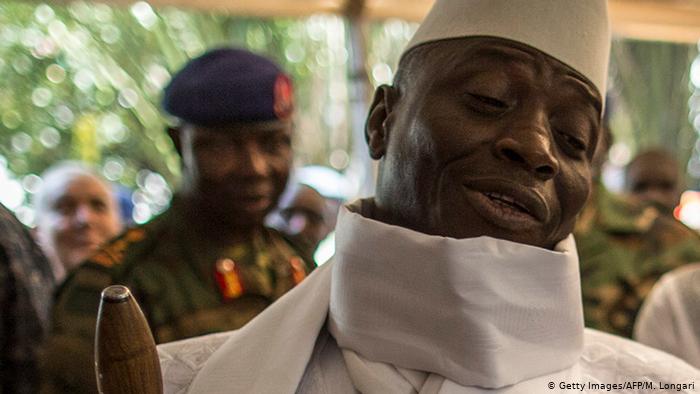
However, according to the will of Gambia's Independent Electoral Commission (IEC), the 2016 election would be the last time that a head of state is to be voted in or out of office through marbles. At the next presidential election, scheduled for the end of 2021, Gambians will lose their marbles and start using paper ballots instead.
A logistical nightmare
So why is Gambia doing away with the marbles now? IEC Chairman Alieu Momor Njai told DW that the electoral system has simply become too complicated for the marbles to handle.
"We used to have only two or three contestants," he said. "But today sixteen parties have registered candidates and we also have independent candidates."
This, Njai added, makes it nigh impossible to place dozens of different-colored drums in every polling station. It would be a "nightmare and a headache to transport them," he said "After the elections, where will you keep them?"
Change divides Gambians
Not all Gambians are convinced that paper ballots are a better option. A quick — albeit informal — survey on the streets of Banjul showed that citizens have mixed feelings on the matter.
"People might not understand how things are done," one resident told DW. "Let us stick to the method that we know since that method is transparent."
But not everyone agrees. "I think Gambia doing away with the marble system of voting is long overdue," said another Banjul local.
Some Gambians are concerned there won't be enough time before the next election to properly switch to a new system.
But most of all, those who are against the change are worried about how it will impact the voting process, with most people unfamiliar with paper ballots and the risks of vote-rigging.
'Not the dumbest country'
IEC chairman Njai dismisses these qualms: "We are not the dumbest country in the world for our people not to be able to use paper ballots like the whole world is using," he said.
The latest available data from the United Nations Educational, Scientific and Cultural Organization (UNESCO), shows that in 2015, the literacy rate in Gambia among the population aged 15 and above was 51%. On average, more than 60% of the West African population can read and write.
Latest Stories
-
Police recover stolen Honda CR-V in Kumasi within 48 hours
19 minutes -
Apetorku Gbodzi 2026 Festival opens in Dagbamete with development focus
33 minutes -
President Mahama arrives in Lyon to co-chair One Health Summit
40 minutes -
Beverly View Plus Hotel draws crowds amid coastal Easter rush in Volta
40 minutes -
Maiden Zongo Festival held in Wa amid calls to tackle drug abuse among the youth
1 hour -
FDA warns of fake HIV test kits on Ghanaian market
2 hours -
Africa urged to build resilient health systems as donor support tightens
2 hours -
Easter gesture: Ablakwa settles medical bills for 85 North Tongu constituents
3 hours -
Africa must harness its population strength—Titus-Glover
3 hours -
Visa-free access doesn’t mean unlimited stay – Lom Ahlijah
3 hours -
From Golgotha to Kwahu: The Easter Migration of the Faithful and the Faithless
5 hours -
How the Ghanaian onion traders’ standoff with Nigeria unfolded and threatened local supply
5 hours -
No compensation for demolished structures on 24-Hour Economy market lands — Gov’t to structure owners
5 hours -
Financial Institutions must back local enterprises to spur growth – Deputy Minority Whip
5 hours -
Photos: Gomoa Easter Carnival 2026 ends in a burst of colour and celebration
6 hours