

Audio By Carbonatix
When the BBC's director general, Tim Davie, took over in 2020, he declared his founding principle to be "impartiality".
Three years later, a row over that principle and how it applies across the corporation has created a crisis that has quite clearly caught managers by surprise.
Familiar, fixed points in the weekly TV schedule unexpectedly falling off air in quick succession is proof of a crisis that has become something much bigger than a row about some tweets.
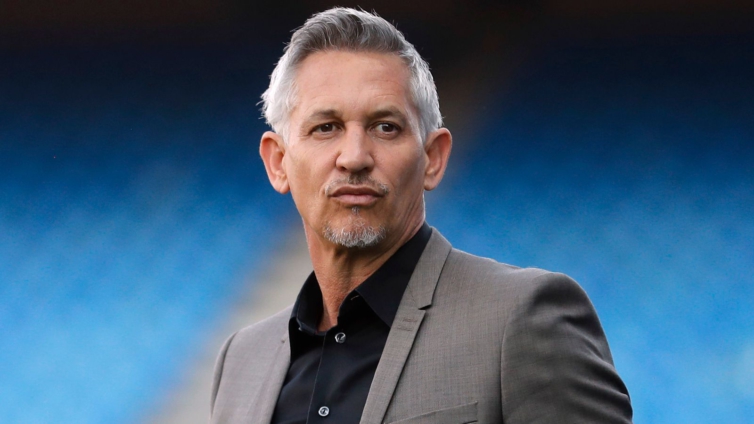
The Gary Lineker issue is more than an argument about the opinions of a highly paid sports presenter - it is a test of the BBC's fundamental values and the current director general's core mission.
The passions provoked by Lineker's political tweets and the decision to keep him off air until he and the BBC resolve this issue has poured petrol on a fire that was already well alight - the debate about the BBC's role in British politics and perceptions of bias both to the left and the right.
But first, let's look at the immediate issue.
It's worth noting that complaints about Lineker's politically charged tweets are not new.
In 2016 and 2018 the BBC defended comments made by the Match of the Day presenter about child migrants and Brexit by saying he was a freelance presenter, it was a private Twitter account and the stringent rules for journalists did not apply equally to sports presenters.
The guidelines at the time said the risk to compromising the BBC's impartiality "is lower where an individual is expressing views publicly on an unrelated area, for example, a sports or science presenter expressing views on politics or the arts".
Since then rules have been tightened. New guidelines on social media demanded an "extra responsibility" for presenters with a "high profile". Some described the new rule as the "Lineker clause".
The question is whether that rule is being fairly applied. Twitter is awash with examples of what some people think are presenters who have gone too far over recent years. Names frequently raised include Alan Sugar, Chris Packham and Andrew Neil.
In response, Mr Davie said on Saturday evening that he was in "listening mode" and suggested there might be an escape route by re-examining those guidelines.
There is good reason for him to want to bring this to a conclusion. Impartiality is hugely important but so too is providing a service that people pay for through their licence fee.
Match of the Day went ahead on BBC One on Saturday night - but was reduced to a 20 minute edition that did not have a presenter, pundits or any commentary - while other football coverage was dropped.
Every cancelled programme is a source of further complaint from licence payers who may not care what Lineker says on Twitter but care deeply about their favourite programmes staying on air on a Saturday night.
There is also the wider context of a government that has in recent years been critical of the BBC and its perceived liberal bias.
Greg Dyke, a former director general, who left the BBC over a clash with the Labour Government in 2004, says the decision to pull Gary Lineker from Match of the Day looks like a corporation bowing to political pressure from a Tory government.
All of which leads to another issue that asks questions of the BBC's impartiality, the BBC's chairman, Richard Sharp, a former donor to the Conservative party who is the subject of an ongoing inquiry looking in to his appointment and what he did or did not disclose about his part in the arrangement of an £800,000 loan guarantee to the former prime minister, Boris Johnson. He has denied any involvement in arranging the loan.
Lineker has become a lightning rod for a much bigger debate and the BBC would like to resolve the issue as quickly as possible to stop a very public row turning into a monumental crisis. However, with the corporation saying it wants Lineker, with his 8.7 million Twitter followers, to stop the political tweets while he shows no sign of agreeing to be silenced, it's hard to see quite how this will resolve itself.
For the BBC this is about impartiality but to many others it is about free speech. Indeed, there is a statue outside the BBC's headquarters in London of the author of 1984, George Orwell, a former BBC talks producer. Inscribed on the wall behind the Orwell statue are these words: "If liberty means anything at all it means the right to tell people what they do not want to hear."
Eighty years after Orwell left the BBC, the corporation finds itself in a deepening crisis. That thought from Orwell and the questions it raises for the BBC are at the very heart of the Lineker debate.
Latest Stories
-
Kwahu Business Forum 2026: Corporate citizenship, sustaining African businesses take centre stage with KGL as the case study
1 hour -
Trump seeks $152m to reopen notorious Alcatraz prison
3 hours -
Ex-Chelsea player Oscar retires with heart issue
3 hours -
CA Foundation drives constitutional literacy in Kpone Katamanso municipality
4 hours -
GPRTU to hold talks with Transport Ministry over rising fuel costs
4 hours -
CUTS International urges gov’t to halt sachet water price hike pending cost review
4 hours -
Chief Justice: Efficient Judiciary essential to reducing business costs
4 hours -
Bayern grabs 99th-minute winner to cap superb fightback
4 hours -
Ahmed Ibrahim urges Ghanaians to reflect Easter values in nation-building
4 hours -
ECG inefficiencies undermining power supply -Mahama outlines reforms
4 hours -
Lewandowski scores as Barca fight back to defeat Atletico
4 hours -
Lack of private sector consultation undermining economic growth – Jerry Ahmed Shaib
4 hours -
Real Madrid seven points adrift after Muriqi’s late Mallorca winner
4 hours -
Ghana must lead AfCFTA implementation by example – Trade Minister Ofosu-Adjare
4 hours -
Strong Judiciary key to business confidence – Chief Justice Baffoe-Bonnie
4 hours