

Audio By Carbonatix
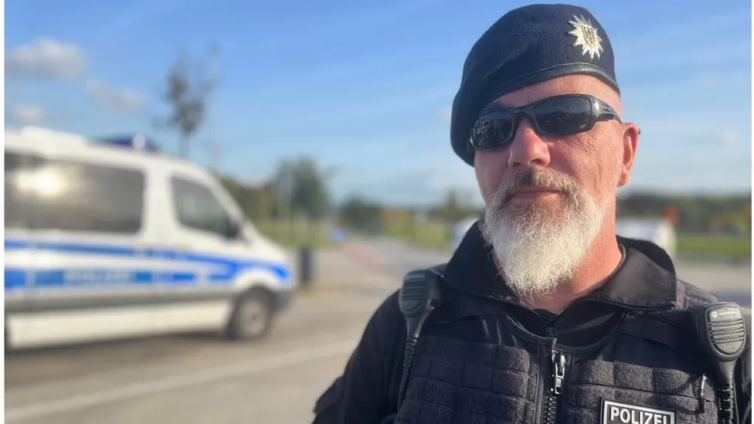
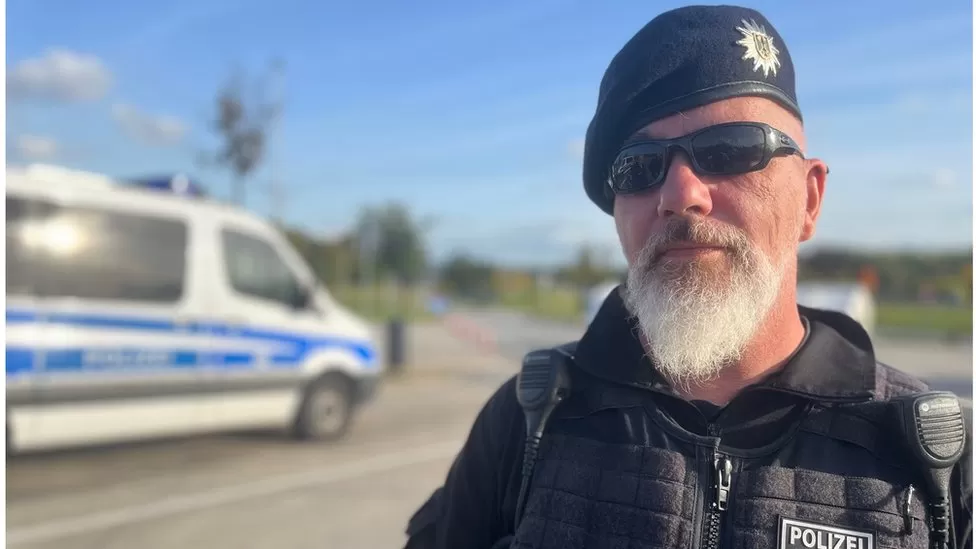
Armed police officers wave cars off the motorway going from Poland to Germany. They're searching for people-smugglers and their desperate cargo.
This is the German government's latest bid to show it is getting a grip on rising levels of irregular migration.
But, as we found in a rural border district, there's little sense of control.
Altenberg is a small town in Saxony, right by the Czech Republic.
Families race down a toboggan run that weaves through the forest and, when winter's here, there's even a small ski resort.
The local mayor, Markus Wiesenberg, says that - in this area alone - smugglers drop off people as often as once a day.
"The trafficker disappears and probably picks up the next load."
New arrivals put a strain on local services, he says, as well as local people.
"Sometimes they find sleeping bags and campfires in the woods and they are worried for their children."
Migration is looming large in the national debate after the far right is seen to have capitalized on the issue, fuelling recent gains in regional elections.
Ministers ordered "temporary" checks last month on Germany's land borders with Poland, the Czech Republic and Switzerland.
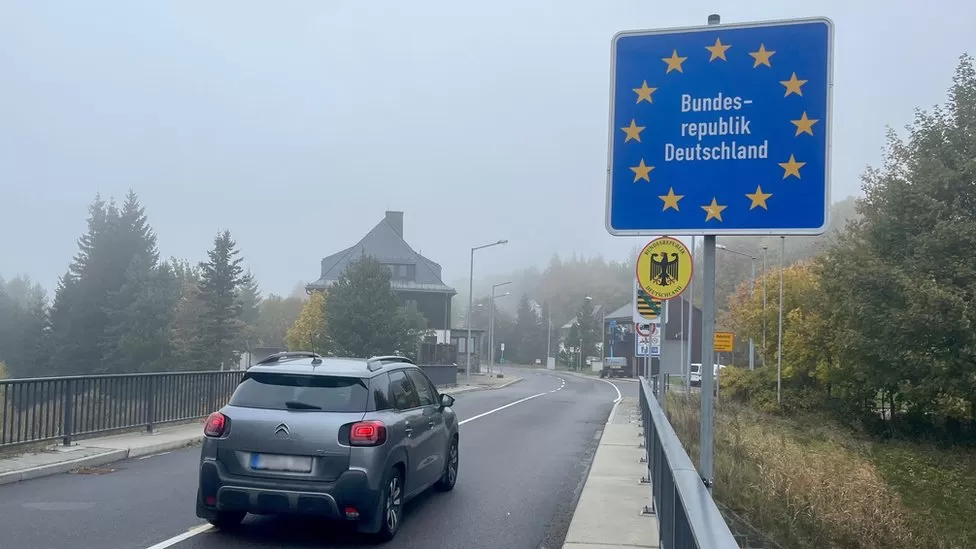
The controls were renewed this week, as they have been for years on the border with Austria, and they are all within the EU's supposedly border-free Schengen Zone.
Registered illegal entries into Germany this year are set to be their highest since 2016.
The country remains a top destination for asylum seekers.
In August, it received around 30 per cent of the 100,000 applications lodged within the EU, Norway and Switzerland.
Inside an old youth hostel in rural Saxony, more than 50 men are waiting for their future to begin.
Thirty-three-year-old Muhammad Abdoum, from Syria, has successfully applied for asylum and hopes soon to find work.
He's adopted a leadership role at this migrant housing centre and seems naturally upbeat.
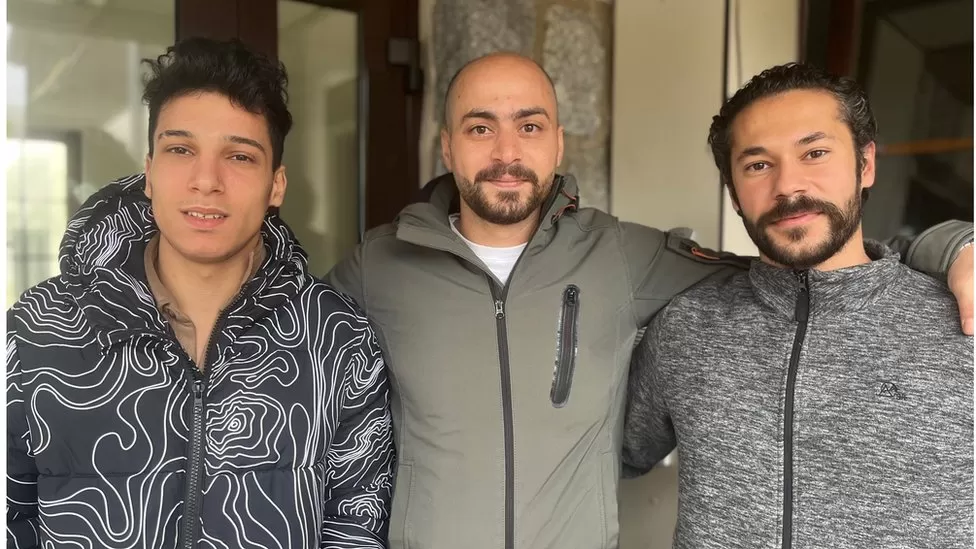
However, he becomes tearful when recounting a "lost" decade in his life with the prospect of starting again from "zero."
"I lost too much [many] friends. I lost 10 years. What did I make for myself?"
A long journey, he tells me, took him from war-torn Syria to Turkey, through the Balkans and eventually here; to what feels like a remote outpost, just metres from the Czech border, surrounded by pine trees and a heavy morning mist.
Passing through other EU nations, the last leg of his travels was on a train from Prague.
Now he dreams of having a life, maybe even a family, in Germany.
That evening, just 10 minutes' drive from the hostel, a small crowd of forty to fifty people gathers in the village square of Hermsdorf.
They're protesting about the possibility that nearby apartments might be used to house migrants.
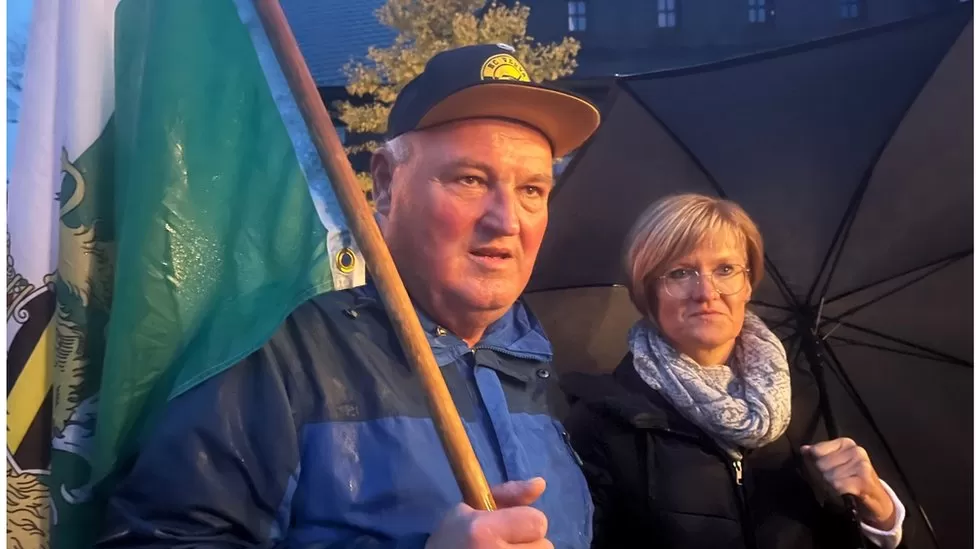
A speaker, playing anti-establishment songs, blares out from the back of a van.
Thomas clutches a damp, sagging flag of Saxony as he tells me that while an Iraqi family has integrated well into his village, "If hordes of young men arrive… we fear for our safety."
"I'm here for the children," chimes in Anja. "For me the young migrants who come here, they are armies - and when the order comes for them to take action, then we're done. Then Germany is done."
The group eventually marches off into the night to do a loop of the village.
You might think, tucked away amongst forests and hilltops, that no one can hear them - but you'd be wrong.
Polls that put the far-right, anti-immigration Alternative für Deutschland (AfD) party ahead of the three governing parties appear to have spooked Berlin into action.
Plans to speed up deportations of failed asylum seekers are being introduced while Chancellor Olaf Scholz was in Nigeria this week to try and boost the number of returns.
The German leader has denied that recent AfD state election successes have forced his hand.
But a "sense of fear" has led to fresh, serious discussions in government according to Gerald Knaus, chair of the European Stability Initiative think tank in Berlin.
He's dismissive of border checks and EU plans to fast-track asylum applications, describing them all as "fake solutions."
Mr Knaus was the brains behind the contentious 2016 deal which saw Turkey promised aid and visa-free travel in return for stemming the flow of migrants into the EU.
He believes this kind of agreement should be revived and expanded to countries such as Senegal, Morocco and Rwanda.
Some senior political figures in Germany, including from within the three-party governing coalition, are also calling for third-country deals.
One idea, which has not been endorsed by ministers, could see asylum claims processed in nations that migrants pass through on their way to the EU.
"We must prevent people with no prospect of asylum to start the dangerous route across the Mediterranean," Christian Dürr, the Free Democrats Bundestag group leader, told Süddeutsche Zeitung.
Successful claimants would then proceed to Germany whereas the UK's deal with Rwanda, which is being contested in the courts, would see refugees remain in the Central African country.
On Monday Chancellor Olaf Scholz will meet with Germany's regional leaders where migration is expected to top the agenda.
A collision of factors are present in the current migration debate in Germany.
Attempts to tackle irregular migration are running in parallel with efforts to plug labour shortages by attracting skilled foreign workers.
Germany's also taken more than a million people from Ukraine - mainly women and children - following Russia's full-scale invasion.
Increased backing for the AfD comes as elected leaders are accused of ducking the debate.
Mayor Markus Wiesenberg, who's a member of Angela Merkel's Christian Democrat party, says there is a perception that the federal government is failing.
All the while, the rise in irregular migration appears to feed gains by the far right as elected leaders are accused of ducking the debate.
"It seems we didn't learn the lesson of 2015," he says - referring to the apogee of Europe's migration crisis.
"We are as unprepared as then."
Latest Stories
-
Current account stability to mitigate pressure on cedi; currency to end year at GH¢11.40 to a dollar
8 minutes -
T-bills auction: Government records 32% undersubscription; interest rates rise again
10 minutes -
Economy to remain relatively insulated from fallout of US–Iran conflict – Fitch Solutions
11 minutes -
[Watch Live] Shatta Wale, Kofi Kinaata, and others ignite the grand finale of Gomoa Easter Carnival
2 hours -
Berekum Chelsea edge Aduana FC in Bono derby to boost survival hopes
6 hours -
‘They can’t control the team’ – Ernest Thompson doubts local coaches for Black Stars role
6 hours -
Ghana-born midfielder Seidu realises ‘dream’ with Atlético Madrid debut
7 hours -
GPL 2025/26: Bubakari strikes late to hand All Blacks vital win over Dreams FC
7 hours -
Fatal crash on Kintampo–Tamale highway claims four lives
7 hours -
2025–26 FA Cup Semifinal Draw: Chelsea, Man City Learn Wembley Opponents
7 hours -
GPL 25/26: Gold Stars back on top after beating Nations FC
8 hours -
GPL 2025/26: Heart of Lions roar back with victory over Vision FC in Kpando
8 hours -
Solomon Agbasi: Hearts keeper in stable condition after concussion
8 hours -
GPL 2025/26: Late Salim Adams penalty earns Medeama draw at Bechem
9 hours -
Hearts pip Young Apostles 1-0 to end 5-game winless run
9 hours