

Audio By Carbonatix
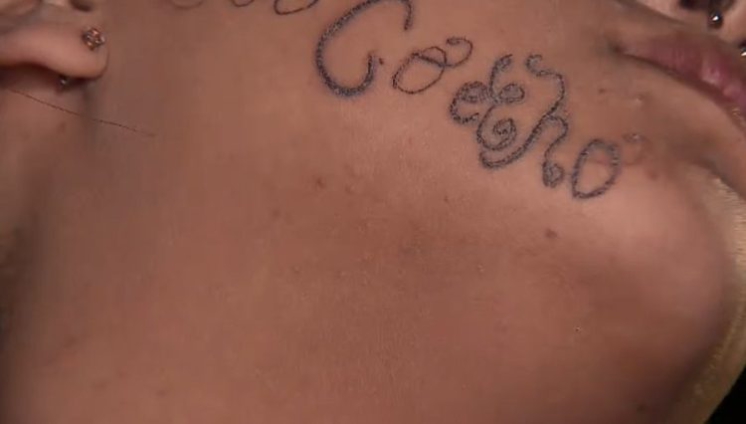
The Ghana Education Service (GES) has expressed concern over the growing prevalence of tattooing, multiple piercings, and bleaching among pupils, describing it as ‘a troubling phenomenon.’
The Service is equally worried about teenage pregnancies and cohabitation and their attendant implications on the education of pupils, particularly the girl-child.
Ms Priscilla Christabel Eshun, the Central Regional Girls Education Officer of the GES said it was surprising that some young pupils had bold tattoos of funny names and meanings.
GES observed these during visits to selected districts in the Central Region on its ‘Life Skills Programme’ to empower pupils.
The districts are Ajumako-Enyan-Essiam, Assin South, Ekumfi, Upper Denkyira West, Twifo-Hemang- Lower-Denkyira West and the Komenda-Edina-Eguafo-Abrem Municipality.
Ms. Eshun disclosed the findings at the Second Quarter Sub-Implementing Partners (IPs) Review Meeting on sexual and gender-based violence, organised by the Regional Coordinating Council with support from the United Nations Population Fund (UNFPA).
Partner institutions and agencies, including the Department of Gender, Ghana Education Service, Ghana Health Service, National Youth Authority, Population Council and the Ghana News Agency took turns to address the forum.
Others are Planned Parenthood Association of Ghana, Social Welfare, House of Chiefs, and Non-Governmental Organizations.
Ms Eshun said: “In one of the schools we visited, a young girl had bleached her skin to the point where it was peeling off and emitting an unpleasant smell.”
“We also observed students with multiple piercings in their ears.
“This has become a fashion trend, and many girls are engaging in it without considering the potential health, employment, and other socio-economic consequences,” she added.
According to her, GES also found that many boys had dropped out of school for several reasons and were operating tricycles (Aboboyaa or Pragyia).
The investigations revealed that many young girls were associating with the boys for financial assistance.
“Regrettably, many girls are enticed into such relationships for financial gain, using the money to purchase sanitary pads and other personal items,” Ms Eshun revealed.
She emphasised that the Service prohibited tattooing, multiple piercing, and bleaching as stated in its harmonised Code of Conduct approved for students in pre-tertiary schools.
The section of the code of conduct titled “Improper Dressing” explicitly states that “bleaching of the skin by a student shall not be allowed.”
She said the GES Code of Conduct stressed the necessity for students to dress neatly, adhere to prescribed dress code and footwear consistently and avoid accessories such as chains, bangles, caps, and bracelets.
Spectacles, for instance, were only permitted with a valid medical prescription and alterations to school uniforms or dresses were prohibited.
“Students shall not wear chains, bangles, caps, or braces. Wearing of spectacles shall require a medical prescription.
“No alterations to school uniforms or dress shall be allowed. Possession or use of un-prescribed attire by a student is an offence,” Mrs. Eshun explained.
These guidelines, she said also extend to personal grooming, emphasizing the importance of maintaining a decent haircut as defined by school authorities.
Clean, neat, and modest hair is encouraged, with an emphasis on avoiding extreme styles and colours.
For male students, she said a styled haircut and a clean-shaven beard are acceptable.
“Students should have a decent haircut as prescribed by the school authorities. Hair should be clean, neat, and modest, and avoid extremes in styles and colour. Men’s hair should be neatly struck and beard clean-shaven.”
The Code of Conduct outlines various sanctions for offenses such as confiscation of bleaching creams and other unauthorized items, facing disciplinary committees, signing bonds, cautioning, and counselling, manual work, demotion for prefects, two weeks of internal suspension, and supervised shaving of beards or sideburns.
The GES’s harmonised Code of Conduct reflects a broader commitment to instilling discipline and uniformity in the educational environment, emphasizing the role of appropriate appearance and grooming standards in fostering a conducive learning atmosphere.
Mr. Alan Paintsil, on behalf of the RCC, pledged his outfit’s commitment to sustaining the progress made in reducing teenage pregnancies and other sexual and gender-based violence across the Region.
He highlighted the specific districts that have been prioritised for the intervention and called for support from all stakeholders.
Latest Stories
-
Mahama confirms progress on 24-Hour Economy initiative at Kwahu Business Forum
7 minutes -
Parliament passes Ghana Investment Promotion Authority (GIPA) Bill
17 minutes -
New airport infrastructure tax – a costly own goal that ground Ghana’s aviation ambitions
28 minutes -
Sachet water price increase: Why Ghana urgently needs a competition law to address price fixing and cartel conduct
34 minutes -
Ex-President Akufo-Addo visits President Mahama in Kwahu during Easter festivities
37 minutes -
There is no imminent fuel shortage – President Mahama assures Ghanaians amid Iran conflict
45 minutes -
Gov’t to expand Accra International Airport with new car park, retail spaces, and airport hotel
45 minutes -
President Mahama optimistic about Ghana’s economic progress at Kwahu Business Forum 2026
56 minutes -
Prof. Kpessa-Whyte writes: Understanding SIGA’s policy of encouraging inter-trading among specified entities
1 hour -
President Mahama calls for emergency Cabinet Meeting over rising fuel prices
1 hour -
Gov’t to construct new concourse at Accra International Airport to ease congestion
2 hours -
Day 3 of Gomoa Easter Carnival bursts with culture, music, and community spirit
2 hours -
Gender Ministry launches National Shock-Responsive Social Protection Strategy to strengthen Ghana’s crisis response
2 hours -
Photos: Zimbabwean President Mnangagwa departs Ghana after state visit
2 hours -
Gov’t procures over 24,000 medical equipment to support free primary healthcare rollout
2 hours