

Audio By Carbonatix
The Ashanti Caucus of Parliament has demanded answers from the government after the Roads Minister announced a reduction in the scope of the Suame Interchange Project from the original four-tier design to a two-tier configuration.
It cites debt-related constraints and contractor drawdown challenges.
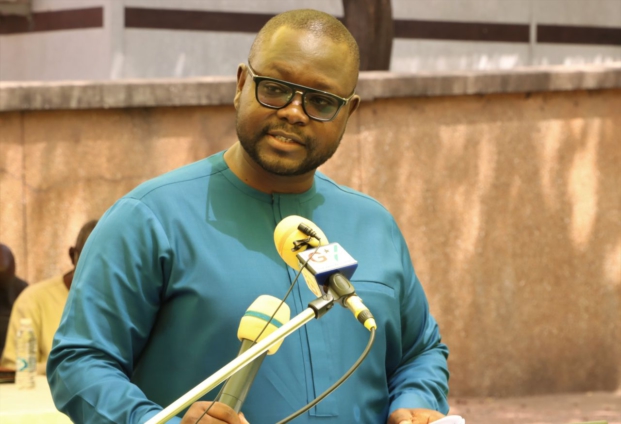
In a press statement delivered on Monday by Francis Asenso-Boakye, MP for Bantama and former Minister for Roads and Highways, the caucus described the decision as “deeply concerning, technically unsound, and unfair to the people of Kumasi and the Ashanti Region.”
The caucus insisted that scaling down the project is not a simple adjustment but a major compromise that undermines the original engineering intent and the long-term transport needs of Kumasi.
“Reducing a 4-tier solution to a 2-tier compromise is a disservice to Kumasi and Ghana,” the statement said.
The Suame Interchange was initiated under the administration of former President Nana Addo Dankwa Akufo-Addo to address what the caucus described as severe and worsening traffic congestion in Kumasi, Ghana’s second-largest and fastest-growing city.
The caucus recalled that in July 2022, Parliament approved both the Commercial Agreement and the Loan Agreement for the Design and Construction of the Suame Interchange and Ancillary Works Project (Phase One).
It said the project was financed by Deutsche Bank S.A. of Spain and backed by an Export Credit Guarantee from the Spanish Export Credit Agency (CESCE), which it argued underscored the project’s “international credibility, bankability, and technical soundness.”
The caucus stressed that Kumasi is not merely a regional capital but a national transport hub linking north to south, east to west, and major economic corridors, markets, industrial zones and transit routes.
It said congestion across Suame, Krofrom, Bantama, Abrepo Junction, Anomangye, Magazine, Abusuakruwa, and other parts of the Kumasi metropolis has become “unbearable,” leading to excessive travel times, lost productivity, increased fuel consumption, higher accident risk, and a deterioration in quality of life.
According to the caucus, the original four-tier design was not arbitrary but “the product of detailed traffic modelling, engineering analysis, and long-term urban planning.”
It argued that, even after Ghana’s IMF programme and subsequent debt restructuring disrupted the continuity of the original external financing arrangement, the government still decided to prioritise the project.
“Government took a conscious decision to prioritise the project by reallocating funding under the Afreximbank loan facility to ensure that works continued,” the statement said.
The caucus said after extensive relocation of major utility services, final engineering designs and foundation works began in 2024, stressing that “the detailed engineering designs were completed for all four tiers of the interchange.”
It explained that Phase One included a four-tier grade-separated interchange at Suame Roundabout, an overpass at Krofrom Junction, an underpass at Abrepo Junction, and widening of critical sections of the Kumasi Inner Ring Road.
Phase Two, it added, included additional overpasses at Anomangye, Magazine New Road, and Abusuakruwa; dualisation of Offinso Road (N10) to a 2×3-lane carriageway; construction of about 15 kilometres of local roads; and improvements to key intersections.
The caucus argued that the corridor-based approach was deliberately designed to address both current congestion and future traffic growth in Kumasi.
It warned that a two-tier solution would fail because it “will not eliminate traffic conflict points,” “will not accommodate projected traffic growth,” and “will simply shift congestion from one junction to another.”
The caucus further cautioned that reducing the design could turn the project into “an expensive but ineffective bottleneck.”
It also argued that attempting to construct only some levels would require revisions to completed engineering designs, leading to delays, cost overruns, technical compromises, and contractual complications.
“In urban transport engineering, under-designing is often worse than doing nothing, because it locks a city into congestion for decades,” the statement said.
The caucus said government must answer hard questions, particularly on funding priorities.
“If Government could mobilise funds for the Ofankor–Nsawam Road and other major road projects, why is the Suame Interchange being short-changed?” it asked.
It also questioned what it described as a contradiction with government’s own Big Push Road Programme.
“In 2025, Government itself captured the Suame Interchange under the Big Push Road Programme to guarantee continuous funding and timely payments. What has suddenly changed?” it asked.
The caucus also cited public comments by the finance minister.
“The finance minister has publicly stated that GHS 43 billion has been allocated to road infrastructure this year alone. Why can’t a fraction of this amount be applied to complete the Suame Interchange as originally designed?” it asked.
It also challenged the government’s decision to pursue new commitments while citing a lack of funds.
“If the government claims it lacks funds, why is it financing 64 new road projects recently rushed through PPA processes? Why prioritise new commitments over completing ongoing, high-impact projects?” the caucus said.
The statement also raised concerns about an inconsistency in the handling of major national road projects.
“Why has the government abandoned a 64%-complete Accra–Kumasi dual carriageway, only to pursue a new greenfield three-way expressway at significantly higher cost and risk, when it bemoans funding challenges?” it asked.
The caucus said these decisions point to a troubling possibility of discontinuity.
“Is this Government deliberately deprioritising projects initiated under the Akufo-Addo administration in favour of projects it can label as its own?” it asked.
It argued that if this is the case, “it is Ghanaians, not political opponents, who will bear the consequences.”
The caucus insisted that Kumasi deserves better, citing the city’s status as Ghana’s second-largest, its role as a strategic national transit hub, and its growth, with rapid increases in population and vehicle ownership.
It said short-changing Kumasi on a project of this scale is “technically indefensible,” “economically unwise,” and “politically unjust.”
The caucus called on government to restore the original four-tier design, reprioritise funding to complete the project as planned, and engage transparently with Parliament and the people of Kumasi on the way forward.
“Kumasi deserves infrastructure that reflects its national importance, not half-solutions justified by selective constraints,” the statement said.
Latest Stories
-
TTAG raises alarm over proposed recruitment of 7,000 teachers, demands national posting roadmap
30 minutes -
Civilians feared killed after reports of air strike on Nigerian market
40 minutes -
Bishop Simon Kofi Appiah installed as new Jasikan Diocese Bishop
41 minutes -
Trump’s Strait of Hormuz blockade threat raises risks and leaves predicaments unchanged
43 minutes -
US Court backs extradiction of former MASLOC CEO Sedina Tamakloe-Attionu’s to Ghana
1 hour -
Seven arrested as NAIMOS dismantles illegal mining camp, seizes firearms at Boin River
1 hour -
Fire erupts at Madina Ritz Junction, destroys multiple wooden structures and containers
1 hour -
Daniel-Kofi Kyereh returns from long-term injury, registers assist for Freiburg U23
2 hours -
Knifeman calling himself ‘Lucifer’ slashes three at NYC’s Grand Central
2 hours -
Brands are built from within to without
2 hours -
Matriculants urged to pursue excellence as gov’t reaffirms support for Maritime education
2 hours -
See the areas that will be affected by ECG’s planned maintenance on Monday, April 13, 2026
2 hours -
GPL 2025/26: Salim Adams double fires Medeama back to summit after Kotoko rout
2 hours -
Two robbery suspects convicted following violent gold dealer attack in Obuasi
2 hours -
Supreme Court @150: Fanfare meets reflection as nationwide activities roll out
2 hours