

Audio By Carbonatix
Ghana is calling for a stronger private sector role in financing and developing gas infrastructure across West Africa, warning that governments alone cannot shoulder the rising capital demands of the energy sector.
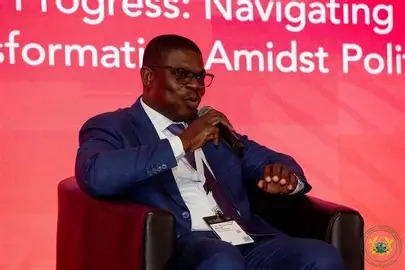
Speaking at the 2026 West African Gas Summit, the Deputy Minister for Energy and Green Transition, Richard Gyan Mensah, said the scale of infrastructure required to unlock the region’s gas potential demands deeper collaboration between governments, private investors, and development finance institutions.
“The government alone cannot carry the full burden of the investments required in this sector. We need a strong partnership between the public sector, private investors, and development finance institutions to move this agenda forward,” he said.
He explained that while natural gas remains central to industrial growth, job creation, and energy security, many promising projects across the sub-region are unable to progress because they are not yet “bankable,” largely due to weak project preparation frameworks and limited investment readiness.
“Many of the projects we have are technically sound, but they struggle to reach financial close. The challenge is not just resources—it is preparation, structuring, and making projects attractive to investors,” he added.
According to him, addressing this gap is critical if West Africa is to translate its abundant gas resources into real economic transformation.
Mr. Mensah pointed to Ghana’s experience with the West African Gas Pipeline as an example of how regional cooperation can enhance energy security and improve access to gas for power generation and industrial use.
“This pipeline has demonstrated what regional cooperation can achieve. It has supported our power generation and strengthened energy security, and it shows the value of integrated markets,” he noted.
He further stated that gas continues to play a major role in Ghana’s electricity generation, helping reduce reliance on more expensive liquid fuels, but stressed that sustaining and expanding such gains requires continued investment in infrastructure and supply reliability.
The Deputy Minister also emphasized that creating a predictable and stable investment climate is essential for attracting long-term capital into the sector.
“Investors are looking for clarity, stability, and confidence. If we can provide the right policy environment and regulatory certainty, the capital will come,” he said.
He concluded that West Africa has the resources and potential to become a major gas hub, but achieving this will depend on stronger partnerships and deliberate efforts to mobilize private capital into large-scale energy infrastructure projects.
Latest Stories
-
GRA blames system failure for delay in issuing receipt over passenger’s customs duty
1 minute -
Livestream: Newsfile discusses World Cup visa scandal, beach demolitions, education strikes, BRICS bid
5 minutes -
NC-PTAs welcomes end of teachers’ strike, urges parents to prepare children for Monday
15 minutes -
Government procures over 2,000 transformers as Ghana’s electricity access hits 89.13% – Energy Minister
41 minutes -
UTAG-UG threatens strike on October 19 over unpaid allowance
50 minutes -
Let The Constitution direct Chieftaincy to deliver “All Development Is Local”
2 hours -
John Jinapor outlines renewable energy, nuclear power priorities for 2027
2 hours -
Ghana explores centre of excellence for hearing, communication and cochlear implant care
3 hours -
Schizophrenia-related disorders lead mental health cases recorded in Ghana
4 hours -
Dutch authorities enlist Ghana in hunt for fugitive drug lord Bolle Jos
4 hours -
Ghana housing finance conference adopts communiqué to improve affordable housing access
9 hours -
Special Initiatives Minister urges Wa Technical Institute to enrol more girls as EU-backed solar training lab opens
9 hours -
In the matter of my first year at the Bar
9 hours -
ActionAid Ghana calls for an end to child marriage, greater investment in girls’ rights
9 hours -
Newsfile to tackle World Cup visa scandal, beach demolitions, education strikes, BRICS bid
10 hours