

Audio By Carbonatix
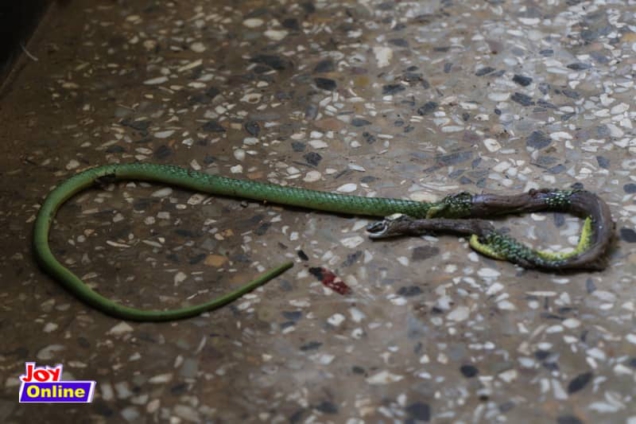
Though often overlooked, snakebite envenoming poses a significant threat, particularly in low and middle-income countries. According to the World Health Organization (WHO), more people die annually from venomous snakebites than from diseases like Ebola. In fact, snakebite envenoming is more deadly than almost any other Neglected Tropical Disease (NTD).
Ghana's snakebite crisis
Globally, an estimated 5.4 million snakebites occur each year, resulting in 1.8 to 2.7 million cases of poisoning. This tragic reality claims between 81,410 and 137,880 lives annually, with around three times as many amputations and other permanent disabilities.
Ghana is no exception to this scourge, with 14 of the 20 NTDs classified by the WHO being endemic to the country. According to Dr. Joseph Opare, Programme Manager of Neglected Tropical Diseases (NTDs) at the Ghana Health Service, the nation recorded a staggering 59,600 snakebite cases between 2015 and 2020 – the first time such comprehensive data has been compiled.
On average, Ghana experiences 9,900 snakebite incidents each year, with males accounting for 5,600 cases and females 4,300. The Upper West, Ashanti, and Eastern regions bear the brunt of this predicament, with rural communities engaged in farming, hunting, fishing, and other outdoor activities being the most vulnerable.
Providing additional context, Dr. Anthony Nsiah-Asare, the Presidential Advisor on Health, mentioned that most snakebite cases occur during the major and minor farming seasons, spanning from March to June and October to November, respectively.
Challenges and efforts
Despite the severity of the issue, Ghana's progress in addressing snakebite envenoming faces several obstacles. These include the unavailability of reliable data on snake types and distribution, limited access and affordability of antivenoms, and the lack of protective gear for farmers in rural areas.
Dr Opare said the exact burden of snakebite envenomation in the country was unknown, explaining that hospital visit rate of snakebite was estimated at 35 per 100,000 persons per year.
Envenomation is the exposure to a poison or toxin resulting from a bite or sting from an animal such as a snake, scorpion, spider, or insect or from marine life.
Dr Opare explained that to reduce the snakebite mortality and morbidity, the Ghana Health Service has implemented measures to improve surveillance and provide adequate antivenoms. Awareness campaigns are also underway to empower victims with remedial measures.
ASA
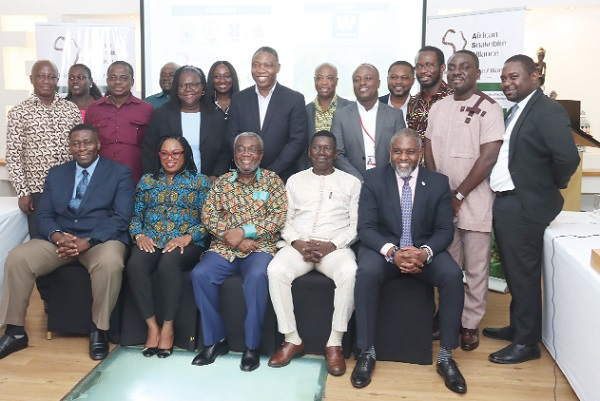
The African Snakebite Alliance (ASA), an organization comprising experts from various institutions across Africa and the United Kingdom, has been established to transform snakebite research. With funding from the Wellcome Trust. the ASA aims to conduct high-quality research, support national and regional bodies in incorporating research evidence into policy and planning, and develop a sustainable and cross-disciplinary capacity for snakebite research in Africa.
Dr. John H. Amuasi, the Principal Investigator of the African Snakebite Alliance (ASA), stated that the lack of high-quality research evidence to guide policymaking and practical implementation is a significant obstacle in achieving the World Health Organization's 2019 roadmap target of reducing global snakebite deaths and disabilities by half before 2030.
He outlined the ASA's key objectives as undertaking high-quality research relevant to improving health outcomes for people affected by snakebite in Africa; developing systems to support national and regional bodies in Africa to incorporate research evidence into decision-making in policy and planning and developing and supporting a sustainable and cross-disciplinary capacity for snakebite research in Africa.
Furthermore, Dr. Amuasi, who also leads the Global Health and Infectious Diseases Research Group at the Kumasi Centre for Collaborative Research in Tropical Medicine (KCCR), mentioned that as part of their efforts, the ASA would provide small grants to other researchers interested in conducting any form of snakebite-related research. Additionally, they would ensure that the research findings are effectively translated into actionable policies.
A call to action
Dr. Hafez Adam Taher, the acting Director of the Technical Coordination Directorate and Director of External Health Cooperation at the Ministry of Health, described snakebite as the most neglected among Neglected Tropical Diseases (NTDs), despite being covered under the National Health Insurance Scheme. He explained that there is still a scarcity of vaccines for snakebites.
Addressing the snakebite problem requires a concerted effort from all stakeholders. The WHO's prequalification process is evaluating new types of antivenoms to improve global access.
“At present, very few countries can produce snake venom of adequate quality for antivenom manufacture and many manufacturers rely on common commercial sources. These may not properly reflect the geographical variation that occurs in the venoms of some widespread species,” said Dr Angela Ackon, a representative of the WHO Ghana Office.
She explained that the lack of regulatory capacity for the control of antivenoms in countries with significant snakebite problems resulted in an inability to assess the quality and appropriateness of the antivenoms.
As the world grapples with this neglected yet deadly threat, a comprehensive approach involving research, policy reforms, awareness campaigns, and improved access to treatment is crucial to saving lives and preventing disabilities.
Members of the African Snakebite Alliance are Kumasi Centre for Collaborative Research in Tropical Medicine (KCCR), Ghana, Kenya Institute of Primate Research (KIPRE), Kenya, University of Global Health Equity (UGHE), Rwanda.
The rest are Rwanda Biomedical Center (RBC), Rwanda, Eswatini Antivenom Foundation (EAF), Eswatini and Liverpool School of Tropical Medicine (LSTM), UK
Latest Stories
-
Four dead, 14 injured in Dawadawa Highway crash
24 minutes -
Ga Mantse, Spanish Ambassador discuss Hola Accra Music Festival
25 minutes -
President Mahama reflects on the birth of Kwahu Business Forum at 2026 event
27 minutes -
How Dr. Joseph Bonney’s ‘No Bed Syndrome’ moved from Ghana hospitals to global use
35 minutes -
President Mahama emphasises need for stable and predictable cedis
43 minutes -
Deliver quality or be penalised, GETFund Administrator cautions contractors
56 minutes -
President Mahama urges Ghanaian businesses to prioritise tax compliance and succession planning
1 hour -
Invest in start-ups and explore mergers – President Mahama urges Ghanaian businesses
1 hour -
Mahama confirms progress on 24-Hour Economy initiative at Kwahu Business Forum
2 hours -
Parliament passes Ghana Investment Promotion Authority (GIPA) Bill
2 hours -
New airport infrastructure tax – a costly own goal that ground Ghana’s aviation ambitions
2 hours -
Sachet water price increase: Why Ghana urgently needs a competition law to address price fixing and cartel conduct
2 hours -
Ex-President Akufo-Addo visits President Mahama in Kwahu during Easter festivities
2 hours -
There is no imminent fuel shortage – President Mahama assures Ghanaians amid Iran conflict
2 hours -
Gov’t to expand Accra International Airport with new car park, retail spaces, and airport hotel
2 hours