

Audio By Carbonatix
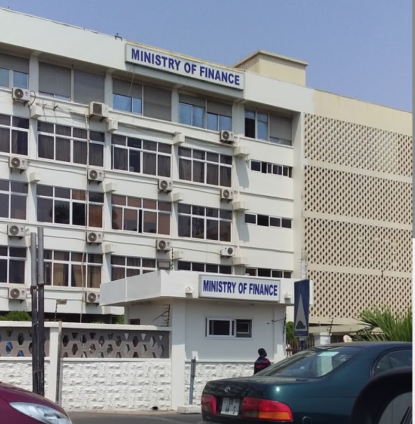
The Ministry of Finance says Ghana continues to be categorized as a ‘Lower-Middle Income Economy’ based on widely-recognized classification of the World Bank and the United Nations.
The Ministry, in a statement by its Public Relations Unit, said publications in the media that Ghana had been downgraded as a low income country by the International Monetary Fund (IMF), in accordance with its latest Fiscal Monitor, was incorrect because the IMF Fiscal Monitor did not classify countries by income levels.
It said the IMF instead analysed latest public finance developments, updated medium-term fiscal projections, and assessed policies to put public finances on a sustainable footing.
The statement said the groupings of economies presented in the Fiscal Monitor's Methodological and Statistical Appendix served an analytical purpose only.
“In this appendix, Ghana is conveniently categorised as a ‘Low-Income Developing Country (LIDC)’ like other lower-middle income economies such as Côte d'ivoire, Kenya, Nigeria and others,” it said.
The statement said Ghana's classification in the recent IMF Fiscal Monitor did not change and there was nothing like the country being downgraded.
Government had put in measures including the GHS100 billion ‘Ghana CARES Obaatanpa’ programme to provide fiscal stimulus to drive growth and economic transformation post Covid-19 pandemic, it said.
The country was projected to maintain a positive economic growth of 0.9 per cent in 2020, representing one of the few "pockets of resilience" on the continent, the statement said.
In 2021 and over the medium term, the Government expected GDP growth to average five percent with the deficit to decline to under five percent by 2024,it said.
The Ministry reassured citizens that Ghana was still classified as a Lower-Middle Income Country and was unfortunate that the media houses, which published the news, did not contact the Ministry for verification, neither did they contact the offices of the World Bank and/or the IMF in Ghana for confirmation.
“Public misinformation of this magnitude has serious implications for the international investor community, especially coming on the heels of a major and successful Eurobond issuance two weeks ago,” it added.
Latest Stories
-
Anti-LGBTQ Bill: Forget the rumour mongers, I’m a man of action, and will pass the bill – Speaker
18 minutes -
Women and children among those killed in Sudanese army shelling of wedding celebration
21 minutes -
President Mahama is not sincere with Ghanaians on LGBTQ bill matter – Hassan Tampuli
39 minutes -
Gov’t to establish Prison Industrial Hub to equip inmates with income-generating skills – Prison Service boss
58 minutes -
Alhassan Tampuli donates cement, roofing sheets to support storm victims in Gushegu
58 minutes -
Alhassan Tampuli appeals for urgent support for storm victims in Gushegu
1 hour -
The hypocrisy must stop; pass Anti-LGBTQ+ Bill now – Alhassan Tampuli to Mahama
1 hour -
Imprisonment should be rehabilitative, not punitive – Ghana Prisons boss at UNGA
1 hour -
Ga Adangbe traditional priests petition Mahama over McDan aviation licence revocation
2 hours -
Anti-LGBTQ Bill: NDC’s arrogance is worrying – Hassan Tampuli
2 hours -
Let’s give OSP time to mature, not to scrap it – Hassan Tampuli
2 hours -
Nigeria convicts 386 Islamist militants in mass trials
2 hours -
Djibouti president wins election with 97.8% of vote, state media says
2 hours -
We don’t have mandate to deduct tax from rent allowance of security services personnel – Interior Ministry clarifies
2 hours -
Ablakwa receives Presidential Special Envoy on Reparations to advance global agenda
3 hours