


Audio By Carbonatix
The Chief of Staff, Julius Debrah, has underscored the critical importance of cybersecurity as a pillar of economic stability, stating that Ghana’s financial sector must embed cyber resilience at the core of its operations to safeguard public trust and national development.
Launching the Bank of Ghana Cyber and Information Security Directive (CISD) 2026 in Accra, he noted that as the financial sector becomes increasingly technology-driven, cyber risks now pose significant threats to businesses, investments, and everyday economic activity.
Debrah emphasised that cybersecurity can no longer be treated as a narrow technical issue but must be seen as a strategic priority requiring collaboration among regulators, financial institutions, and industry leaders.
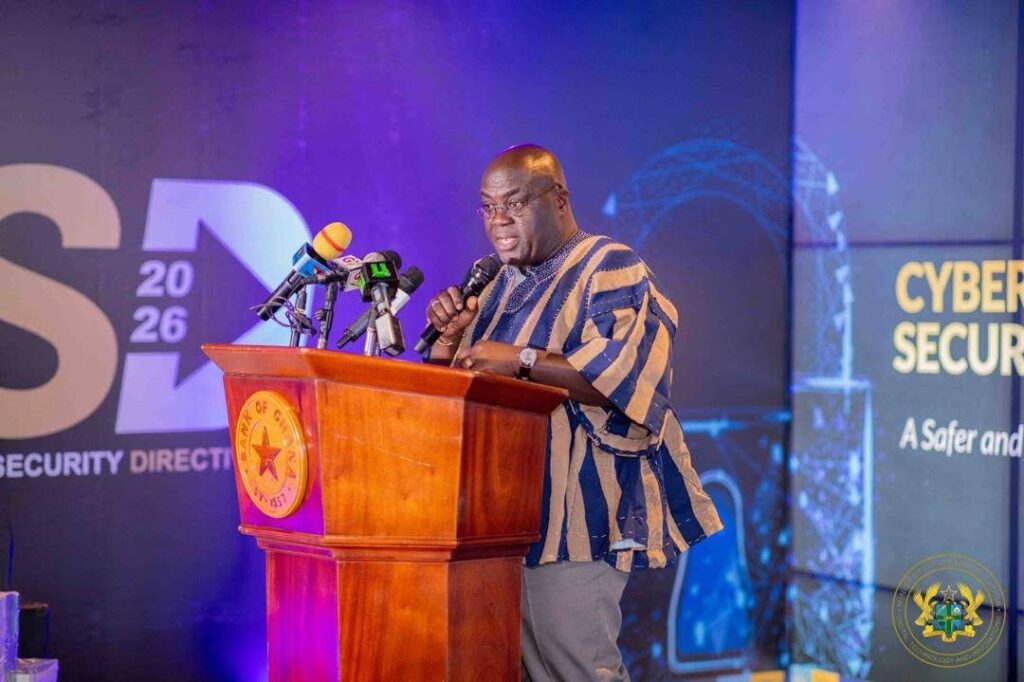
He applauded the Bank of Ghana for establishing a robust regulatory framework and operational structures to enhance preparedness, detect threats, and respond effectively, describing the initiative as a major step towards building a secure and trusted digital financial ecosystem.
The Minister for Communication, Digital Technology and Innovations, Samuel Nartey George, reaffirmed government’s commitment to positioning the Ministry as an enabler of Ghana’s digital economy, rather than merely a regulatory or procurement institution.
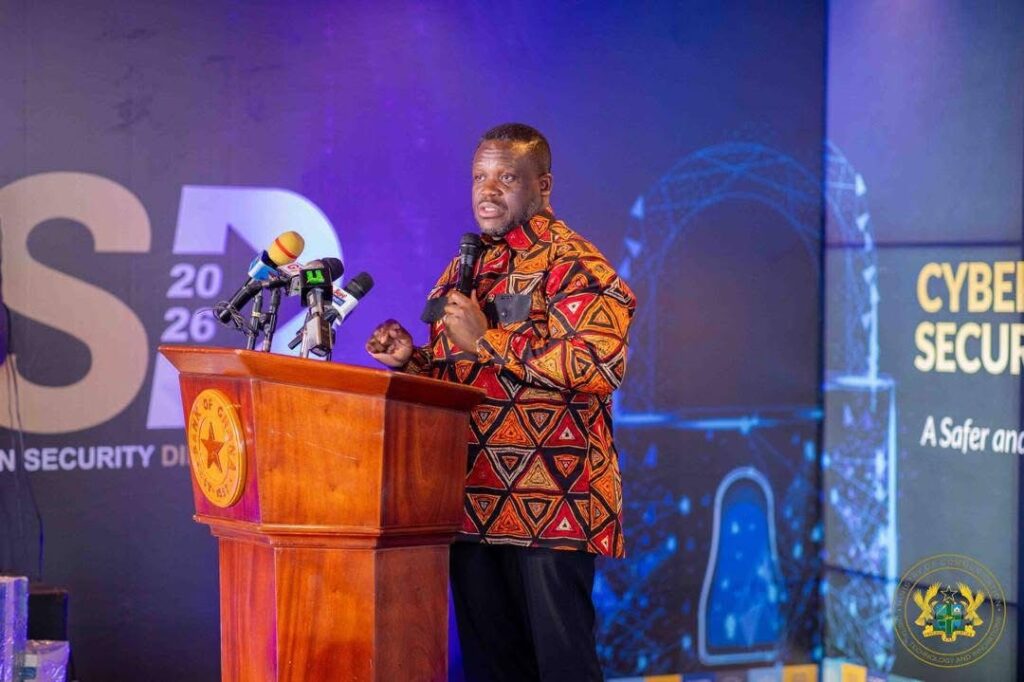
He highlighted the evolving role of technology in banking, noting that financial institutions increasingly see technology not just as an enabler but as the core of their business models.
The Minister commended the Governor of the Bank of Ghana for its leadership in cybersecurity coordination, describing it as one of the most effective sectoral Computer Emergency Response Teams (CERTs) in the country.
He stressed the importance of onboarding all financial technology firms into the cybersecurity framework and announced that all licensed entities under the central bank would soon be designated as Critical Information Infrastructure to strengthen compliance enforcement.
Nartey George further reiterated government policy on data sovereignty, emphasising that sensitive financial data must be stored within Ghana to ensure business continuity and national security, particularly in an era of rising global cyber threats.
He called for stronger collaboration across institutions, noting that collective defence mechanisms remain the most effective way to address evolving cyber risks.
For his part, the Governor of the Bank of Ghana, Dr Johnson Asiama, described the CISD 2026 as a transformative framework aimed at building a safer and more resilient digital financial industry.
He explained that while the central bank’s traditional mandate focused on price stability and financial soundness, the digital era now demands equal attention to safeguarding the confidentiality, integrity, and availability of data that underpins the economy.
He noted that rapid advancements in mobile money, cloud computing, and artificial intelligence have significantly expanded financial inclusion but have also introduced complex cybersecurity risks, including ransomware attacks and systemic data breaches.
The revised directive, he said, moves beyond basic compliance to promote active and collective cyber resilience across the sector.
Key features include governance frameworks for artificial intelligence, stricter cloud computing security protocols, proportional regulatory requirements based on institutional size and risk, and mandatory board-level accountability for cybersecurity.
The Governor also announced the expansion of the Financial Industry Security Operations Centre (FICSOC) to cover all financial institutions, including fintechs and microfinance entities, creating a unified national defence system.
He emphasised that sustaining such infrastructure would require a shared responsibility model across the industry, ensuring continuous investment in advanced technologies and skilled personnel.
Latest Stories
-
Samson’s Take: The rule of law is cheaper before the bulldozer
1 minute -
GRA blames system failure for delay in issuing receipt over passenger’s customs duty
22 minutes -
Livestream: Newsfile discusses World Cup visa scandal, beach demolitions, education strikes, BRICS bid
26 minutes -
NC-PTAs welcomes end of teachers’ strike, urges parents to prepare children for Monday
36 minutes -
Government procures over 2,000 transformers as Ghana’s electricity access hits 89.13% – Energy Minister
1 hour -
UTAG-UG threatens strike on October 19 over unpaid allowance
1 hour -
Let The Constitution direct Chieftaincy to deliver “All Development Is Local”
2 hours -
John Jinapor outlines renewable energy, nuclear power priorities for 2027
3 hours -
Ghana explores centre of excellence for hearing, communication and cochlear implant care
4 hours -
Schizophrenia-related disorders lead mental health cases recorded in Ghana
4 hours -
Dutch authorities enlist Ghana in hunt for fugitive drug lord Bolle Jos
5 hours -
Ghana housing finance conference adopts communiqué to improve affordable housing access
9 hours -
Special Initiatives Minister urges Wa Technical Institute to enrol more girls as EU-backed solar training lab opens
9 hours -
In the matter of my first year at the Bar
10 hours -
ActionAid Ghana calls for an end to child marriage, greater investment in girls’ rights
10 hours