

Audio By Carbonatix
Ghana’s long-standing power challenges, popularly known as dumsor, may soon see improvement as the Ministries of Energy in Ghana and Switzerland join forces to address the country’s renewable energy needs. The initiative forms part of efforts under Article 6.2 of the Paris Agreement.
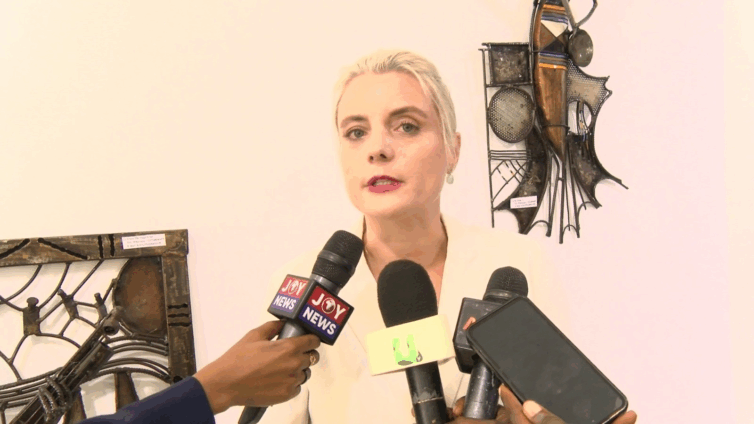
At the launch of the National Clean Energy Programme in Accra, the Swiss Ambassador to Ghana, Togo, and Benin, Simone Giger, explained the agreement between the two ministries to install PV solar panels across Ghana.
“Our two countries have signed a bilateral climate agreement some five years back. Under that climate partnership, Switzerland actually finances quite a few projects in the field of clean energy in Ghana, helping assist Ghana in transitioning to more renewables and cleaner energy.
What happened today is actually a new programme under that framework, and it aims to mobilise about 200 million US dollars, including private sector funding, for investments in solar panels on the roofs of both commercial and private buildings – and we are talking about 4,000 of these installations.”
The Director of the Climate Change and Ozone Directorate at the Environmental Protection Agency, Felix Addo Okyireh, reaffirmed the government’s commitment to advancing the country’s renewable energy agenda, as the Ministry of Energy and Green Transition assures its continued support.
“So, we have the bilateral with the Swiss Government and then also with the private sector. Now, currently, before this launch, effort has been made. We have started developing certain clean products such that the consumption of fossil fuel may go down.
For instance, we talk about the e-vehicle, electronic vehicle or buses that you see around, which we are hoping that it will be developed more, we'll get more. The Ministry of Energy and Green Transition has assured us that by 2030, we'll get more to address this issue.”
The Managing Director of Swiss-based PV company, the KLIK Foundation, Michael Abrokwaa, also explained the organisation’s role in driving Ghana’s green transition.
“So we've defined the amount of power. We are using $60 million to leverage $200 million. So $140 million would be coming from the private sector whilst KLIK will be pumping in $60 million.
We are starting now. So as of now, projects have started, have kicked off. I've already signed agreements with a lot of installers and therefore this week, for instance, we’ll be going around to look at some of the installations that are happening.”
Ghana’s energy landscape is gradually transforming, with the solar PV installations expected to provide a sustainable solution to the country’s persistent energy challenges.
Latest Stories
-
We can tackle multiple priorities – Sam George defends Anti-LGBTQ Bill push
11 minutes -
Statement: Ghana Chamber of Mines’ Response to Claims in Joe Jackson’s “Ananse Stories about the Economy of Ghana”
12 minutes -
GES opens 2026 teacher recruitment for licensed B.Ed graduates
15 minutes -
Ghana must value skilled trades, build resilient learners — Ibn Chambas
23 minutes -
Ghana must rethink education around relevance, resilience and responsibility — Ibn Chambas
26 minutes -
Prince Harry faces defamation lawsuit from charity he co-founded
28 minutes -
South Korea deploys thermal cameras to track escaped zoo wolf
29 minutes -
Calls for royal meeting with Epstein survivors grow ahead of US visit
33 minutes -
Ibn Chambas advocates blend of technology and human values in education
34 minutes -
UMA improves healthcare access in Asutifi North with GH₵700k ‘Kim Taylor Legacy’ Walkway
39 minutes -
Scholarships Authority and Fanaka University offer sponsorship for procurement and supply chain studies
42 minutes -
Bisa Kdei drops new single ‘Go N Look’ featuring Medikal
48 minutes -
Benin facing rising terrorism in north as French military presence faces growing criticism
50 minutes -
UEW Public Lecture Series 2026: Education debate ‘about the soul of Ghana’s future’ — Dr Ibn Chambas
50 minutes -
EU fingerprint and photo travel rules come into force from today
1 hour