

Audio By Carbonatix
A Community-based Sickle Cell Disease screening project has been launched in Accra to aid the early detection of the disease in children at birth.
The project will establish community-based sickle cell clinics which will employ innovative technology to do rapid diagnosis at the point of care; with just a drop of blood and results detected in ten minutes.
Dr Akosua Agyeiwa Owusu-Sarpong, Greater Accra Regional Director of Health Services, who launched the project, said the approach will ensure the screening of more babies for sickle cell at birth and provide the needed care to prevent complications and early mortalities.
She said undiagnosed sickle cell diseases were associated with a lot of misconceptions, especially in rural communities with some even attributing it to the commission of adultery by the mother.
The project is on the theme, “Sickle Cell Diseases: early screening, early interventions, better outcomes.”
Dr Afua Commey, acting Programme Manager of the Non-Communicable Disease Directorate of the Ghana Health Service, said data from the GHS showed that between 2021 and 2023, over 41 thousand sickle cell cases were recorded in health facilities.
“This is a key issue that needs to be addressed, as a country we need to put our resources together so that ultimately, we can have the cases detected early,” she said.
She said Ghana needed to pay critical attention to the awareness creation and prevention of sickle cell disease to help improve the conditions of persons living with the disease.
Dr Commey said although there were some services offered to persons living with the diseases, “the component about genetic counselling is extremely limited, the newborn screening that we need to highlight exists on a very limited scale.”
She emphasised that more needed to be done for persons living with sickle cell disease and boost the knowledge base of primary healthcare workers.
Professor Issac Odame, Pediatric haematologist at the hospital for sick children in Toronto, Canada, said presently, one in every 50 children born in Ghana would have a sickle cell disease, which translates to about two per cent of the population.
“In Ghana, 15 thousand children are born with sickle cell disease every year, the reason we do not see them is that the majority die before age five, in most cases, parents do not even know that their child died of Sickle cell,” he said.
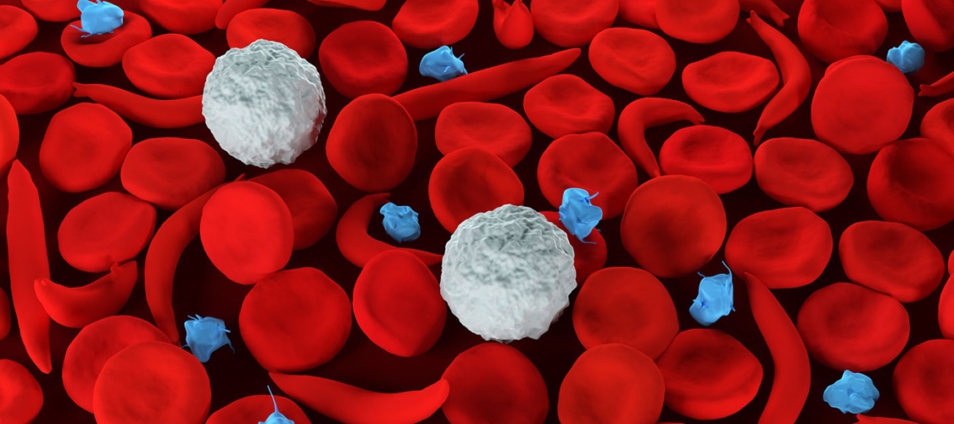
Sickle cell disease (SCD) is an inherited blood disorder passed down from a parent’s genes. It causes the body to make abnormal haemoglobin; the protein in red blood cells that carries oxygen to all parts of your body.
Someone with SCD body’s tissues and organs do not get enough oxygen, healthy red blood cells are round and easily move all over the body. The red blood cells are hard and sticky, they are shaped like the letter C (and like a farm tool called a sickle).
These damaged red blood cells (sickle cells) clump together. They cannot move easily through the blood vessels as they get stuck in small blood vessels and block blood flow.
This blockage stops the movement of healthy oxygen-rich blood. This blockage can cause pain. It can also damage major organs.
Latest Stories
-
Ghanaians were misled- NPP accuses NDC of politicising Anti-LGBTQ bill
7 seconds -
Photos: Mahama receives full state welcome in Paris ahead of talks with French President Macron
22 minutes -
Deputy Health Minister endorses Women in Medicine Fellowship
22 minutes -
Duncan Amoah pushes for Consumer Protection Bill amid VIP fare hike
34 minutes -
LMWG backs Damang lease award to E&P, demands transparency and results
39 minutes -
Volta Chiefs condemns EOCO over alleged disregard for court ruling in Council of State member case
40 minutes -
Matthew Perry’s stepmother says ‘Ketamine Queen’ should get maximum sentence
40 minutes -
Northern Regional Police Command intensifies anti-drug operations, arrests 217 suspects
42 minutes -
The architect of a healthier Ghana: Mahama’s vision and legacy in primary healthcare
44 minutes -
Israel carries out large wave of air strikes across Lebanon
49 minutes -
BBC upholds complaints over racial slur in Baftas broadcast
49 minutes -
Kukurantumi set to host 2025/26 Women’s FA Cup Final as Hasaacas Ladies face Army Ladies
50 minutes -
Where the law stops: Torture, power, and the failure of prevention in Ghana
50 minutes -
Only 6% of imports insured locally despite mandatory policy – GSA raises concern
55 minutes -
IndomieFest Accra 2026 delivers Ghana’s premier family festival at Easter
1 hour