

Audio By Carbonatix
The Ghana Health Service has partnered with a Finland-based health firm, Aqsense to introduce a new rapid malaria testing drive using saliva. This new method will create a new non-invasive screening test to detect malaria by using saliva samples.
The new diagnostic method is expected to replace the commonly used blood tests that require skin pricks.
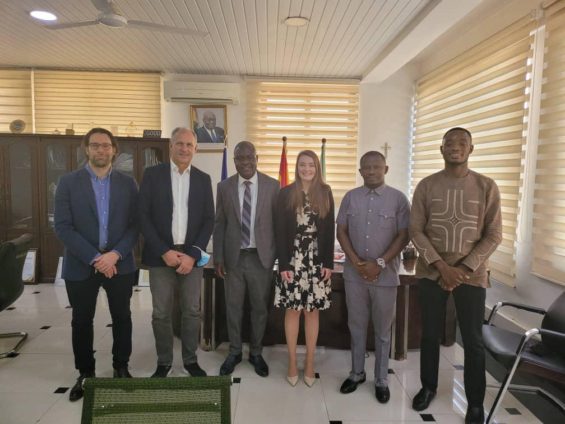
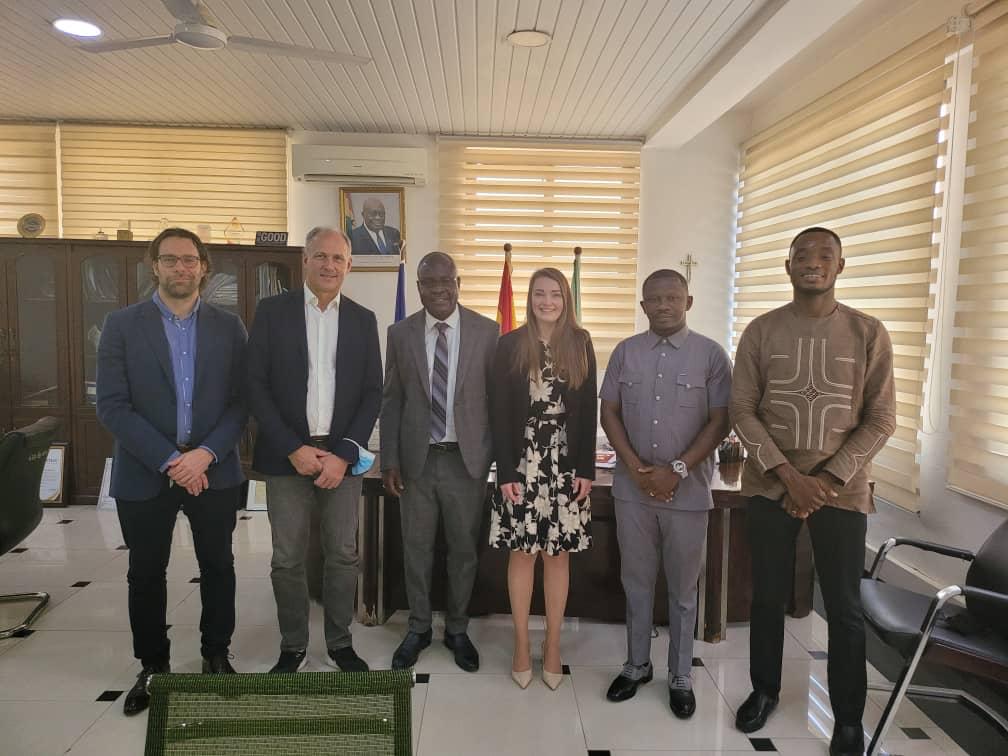
Chief Executive Officer and co-founder of Aqsense, Timo Teimonen are both in the country to hold talks with the Noguchi Memorial Institute for medical research and the Food and Drugs Authority on ways to have the method formally introduced into the country.
He revealed plans are underway to introduce the high-tech testing method in Ghana.
According to Aqsense, the new test requires spitting into a tube and can be performed outside clinical settings.
The Head of Laboratory at Aqsense Health, Wilhelmina Lehti, explained how the testing is done.
“Malaria is like a big iceberg that we’ve always chipped away at on top, above the waterline. But it’s the bottom of the iceberg, this reservoir for transmission that we don’t understand because it’s a population that, until now, we could not see. This test takes us below that water line, so we can see how big the reservoir is,” she noted.
The saliva test is designed to identify an essential protein required by Plasmodium falciparum parasites for survival. This is intended to address the issue of acquired mutation of the malaria parasite.
It detects female parasites circulating in an infected person who does not display any symptoms but has the parasite and could potentially develop the disease within a week.
Chief Executive Officer of Equity Health Insurance, Elton Afari emphasized the need to roll out this new testing to help improve healthcare in the country.
“Our desire is to work towards bringing this testing kit to Ghana and help address the impact of malaria on the populace and we are optimistic this product will help deal with malaria especially in the rural areas where access to laboratory services is hard to come by,” he added.
Early detection of malaria is expected to enable early treatment as well as prevention and further transmission of the disease.
A UNICEF report in 2020 noted that malaria is responsible for approximately 1-3 million deaths per year.
Of these deaths, the overwhelming majority are in children aged five years or younger, and 80-90% of the deaths each year are in rural sub-Saharan Africa. Malaria is the world’s fourth leading cause of death in children younger than age 5 years.
According to a report from Severe Malaria Observatory, an online site for records on malaria in Ghana, with 2% of global malaria cases and 3% of deaths, Ghana is among the 15 highest-burden malaria countries in the world.
Between 2016–2019, however, Ghana made significant progress in malaria control – cases decreased by 32% (from 237 cases per 1000 of the population at risk to 161 cases), and deaths decreased 7% (from 0.4 per 1000 of the population at risk to 0.37).
Latest Stories
-
Health Ministry launches World Health Day 2026, urges science-based action
10 minutes -
MMFL anchors MTN Group’s fintech push in Ghana
19 minutes -
Ghana’s economy shows recovery signs, but risks persist – S&P maintains stable outlook
36 minutes -
SWAG commemorates its 8th anniversary with a public lecture
38 minutes -
Ibrahim Mahama claims Police Commander failed to stop alleged assault
41 minutes -
Damang lease award to E&P followed due process — Minerals Commission
52 minutes -
Today’s Front pages: Wednesday, April 8, 2026
54 minutes -
Julian Opuni reaffirms Fidelity Bank support for industry-led skills training at DTI Berekuso campus
1 hour -
CAF President arrives in Dakar to meet Senegalese President, football authorities over AFCON title saga
1 hour -
Pastor arrested over viral threats against Vice-President
1 hour -
2026 Success Africa Summit: MTN’s Adwoa Wiafe challenges youth to act with purpose, not just pursue titles
1 hour -
Nurse laureate launches Cancer Care Africa Foundation to tackle late diagnosis, workforce gaps
2 hours -
Ghana to lose GH¢18.15bn in revenue by 2027 from abolishing Covid levy, E-levy – CPS study
2 hours -
Reintroduce scrapped taxes to close revenue gap – Tax expert
3 hours -
GRA applauds CPS study, urges continuous policy scrutiny
3 hours