

Audio By Carbonatix
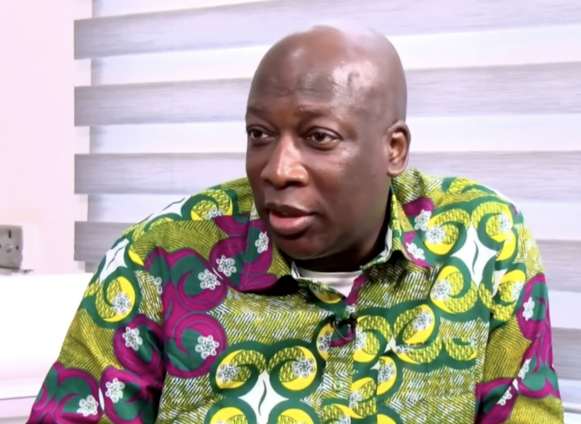
Business executive and former Unilever Executive Vice President Yaw Nsarkoh says the difference between order and chaos in society lies not in genetics but in consequences.
Speaking on Joy News’ PM Express on Tuesday, he used the example of taxi drivers in Accra and Singapore to illustrate his point.
“I often point out to people that we talk about chaos in our societies. Why is it that when you take the same people, take the taxi drivers of Accra, put them all on a ship, and ship them to Singapore, give them cars, and suddenly, they all obey the law.”
“Why? Because there are cameras. There’s a consequence. If you break the law, they know what the law is. It is communicated in ways that everybody understands, so they are not genetically disorderly.”
For him, the issue is the environment created by leadership and institutions.
“If you create a permissive environment in which there is impunity, then what happens?”
He cited everyday examples of what he describes as normalised lawlessness.
“I spoke about it yesterday, a pastor. I’m going to Kumasi. I know how long it is. Somebody says that he’s having an all-night service, and then he blocks the road for six hours, and there’s no impunity. There’s just total impunity.”
He questioned the absence of consequences.
“What was the consequence? You are the media people. You tell me it’s just gone. So next time another person does it, we do the same.”
He extended the argument to property rights and weak enforcement.
“Somebody is building a house. It gets broken down. You’re looking for somebody even to report it to.”
He recounted raising such concerns with a senior government official.
“You do as I have done before, to a very senior person in government at the time, says to me, this is a real problem. It’s happening everywhere. It even happened to my sister. That’s the end of the matter.”
Even the courts, he suggested, do not offer a timely remedy, stressing, “You take it to court. It stays there for seven years.”
For Mr Nsarkoh, these are not isolated incidents but structural failures. “So these are the fundamental issues, and we need bipartisan consensus.”
He argued that without political agreement on core national principles, reform will remain elusive.
“So my last point in terms of solution is that we cannot continue to run the Santa Claus democracy, with this over monetisation, with the political vehicles that are called political parties that are no longer truly accountable to the people of Ghana, these are elite enterprises now.”
Latest Stories
-
Bear with us over temporary outages as ECG begins transformer upgrade programme – Energy Ministry
25 minutes -
President Mahama has not broken promise on anti-LGBTQ bill — Akwatia MP
58 minutes -
Education Minister promises swift fix to Aburi Girls’ SHS water crisis
1 hour -
Top Australian soldier charged with war crimes to remain in jail on remand
1 hour -
US journalist Shelly Kittleson released after kidnap in Iraq, officials say
1 hour -
Starmer to visit Middle East after US and Iran reach ceasefire deal
1 hour -
Telcos and regulators are failing Ghana on Mobile Money fraud
2 hours -
Discussions on petroleum taxes review ongoing with Finance Minister – Jinapor
2 hours -
BMW Club Ghana partners National Road Safety Commission for “Stay Alive” Easter road safety campaign
2 hours -
Health Ministry launches World Health Day 2026, urges science-based action
2 hours -
MMFL anchors MTN Group’s fintech push in Ghana
2 hours -
Ghana’s economy shows recovery signs, but risks persist – S&P maintains stable outlook
3 hours -
SWAG commemorates its 8th anniversary with a public lecture
3 hours -
Bekwai MP supports community projects with over 400 bags of cement, streetlights and cash during Easter
3 hours -
Ibrahim Mahama claims Police Commander failed to stop alleged assault
3 hours