

Audio By Carbonatix
For almost 2 decades, both prominent political parties in the country, NDC and NPP, have failed the country when it comes to managing the electrical power supply.
Each party has come out with very glittering manifestos to address certain basic needs such as water, sanitation and electricity power supply and yet we are still barricaded in the same situation, sor dum, sor dum.
The poor management of electrical power or energy has been ‘poli-monicize.’ All we hear and are left with is a blame game. It is almost comic – Ghanaians now ‘bet’ in the blame game, and the prize? Sky-high electricity bills taxed to the bone. Every new government arrives armed with a scandal exposé kit, eager to paint the other side dirty while polishing their own image. But let’s be honest—they’ve all had their turn in the mud. None can claim a clean slate.
Electricity, as we all know, is a fundamental pillar of economic growth in every country. You simply can’t do without it—you can’t plan, you can’t work, and you certainly can’t achieve meaningful development without it.
Until we strip partisan meddling from our system—especially when it comes to basic utility services—we’ll keep playing the same old game of politricking and musical chairs every time a new government takes office.
While we commend the government's recent renewable energy initiatives, especially for island communities, we must ask: as the second phase of fossil fuel exploration unfolds, have communities themselves, not just their “leaders,” been genuinely engaged and informed? What safeguards are in place to ensure this phase ends harmful practices like gas flaring, which continue to endanger health and the environment?
If the gas is tied to the electricity supply chain, then why not explore cleaner, safer alternatives? Why not invest in decentralized solutions like solar-powered street lights to illuminate our roads, improve safety, and reduce dependence on polluting energy systems?
Ghana, at the age of 68 as a country, should not still be wobbling over how basic needs such as water, electricity and sanitation management should be handled.
It looks like Ghana finds it very difficult to equate the propensity and importance of other sources of electrical power (Renewable Electrical Energy) to the hydroelectric power, which nearly 90% of the country depends.
A lot of talks, manifestos and conferences have been organized on this particular area, to relook at other sources of power. Nevertheless, very little is happening on the ground.
Every government that comes into power presents a long chain of strategies to augment the country's electricity supply, often promising to incorporate renewable resources. But year after year, very little is achieved. Most plans never leave the drawing board.
Meanwhile, in more daring and forward-thinking countries – where electricity is rightly treated as a basic necessity, such matters are neither up for endless political debate nor shamefully politicised in parliament. They act. They invest. And they build systems that work.
It is high time Ghanaians – corporate bodies, institutions, communities, families, and even individuals – take the power supply situation into their own hands.
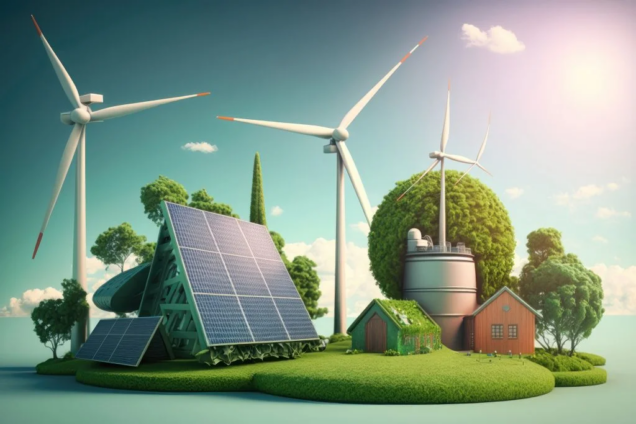
We must begin to seriously explore and invest in alternative renewable energy sources such as solar, wind, hydropower, and biomass.
These resources are not futuristic fantasies. They are viable, valuable, durable, and sustainable means of generating power. Indeed, the benefits are profound: investing in renewable energy can stimulate economic growth, reduce taxes, and ultimately lower electricity tariffs for everyone.
For far too long, we’ve relied on governments that come and go – each borrowing millions to patch a broken system without committing to real, long-term solutions. Meanwhile, we remain at the mercy of erratic power supply and skyrocketing utility bills.
But we are not helpless.
Ghanaians have the capacity and creativity to break this cycle. We must rise to the challenge and reclaim our energy future. Renewable energy is not just an alternative – it is our opportunity for independence, innovation, and long-term resilience.
Let’s stop waiting.
Let’s take the power back.
Take up the power. Generate your own power. Ghana deserves better – and so do you.
Nicholas Aazine, SVD
Coordinator: Justice, Peace and Integrity of Creation (JPIC)/
VIVAT-Ghana
A Member of the Divine Word Missionaries (SVD)
A Catholic Missionary Society, serving God through Humanity
Email: nicholasbetol@gmail.com
Latest Stories
-
CGI orders motorbike training at tactical school in Kyebi
8 minutes -
Sachet water producers in Berekum defy gov’t directives, increase prices
10 minutes -
Critical commodities stuck at port, CSOs warn of family planning crisis
12 minutes -
Gender Ministry mourns victims of Volta Lake boat tragedy, deploys support for affected families
14 minutes -
MPs undergo training on human trafficking and gender dimensions
14 minutes -
Don’t expect instant relief – COMAC CEO warns fuel price drops will be gradual
17 minutes -
GIS to unveil comprehensive plans to enhance officers’ welfare and infrastructure
34 minutes -
Right move, wrong timing? – COMAC CEO questions govt’s delay on fuel price relief
36 minutes -
IMF urges Central Banks to keep inflation in check
59 minutes -
NRSA stands firm on Toyota Voxy ban despite transport operators’ opposition
1 hour -
H. Kwasi Prempeh raises concerns over Supreme Court’s handling of OSP constitutionality case
1 hour -
Global childhood cancer cases soar
1 hour -
Airline pilots fear retribution over refusing to fly in Middle East, aviators’ group says
1 hour -
Police intensify security in Bosomtwe communities after deadly clash
1 hour -
Corporate Income Tax contributes highest to 2025 petroleum revenue
1 hour