

Audio By Carbonatix
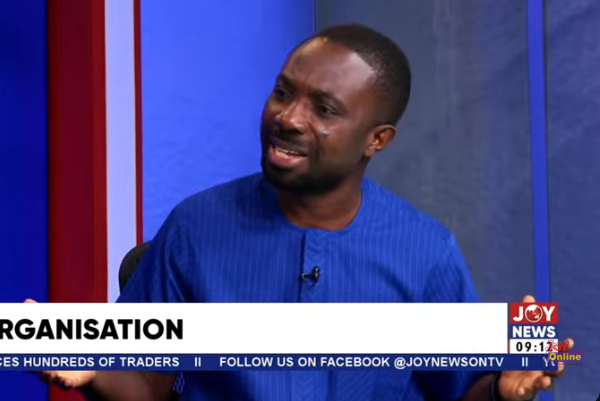
The Director of Communications for the Bawumia Campaign Team, Dennis Miracles Aboagye, has argued that Ghanaians are facing a higher cost of living than in 2024 despite improvements in key macroeconomic indicators.
Speaking on JoyNews’ AM Show on Tuesday, 7 April, Mr Aboagye said both data and everyday experiences suggest a growing disconnect between economic statistics and the realities faced by citizens.
“The truth of the matter is that the Ghanaian today is worse off in terms of their cost of living than they were in 2024. It’s the data. There’s no lie about that,” he stated.
He acknowledged that indicators such as inflation, fuel prices and the exchange rate have shown signs of improvement but maintained that these gains have not translated into relief for ordinary households.
“The dollar has come down. Inflation has come down. Fuel has come down. And that is true… but there’s a disconnect. And we’re only drawing the government’s attention to that disconnect because it may not have realised,” he said.
Mr Aboagye questioned why improvements in macroeconomic indicators had not been reflected in the daily lives of citizens.
“Why is it that for the first time in this country, we see all these macroeconomic indicators improving drastically, massively, and yet it’s not reflected in our lives? There is a problem. Can you look at it?” he asked.
He noted that earlier concerns raised by the People’s Forum in December 2025 about rising living costs were initially dismissed but, according to him, recent developments have reinforced those concerns.
“Today, the reality is hitting us. If you like, go to the market and ask them; they’ll tell you. They cannot afford electricity. They cannot afford water,” he said.
Mr Aboagye also highlighted recent increases in utility tariffs as a major burden on households.
“In 12 months, you have a government that increases electricity by 24%. Then you have water increased by 15%. And those are the things that we’ve been speaking about all day long,” he noted.
He further pointed to rising fuel prices and their impact on transport fares, arguing that these increases have worsened economic hardship.
“This morning, as we speak, transport fares have gone up… I have to be able to afford fuel, pay my overhead, and maintain my buses,” he said.
Comparing past and current conditions, he questioned the government’s claims of economic progress, stating that despite improvements in inflation and exchange rate figures, living costs have continued to rise.
Mr Aboagye maintained that rising living costs remain the most pressing concern for many Ghanaians despite reported improvements in macroeconomic performance.
Latest Stories
-
World Athletics to introduce standalone World Marathon Championships from 2030
17 seconds -
Africa’s voice in global journalism grows as funding, AI and misinformation shape newsrooms
2 minutes -
First Atlantic Bank holds Annual General Meeting, reports strong growth and bold 2026 outlook
4 minutes -
Uganda confirms 2027 AFCON dates
16 minutes -
40 convicted in Northern Region crime crackdown
16 minutes -
‘We’re days away from parts of the world experiencing actual shortages:’ Eric Nuttall on energy
26 minutes -
‘I’m Obroni in every country’ – Coco Blasian on music, survival and making Accra home
27 minutes -
IMANI wants NIC to probe possible conflicts of interest in reinsurance arrangements
39 minutes -
First Atlantic Bank strengthens balance sheet as net interest income surges 67%
43 minutes -
Choplife Gaming donates to Korle Bu Radiotherapy unit for Women’s Week 2026
44 minutes -
Would President Mahama have reduced cocoa prices if this were an election year ? – Annoh Dompreh asks
47 minutes -
Passion, not survival, should drive career choice – Dr Kofi Annan
47 minutes -
Climate change, pollution and overfishing push White Volta fishermen to the brink
48 minutes -
IMANI demands review of SIGA directive steering SOEs toward SIC placements
53 minutes -
Climate change and pollution threaten livelihoods of White Volta fishermen
1 hour