

Audio By Carbonatix
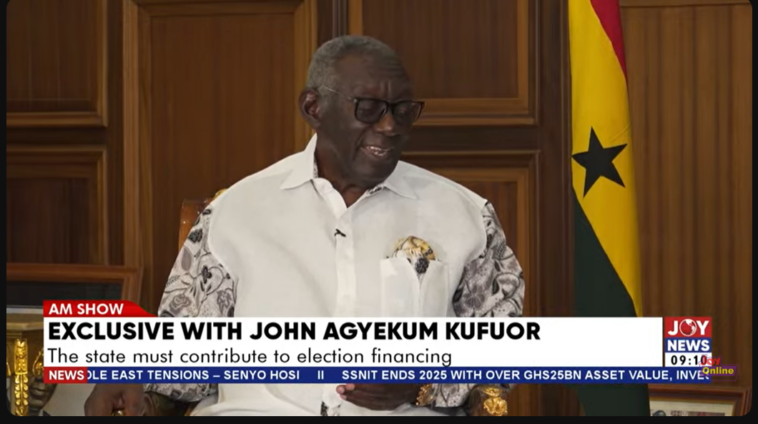
Former President John Agyekum Kufuor has blamed Ghana’s slow private sector growth and low public sector wages for creating conditions that make corruption almost inevitable.
Speaking in an interview on the AM Show, Mr Kufuor said the two problems feed into each other, creating a damaging cycle that undermines governance and national development.
“Because we do not promote the private sector the way we should, and because the wages are not good, these two factors combined render our system perversely corrupt,” he said.
The former president argued that Ghana sits on enormous untapped potential, including fertile agricultural land, abundant water resources, and rich natural assets, yet struggles with poverty and poor governance outcomes because the system fails to convert these resources into broadly shared wealth.
Mr Kufuor also criticised what he described as a culture of petty jealousy that hampers local entrepreneurship.
He noted that Ghanaian businesspeople seeking licenses often face bureaucratic delays lasting years, while foreign nationals, including Lebanese and Indian investors, navigate the same processes with relative ease.
“People in politics might think this guy gets so much money that he might threaten the politics of the land,” he said, implying that some political actors may deliberately frustrate the growth of wealthy, independent local entrepreneurs to limit their political influence.
According to Mr Kufuor, the failure to nurture a strong private sector has broader consequences, leaving the country unable to generate the domestic wealth necessary to fund quality governance and improve living standards for ordinary Ghanaians.
Latest Stories
-
Keep the money in Ghana – Gov’t enforces local cargo insurance
60 minutes -
US Army veteran charged with leaking classified information to journalist
1 hour -
Dr. Dre joins Forbes billionaires list as second-richest hip-hop artist with $1 billion fortune
1 hour -
Trump administration cannot nix legal status of 5,000 Ethiopians, US judge rules
1 hour -
Libya announces new oil and gas discoveries with three major energy companies
2 hours -
Oil rises as investors remain wary US-Iran ceasefire will open supply flow
2 hours -
Police arrest suspect over church threat video
4 hours -
Eight appear in court as police intensify crackdown on illicit drugs in Tamale
4 hours -
Motorist remanded in custody for hitting four-year-old girl
4 hours -
Mobile money vendor robbed at Ziope
4 hours -
Benin’s Finance Minister Wadagni seeks his own mandate in election
4 hours -
GNFS retrieves body of unidentified man from Asylum Down drain
5 hours -
CAF’s Motsepe to visit both Senegal and Morocco amid AFCON fallout
5 hours -
Edmond Boateng takes up secretary role at Honorary Consular Corps of Ghana
5 hours -
Armed men kill 20 and abduct others in northwestern Nigeria villages
5 hours