

Audio By Carbonatix
The Economic Governance Platform (EGP), a coalition of civil society organisations, which focus on economic issues, is advocating for a national conversation on sustainable debt management as the country strives for economic recovery.
It said the cyclical International Monetary Fund (IMF) bailouts over the years would continue to persist if managers of the economy do not adopt pragmatic measures geared towards ending the over-reliance on borrowing to manage the economy.
Mr. Abdul Karim Mohammed, Coordinator of EGP, said Ghana’s subscription to IMF programmes over the years were driven by a debt crisis and stressed the need for a broader stakeholder consultation to end the perennial unsustainable debt levels.
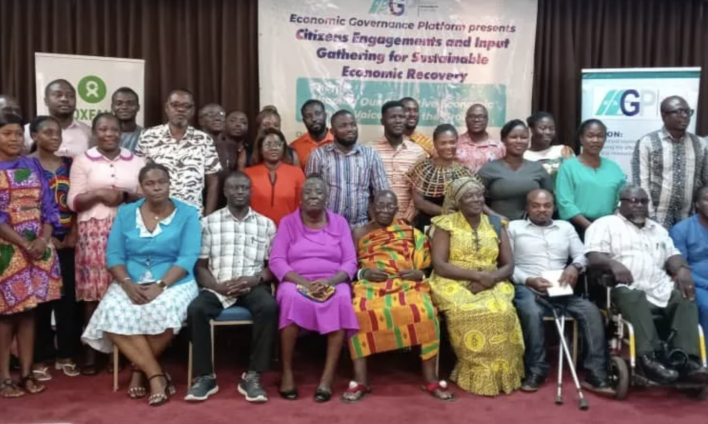
He was speaking at a citizens’ engagement and input gathering for economic recovery in Kumasi ahead of a national forum to discuss how to end the cyclical IMF bailouts as a country.
The goal was to collate inputs from participants drawn from local civil society organisations, the private sector, organised youth groups, students, and the media.
Participants were exposed to a comprehensive overview of the current IMF programme and its implications on national development, especially in the development sectors.
“We need to have a conversation as a nation on sustainable debt management.
“If you look at the number of times that we have been to the IMF, it has mostly been influenced by a debt crisis,” Mr. Mohammed said.
Seeking bailouts from the IMF 18 times as a country, according to him, is a cause for worry and called for prudent economic policies that would minimise borrowing, which had been the cause of the numerous IMF bailouts.
“We need to borrow for productive activities that will give us returns to enable us to pay our debt. But if we don’t do that and we borrow for recurrent expenditure or for other purposes for which we are unable to repay the interest, the ordinary citizen will have to pay taxes to defray the debt,” he pointed out.
He said monies spent on servicing debt compared to what was allocated for the delivery of important social services, emphasising the need to do things differently to save the economy from further decline.
“It has been established by both government and the IMF that the solutions that will take us out of the current economic crisis lie far beyond what we are getting from this IMF bailout,” he indicated.
Mr Mohammed said the IMF programme was not a panacea to the challenges facing the Ghanaian economy and that more needed to be done to holistically address the problem.
It is for this reason that the EGP is breaking down the IMF programme to the understanding of citizens and also collating their views on how best to manage the national debt to prevent a return to the IMF in future.
Latest Stories
-
Netherlands Fire Chief in Ghana to support fire safety reforms and market fire prevention efforts
2 hours -
Mason goes on remand for stealing
2 hours -
Gov’t cuts fuel taxes, deploys buses to curb impact of rising fuel prices
3 hours -
Interior Minister calls for intelligence-driven strategy as Ghana strengthens counter-terrorism efforts
3 hours -
Adenta Circuit Court remands Pastor William Gyimah over viral threats against Vice President
4 hours -
“We’ve implemented changes to prevent a repeat of the AFCON final” – CAF President Motsepe
4 hours -
Gov’t orders deployment of Metro Mass buses to cushion commuters amid fuel price hike
5 hours -
Key Indian state polls begin in test for Modi’s party
5 hours -
Playback: Gomoa Easter Carnival in photos
5 hours -
Gov’t orders removal of fuel taxes to ease pump price hikes
5 hours -
“Whatever the decision of CAS, we will respect it” – CAF President Motsepe after AFCON final meetings in Morocco
5 hours -
Emma Ankrah: When waiting becomes part of treatment – Reflections on hospital care
5 hours -
Ghana urges travellers to prepare for new EU border system roll-out
6 hours -
Mahama enforces fuel coupon ban for ministers as cabinet moves to slash fuel taxes
6 hours -
Task force probes strange fish deaths in Tema
6 hours