

Audio By Carbonatix
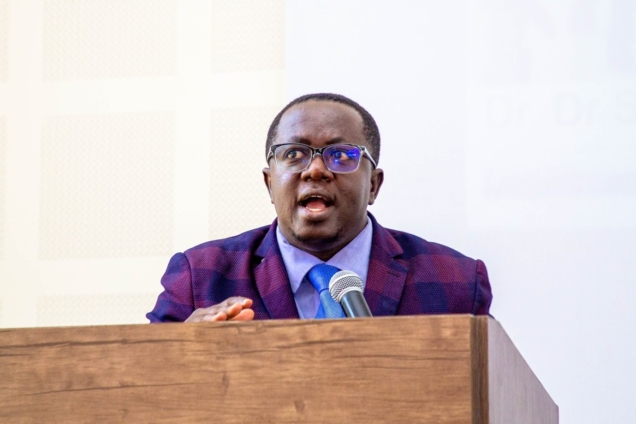
A medical sociologist and migration health researcher at the Kwame Nkrumah University of Science and Technology, Dr. Dr. Seth Christopher Yaw Appiah is advocating a review of Ghana’s migration policies to include climate-induced migration.
He believes the move will address migration issues caused by climate change.
“In Ghana, we have the national migration policy and the national labour migration policy but they don’t focus on how climate change induces migration. There is some silence on that,” he noted.
Speaking at the Historical Ties and Multiple and Recurring Climate-Induced Displacements Study (Histo-MultiClimDis Study) symposium, Dr. Appiah indicated the creation of the Migration Commission will be crucial in overseeing climate-related issues.
“There was supposed to have been the establishment of the Migration Commission similar like CHRAJ they will look at all migration-related issues,” he explained.
The symposium which was under the aegis of the Department of Sociology and Social Work of KNUST was themed: “Post COP28, an integrated and interdisciplinary response to climate migration or immobility and social determinants of health in Ghana.”
The event brought together historians and sociologists to discuss the issue of climate migration.
Dr. Dr. Seth Christopher Yaw Appiah who is the Principal Investigator of the Histo-MultiClimDis Study and senior lecturer at Department of Sociology and Social Work was also worried about the continuous displacement of residents around the Bagre dam.
He says climate mitigation and adaptability responses will lead to the reduction of problems caused by the situation.
“A lot of health effects come out of this Bagre Dam spillages, and it’s become cyclical. But when can we have a minimal effect?
“If we’ve done climate mitigation and climate adaptability responses then the people who would have to move and people who are will be trapped, there will be some social protection interventions for them,” he said.
Other speakers included Professors Samuel Adu Gyamfi from the Department of History and Jonathan Mensah Dapaah from the Department of Sociology and Social Work who explored the phenomenon.
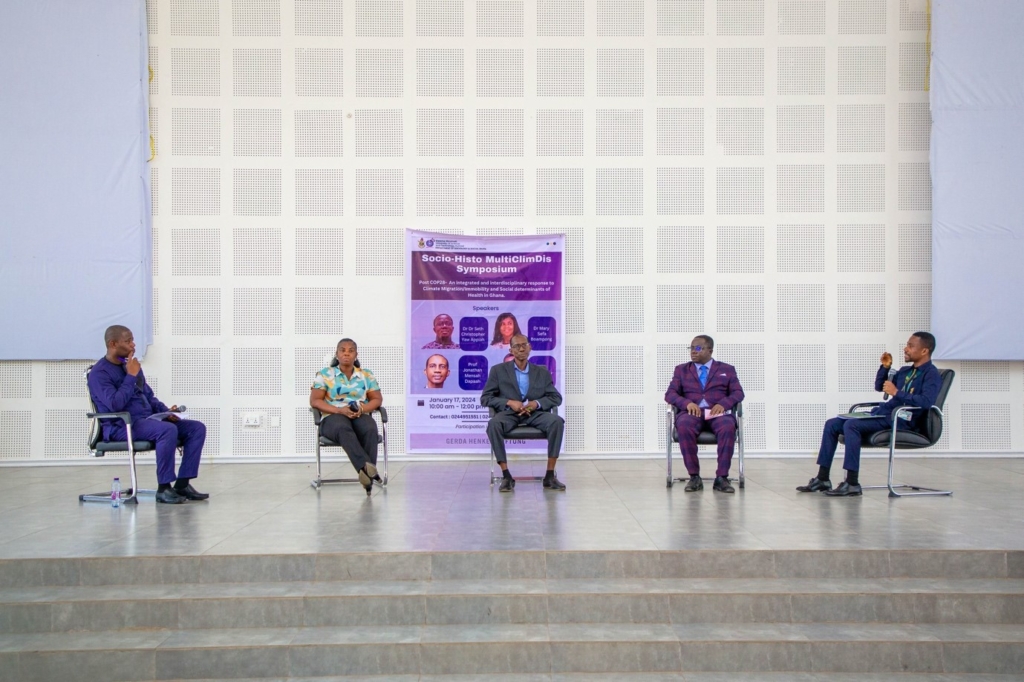
Prof. Jonathan Mensah Dapaah added: “Government and city authorities need to put in place social policies. That will go a long way to help those demographics. Some of them don’t have anywhere to go.”
Prof. Samuel Adu Gyamfi encouraged researchers to delve into the situation to properly tackle the problems associated with the spillage.
“We need our researchers to have longitudinal evidence-based study to know why people are refusing to migrate and if they’re migrating, what’s the nature of response, so we can give the assurances that indeed when they move to this place, they’re assured of their safety,” he said.
The Histo-MultiClimDis study is supported by Gerda Henkel Stiftung Germany.
Latest Stories
-
Rapper Offset injured in shooting near Florida casino, officials say
6 minutes -
Sporting CP vs Arsenal Champions League preview: Where to watch, predicted line-ups, form, coaches’ thoughts
20 minutes -
Real Madrid vs Bayern München Champions League preview: Where to watch, predicted line-ups, form, coaches’ thoughts
26 minutes -
CIB Ghana Post-MPC policy seminar urges action to turn macroeconomic stability into jobs
29 minutes -
Maguire signs one-year contract at Man Utd
32 minutes -
GACL chairman says airport levy to fund projects, completion targeted within 24 months
45 minutes -
Sugar sacks now used to bag cocoa under Mahama government – Annoh-Dompreh raises concerns
50 minutes -
President Mahama will sign LGBTQ Bill when it reaches him — NDC’s Wonder Madilo
50 minutes -
NADMO issues alert on Chlorine gas leak at Baifikrom Water Treatment Plant
53 minutes -
Airport congestion, ageing facilities justify new levy — GACL Chairman
1 hour -
Runway at risk: GACL Chair warns of potential downgrade and sewage disaster at Accra Int’l Airport
1 hour -
Annoh-Dompreh leads Minority Caucus tour to spotlight cocoa sector challenges
1 hour -
Adorye urges government to safeguard fuel supply amid global tensions
1 hour -
Agalga reveals regional airports are bleeding and survive on Accra International Airport subsidies
1 hour -
Western North police arrest 4 suspected fake National Security operatives over alleged mining site raid
2 hours