

Audio By Carbonatix
The Ghana Institution of Engineers (GhIE) has raised fresh concerns over what it describes as persistent regulatory failures and unsafe construction practices, following a series of building collapses across the country.
The concerns come in the wake of a recent three-storey building collapse at the North Industrial Area in Accra, which reportedly claimed three lives and renewed national debate on construction standards and enforcement.
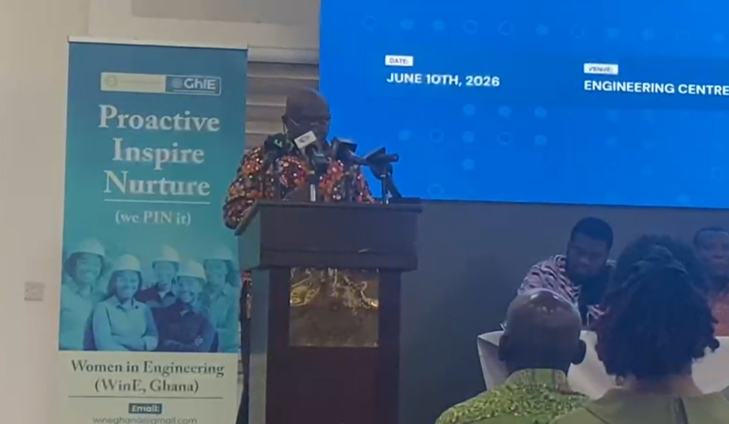
Addressing the media, Chair of the Structures Sub-Division of the Ghana Institution of Engineers, Ing. Joshua Allotey, said preliminary assessments point to multiple contributing factors, including unauthorised structural modifications, changes in building use, and the involvement of unqualified persons in key construction roles.
He warned against attributing building failures solely to environmental conditions, insisting that human and regulatory lapses remain central to the problem.
“In some cases, we observed what is commonly referred to as ‘pancake collapse,’ where a floor fails subsequently under its own weight and lands on the next floor,” Ing. Allotey explained.
He stressed that many of the affected structures were erected without adequate professional supervision, adding that developers are often found to bypass approved regulatory processes.
According to him, although developers are legally required to obtain building permits backed by approved technical documentation, compliance is often ignored in practice, with construction beginning before formal authorisation is granted.
He noted that in some cases, developers assume the role of project managers and engage artisans instead of licensed engineers and architects, a practice he warned undermines structural integrity.
Ing. Allotey also criticised enforcement by some regulatory bodies, citing weak inspection regimes and delays in acting on violations, including breaches of stop-work orders.
“At the same time, enforcement by some state institutions remains weak, with insufficient inspection and delayed responses to violations,” he said.
He emphasised that building safety must be treated as a shared responsibility between developers and state institutions responsible for regulation and oversight.
On environmental factors, the Engineers cautioned that while rainfall, rising groundwater levels and strong winds often coincide with building collapses, they are not the root cause.
Rather, they said such conditions act as triggers that expose pre-existing structural weaknesses, particularly in poorly designed foundations affected by seasonal groundwater changes.
The Ghana Institution of Engineers is therefore calling for urgent reforms, including mandatory stage-by-stage inspections of building projects and formal certification systems for artisans in the construction sector.
The proposals, the group believes, would strengthen compliance, improve quality control, and reduce the incidence of avoidable building failures across the country.
Latest Stories
-
Let The Constitution direct Chieftaincy to deliver “All Development Is Local”
12 minutes -
Ghana explores centre of excellence for hearing, communication and cochlear implant care
2 hours -
Schizophrenia-related disorders lead mental health cases recorded in Ghana
2 hours -
Dutch authorities enlist Ghana in hunt for fugitive drug lord Bolle Jos
2 hours -
Ghana housing finance conference adopts communiqué to improve affordable housing access
7 hours -
Special Initiatives Minister urges Wa Technical Institute to enrol more girls as EU-backed solar training lab opens
7 hours -
In the matter of my first year at the Bar
7 hours -
ActionAid Ghana calls for an end to child marriage, greater investment in girls’ rights
7 hours -
Newsfile to tackle World Cup visa scandal, beach demolitions, education strikes, BRICS bid
8 hours -
UK-Ghana Trade & Investment Summit: Trade Resource Centre to help businesses maximise UK-Ghana trade opportunities
8 hours -
Embassy of Denmark celebrates World Maritime Day
8 hours -
Linking LEAP to productive inclusion could cut extreme poverty by 2030 – UNICEF
9 hours -
Trade Ministry backs use of creative arts to rehabilitate prison inmates
9 hours -
Negotiations with government to continue despite strike suspension – GNAT
9 hours -
‘Ghana cannot afford to waste public resources; every cedi has a job’ – Ato Forson
10 hours