

Audio By Carbonatix
As the world marks the International Day of Zero Waste 2025, environmental advocacy groups Global Alliance for Incinerator Alternatives (GAIA) Africa and the Green Africa Youth Organisation (GAYO) are calling for urgent action against the unchecked dumping of textile waste in Africa. With the theme "Towards Zero Waste in Fashion and Textiles," this year’s observance highlights the devastating impact of fast fashion on the environment, particularly in the Global South.
The global fashion industry produces an estimated 92 million tonnes of textile waste annually. A significant portion of this waste finds its way into African markets under the guise of second-hand clothing donations. Ghana’s Kantamanto Market alone receives approximately 15 million items of used clothing every week—mostly from the Global North. Unfortunately, much of this imported clothing is unsellable due to poor quality, leading to widespread dumping in landfills and illegal waste sites.
Jacob Johnson Attakpah, GAYO’s Project Manager for the Zero Waste Cities Program, warns that the continent is being overwhelmed by textile waste:
“Africa refuses to be at the receiving end of textile waste, especially from the West. The fashion industry must embrace circular design, responsible sourcing, and innovative recycling to move towards true zero waste.”
The consequences of this textile waste crisis extend beyond environmental degradation. In cities like Accra, discarded clothing clogs drainage systems, exacerbates flooding, and pollutes coastal areas. Waves that once carried seashells to Ghana’s shores now dredge up heaps of abandoned garments. The infamous Agbogbloshie Market has become a dumping ground where mountains of unsellable clothing accumulate, worsening pollution levels.
In addition to environmental concerns, the influx of second-hand clothing undermines Africa’s local textile industry. The constant supply of cheap, low-quality imports reduces demand for locally produced fabrics, forcing many artisans and manufacturers out of business.
The trade of second-hand textiles is dominated by developed nations. According to trade data, the top exporters of used clothing in 2023 included:
- United States – $1.06 billion worth of used clothing exports
- China – $681 million
- Germany – $338 million
- United Kingdom – $327 million
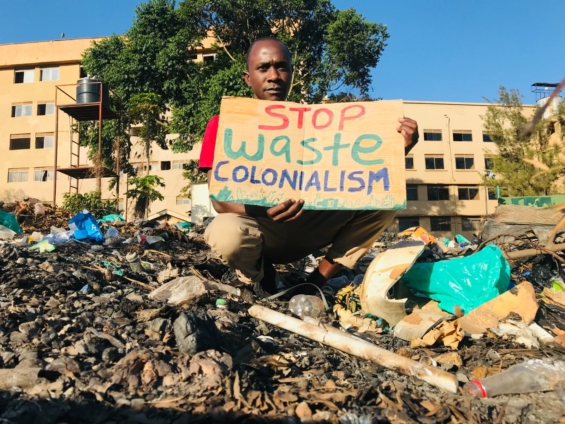
Many of these clothes end up in African countries, where they often become an unmanageable waste problem. Nirere Sadrach, Founder of End Plastic Pollution (EPP) in Uganda, criticizes this practice as "waste colonialism":
“Some countries in the Global North are using the second-hand textile trade as a way to export their waste to poorer countries. The companies producing these items for first-time use must take responsibility for their full lifecycle.”
GAIA Africa and its partners are urging immediate policy interventions to curb the environmental and economic damage caused by fast fashion waste. Their demands include:
- A Ban on Unmanageable Textile Waste Dumping – African governments must prohibit the importation of second-hand clothing that cannot be reused, repurposed, or recycled.
- Extended Producer Responsibility (EPR) – Fashion brands must be held accountable for the waste they generate and implement sustainable end-of-life solutions for their products.
- Investment in Local Textile Industries – Policies should support the growth of Africa’s textile sector, emphasizing sustainability and circular economies.
- Consumer Awareness and Action – Shifting global consumer behavior towards sustainable fashion choices is critical in reducing demand for fast fashion.
Desmond Alugnoa, GAIA Africa’s Program Manager, insists “Africa cannot become a dumping ground for fast fashion’s waste. This is not charity; this is waste colonialism. We demand urgent policies to stop the export of unmanageable textile waste to Africa and to hold corporations accountable.”
Some groups like the Or Foundation is creating a new narrative for Accra’s textile waste problem. The waste that once polluted landfills is now being transformed into sustainable products including laptop stands, speaker shells, and hangers. These products represent just a fraction of what’s possible, as research and development continues. – to be removed.
As the world observes the International Day of Zero Waste, African nations and environmental organizations are taking a stand against the harmful practices of the fast fashion industry. With mounting textile waste threatening ecosystems, economies, and communities, the call for systemic change has never been more urgent. The fight against "waste colonialism" is not just an African struggle—it is a global responsibility.
Latest Stories
-
Bridget Bonnie leads launch of The GH London Mission magazine to strengthen Ghana–Diaspora engagement
5 minutes -
MPs in Australia reject call for under-16s social media ban, backing more flexible powers
6 minutes -
Fuel tanker crash blocks Accra-Kumasi highway; Fire Service warns of explosion risk
11 minutes -
Labour Consultant urges urgent attention to industrial relations amid CLOGSAG strike
13 minutes -
Congo FA President Blaise Mayolas handed life prison sentence for embezzling COVID funds intended for women’s football
22 minutes -
SWESCO alumni alarmed as headmistress is transferred amid alleged political interference
23 minutes -
MiDA moves to transform Volta corridor into agro-industrial powerhouse
33 minutes -
Ablakwa urges stronger regional cooperation to tackle Sahel security threats
35 minutes -
Tamale Water Project to help address northern Ghana’s water shortages – Ghana Water Limited
1 hour -
Sigma Appliances spreads the spirit of Ramadan with food distribution to Madina, Mamobi communities
1 hour -
Oil prices fall and stocks rise after Trump says Iran war ‘very complete’
1 hour -
Ghana-Peru Relations: Foreign Ministry outdoors new book focusing on a Journey of Friendship and Cooperation
1 hour -
Kufuor advocates strict separation of powers to strengthen Ghana’s democracy
1 hour -
Well-structured governance institutions improve efficiency and strengthen democracy – Kufuor
1 hour -
Two Turkish firms to construct water treatment plant for Eastern Accra
1 hour