

Audio By Carbonatix
As global trade dynamics continue to evolve amid escalating tariff conflicts between economic superpowers, Ghana is being called upon to take bold steps to reposition itself as a manufacturing and export leader across Africa.
This was the central message delivered by Michael Kottoh, Managing Partner at economic strategy firm Konfidants, during the 2025 Citi Business Forum held in Accra on Thursday, June 12.
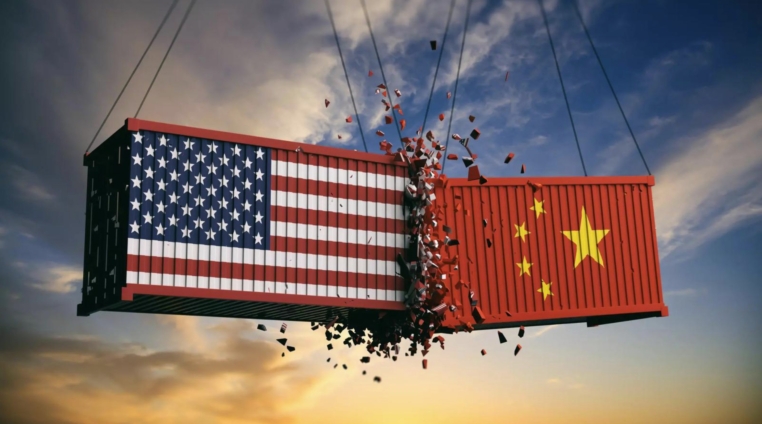
Global trade disputes, particularly those involving the United States, China, and the European Union, have led to an increasingly fragmented supply chain landscape.
But while larger economies grapple with retaliatory tariffs and disrupted trade flows, smaller nations like Ghana stand to benefit from the realignment of international commerce.
“In terms of opportunities, we could seize U.S. niche advantages while rivals pay higher tariffs,” he noted. “Lesotho has been crying a lot, South Africa is complaining a lot—we could potentially, using AfCFTA, attract some of that export.”
The AfCFTA, which came into effect in 2021, has created the largest free trade area in the world by number of countries, covering a market of over 1.4 billion people with a combined GDP of $3.4 trillion, according to the African Union.
One of the most promising sectors for Ghana, Mr Kottoh noted, is the apparel and textile industry, a sector that has historically created thousands of jobs in Africa but has recently seen instability in traditional strongholds like Lesotho and South Africa.
“Lesotho could relocate some of those contracts to Ghana,” Kottoh explained. “So these are potential advantages—but we need to be strategic and understand which product lines, which value chains, which alliances and partnerships are required to take advantage of these.”
Ghana currently exports about $40 million worth of garments annually, but experts say that number could triple within five years if the country invests in industrial parks, worker training, and export-oriented logistics infrastructure.
Despite the encouraging outlook, Mr Kottoh stressed that seizing these opportunities will require more than optimism. Ghana must craft a deliberate, data-driven export strategy that identifies high-potential product categories and builds resilient ecosystems around them.
“We need to be strategic and understand which product lines, which value chains, which alliances and partnerships are required to take advantage of these.”
Mr Kottoh also emphasised the importance of trade facilitation reforms. According to the World Bank’s Logistics Performance Index, Ghana ranks 100th out of 139 countries—a statistic that underscores the urgency of improving port efficiency and customs processing times.
As geopolitical tensions continue to reshape global commerce, Ghana’s ability to adapt and capitalise on shifting trade currents may define its economic trajectory over the next decade.
Latest Stories
-
Families pick Luv Fm Family Party to celebrate Easter Monday with music and more
25 minutes -
Legal and procurement red flags in Ghana Gas insurance change — IMANI
34 minutes -
Kaneshie footbridge rehabilitation to take up to 9 months — AMA
42 minutes -
AMA confirms trading will be banned on Kaneshie footbridge after rehabilitation
53 minutes -
IMANI flags procurement concerns in state insurance placements
58 minutes -
Mahama’s push for visa-free Africa reflects Nkrumah’s Pan-African vision – Rashid Tanko-Computer
1 hour -
Redefining sweetness: Why our celebrations must heal, not harm
1 hour -
IMANI urges Mahama to reaffirm his 2014 directive on competitive state insurance placements
1 hour -
Maiden Katon Praise comes off at Accra Sports Stadium on April 17
2 hours -
Families flock to Luv FM Easter party at Rattray park in Kumasi
2 hours -
Rural health worker laments overwhelming burden at CHPS compounds
2 hours -
Katon Meet to stream Accra stadium Katon Praise Concert worldwide
2 hours -
Gov’t considers exploring local raw materials to stabilise production costs of sachet water prices
3 hours -
Mahama in Paris: Turning Diplomacy into Delivery
3 hours -
Middle East crisis shows Ghana needs to diversify energy sources – Energy expert
3 hours