

Audio By Carbonatix
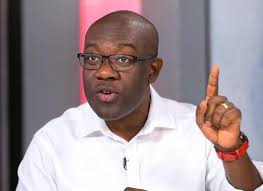
Member of Parliament for Ofoase-Ayirebi, Kojo Oppong Nkrumah, says the government must be transparent about the methods being used to achieve Ghana’s recent decline in inflation.
Speaking on Joy News, the Pulse on March 4, Mr Oppong Nkrumah said the public has a right to know how inflation is being managed.
While acknowledging the drop in inflation, he has urged authorities to fully disclose the strategies behind the figures and outline the potential long-term implications for the economy.
“Inflation doesn’t just drop by itself — it reduces because of the interventions the government introduces. It’s important that government is candid, because every method comes at a cost,” he said.
He pointed out that heavy sterilisation has been a major tool, where money is withdrawn from the economy to control demand.
“In 2025 alone, the government sterilised about 62 billion Ghana Cedis. That money would have been available to stimulate demand, but it was mopped up instead,” he explained.
The minister warned that while sterilisation addresses the demand-pull side of inflation, it does not solve the cost-push factors, like rising production costs, tariffs, and electricity bills.
“Tariffs are going up, electricity bills are increasing between 24 to 28%, yet liquidity is being removed from the economy. The question is: what has been done to reduce these real costs?”
Kojo Oppong Nkrumah also questioned the sustainability of current interventions.
“If the central bank no longer has the reserves to intervene in the market, what happens to our currency? Intervention is part of the toolkit, but when it becomes routine, people should question its long-term impact,” he said.
He urged the government to align inflation targets with economic growth and job creation. “Our inflation target has a lower band of 6% to support productive activity. If interventions push it down to 3.3%, don’t just celebrate — ask what it means for jobs and real sector productivity.”
Finally, he called on the Ghana Statistical Service to clearly explain the methods behind the reported figures.
“It’s not enough to report numbers; we must check if they reflect the lived experiences of Ghanaians in the markets,” Oppong Nkrumah concluded.
Latest Stories
-
After more than 14 years at Atletico Madrid, what next for Simeone?
2 hours -
Conquering the World – Building on the foundations laid by Otto Addo
2 hours -
[Watch Live] Kwaw Kese, Kwami Eugene, Tinny, Keche and others thrill fans at Gomoa Easter Carnival
2 hours -
Gomoa Easter Carnival: Experts charge indigenes to own festival to ensure sustainability
4 hours -
Gomoa Easter Carnival: Edem Agbana and Joy Prime fans shower festival with huge endorsements
5 hours -
Gov’t to overhaul free zones into manufacturing hubs for local production – Trade Minister
6 hours -
Ghana losing $2.5bn yearly from raw exports – Trade Minister reveals
6 hours -
Mahama unveils plans for Kwahu Airport, Convention Centre
6 hours -
World’s oldest leader, Paul Biya to get a deputy for first time in 43-year rule
6 hours -
Search for missing US airman continues as Trump threatens ‘hell’ if Iran does not reach deal
6 hours -
US says it has arrested relatives of late Iranian general Qasem Soleimani
6 hours -
La Liga: Real Madrid’s title hopes hang in the balance as Mallorca snatch stoppage-time winner
7 hours -
FA Cup: Haaland hat-trick powers Man City past Liverpool into semi-finals
7 hours -
FA Cup: Chelsea thrash Port Vale to reach Wembley semi-final
7 hours -
Gov’t to boost tourism in coastal communities through infrastructure, sanitation – Vice President
7 hours