

Audio By Carbonatix
The Government of Ghana has announced an ambitious total revenue and grants target of GH¢268.1 billion for the 2026 fiscal year, representing a growth of over GH¢41 billion or an 18.3 percent increase over the 2025 outturn of GH¢226.5 billion.
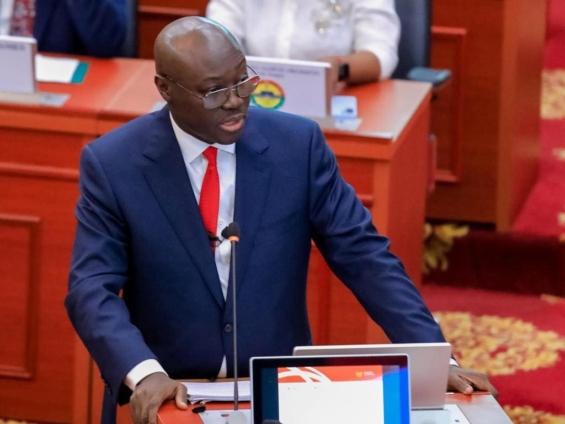
Presenting the 2026 Budget Statement and Economic Policy to Parliament, Finance Minister Dr Cassiel Ato Forson said the new target reflects the government’s commitment to consolidate macroeconomic stability and sustain the gains made under the “Reset Agenda”.
“Mr. Speaker, Total Revenue and Grants for 2026 is projected at GH¢268.1 billion, up from GH¢226.5 billion in 2025. This represents a strong revenue performance supported by new non-oil tax policy measures expected to yield at least 0.6 percent of GDP”, he said.
According to the 2026 budget statement, non-oil tax revenue will remain the largest source of government income, projected at GH¢216.1 billion, an increase of 18.8 percent over 2025 levels.
“Non-oil tax revenue, which accounts for about 80.6 percent of total revenue, is projected at GH¢216.1 billion, reflecting a robust 18.8 percent annual growth. 720. Mr Speaker, non-tax revenue (non-oil) is estimated at GH¢20.9 billion, representing about 7.8 percent of domestic revenue. Of this amount, GH¢18.2 billion will be retained by MDAs to support operations, while GH¢2.8 billion will be lodged into the Consolidated Fund. The IGF Capping Policy is expected to yield an additional GH¢329.6 million to the budget", he said.
This growth is expected to be driven by improvements in the Value Added Tax (VAT) regime, enhanced customs administration, and the rollout of a digital compliance monitoring system across major sectors.
Non-tax revenue, including fees, levies, and internally generated funds (IGFs), is projected at GH¢20.9 billion, while oil revenue is expected to contribute GH¢13.6 billion, supported by stable crude prices averaging around US$70 per barrel. Grants and other inflows from development partners are expected to supplement domestic resources.
Dr Forson emphasised that the government’s revenue strategy for 2026 will focus on equity and simplicity, ensuring that the tax system supports business growth while securing fiscal space for social and capital investments.
The finance minister also outlined several policy interventions to achieve the new revenue target, including VAT reforms, including the abolition of VAT on mineral exploration and the extension of zero-rated VAT on local textiles to 2028, to promote investment and protect jobs.
With revenue targets set high, the government faces the dual challenge of mobilising resources while ensuring that taxation does not stifle the private sector’s capacity to create jobs and growth.
Latest Stories
-
Healthy people are Ghana’s strongest currency, Finance Ministry says
4 minutes -
MTN recognised among global telecom leaders in Ranking Digital Rights Index, ranks second worldwide
15 minutes -
Declining donor funding makes CHAG partnership more critical – Finance Ministry
26 minutes -
CHAG delivers up to 40% of Ghana’s healthcare with just 7% of facilities – Executive Director
34 minutes -
Oil prices are falling, but Ghana’s economic risks are far from over – BoG Governor
44 minutes -
Groupe Nduom eyes Standard Chartered retail business, calls for local ownership
51 minutes -
Deposits safe, banking services uninterrupted – Standard Chartered reassures customers
1 hour -
Gov’t to recruit 550 Arabic teachers to tackle staffing gap in Islamic schools
1 hour -
Gov’t prepares to evacuate nearly 900 nationals from South Africa ahead of anti-immigration protests
1 hour -
Sales assistant fined GH¢12,000 after stealing GH¢353,471 from employer in marriage scam
1 hour -
GCAA probes alleged mistreatment of KLM passengers after Amsterdam delay
2 hours -
NRSA Director-General outlines reforms to reduce road carnage
2 hours -
Kumasi tomato traders push for revival of local tomato industry
2 hours -
Peace Council establishes peace committee, monitors to strengthen peace efforts
2 hours -
My agenda is to reunite, restructure, restrengthen NPP – Paul Afoko
2 hours