

Audio By Carbonatix
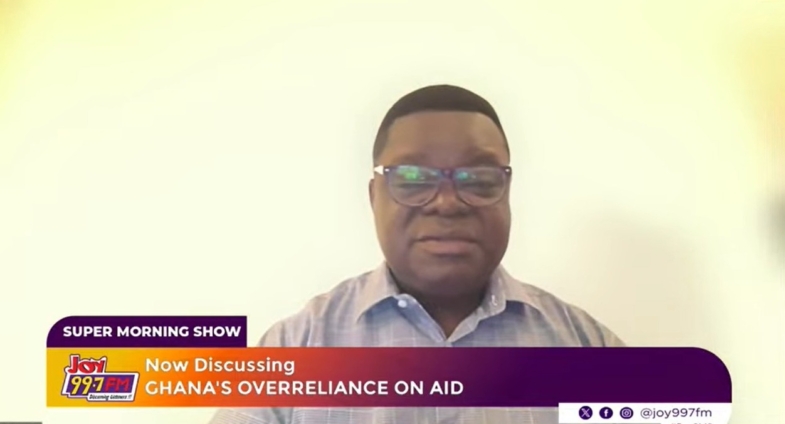
As the conversation about building a ‘Ghana Beyond Aid’ resurfaces, the Director of the Institute of Statistical, Social, and Economic Research (ISSER), Professor Peter Quartey, has advised the government to find an innovative method of generating more domestic revenue without imposing higher taxes on Ghanaians.
Speaking on Joy FM’s Super Morning Show, the economist noted that digitising the tax system would improve efficiency in revenue generation and minimise human discretion in tax collection.
While acknowledging that the Ghana Revenue Authority (GRA) and other institutions have digitised some of its tax system, Prof Quartey believes it should be intensified and the tax basket expanded to cover the informal sector.
“We need to raise more revenue domestically, not by imposing higher taxes but by making the existing tax systems more efficient, and we’ve started that with digitization which GRA and the others are doing and I think we need to deepen that.
“And we need to remove the human interface. There is so much discretion when it comes to raising revenue in the country,” he stated.
Mr Quartey’s assertion comes after the Member of the House of Lords in the United Kingdom, Lord Paul Boateng in his keynote speech at a leadership lecture at the UPSA in Accra, said it is time Ghana moves away from reliance on foreign aid.
Lord Boateng indicated that the country will not experience any significant growth since the dependence on external aid hinders progress.
The ISSER Director, who concurs with Lord Boateng, said domestic revenue generation could reduce the country’s dependency on external funding sources.
Another important step to help Ghana achieve financial independence, Prof Quartey believed is for government to reduce its expenditure.
He stressed that even though revenue generation is low, the government often bloated expenditures in its annual budget statements.
Referring to budget statements from 2022 and 2023, he questioned the rationale behind significant expenditure hikes despite revenue challenges.
“We also need to look at our expenditure. I don’t think we are getting value for money for the expenditures, especially for the procurement of goods and services.
“It surprises me that in times of difficulty like this, if you look at the budget statement from 2023, 2022, and even before that we increased expenditure, sometimes, 42%, 30% and you ask yourself, if you are struggling to raise revenue yet your expenditure is still going up, how do you address all the beautiful things you raised in the Ghana Beyond Aid document? We need to go back to the drawing board,” he stated.
Latest Stories
-
“Black Stars have what it takes to win the World Cup” – Sports Minister Kofi Adams
15 minutes -
Bank of Ghana Governor to perform official tee-off at 3i Africa Invitational Tournament
27 minutes -
Chamber of Bulk Oil Distributors urges caution amidst Special Prosecutor’s petroleum probe
48 minutes -
NDC elections: Nat Tetteh eyes Eastern Regional Deputy Secretary position
56 minutes -
Ablakwa highlights Ghana-France cooperation, praises Macron on reparatory justice
1 hour -
Protect people, not prices – Joe Jackson rejects fuel tax cuts and subsidies
1 hour -
Finance Ministry, BoG clarify false claims about Databank’s bond market specialist status
2 hours -
Lawyer petitions President to halt Terminal 2 refurbishment over value-for-money concerns
2 hours -
Sunyani Market traders urge government action amid surging ginger prices
2 hours -
Maphlix Farms to supply 3,000 tonnes to help bridge tomato deficit
2 hours -
Ho MP urges public access to officials’ asset declarations
2 hours -
Ecowas Bank for Investment and Development targets SMEs in Ghana with fresh funding for 2026
2 hours -
Two killed in Bosomtwe clash as residents demand increased security presence
2 hours -
Mahama returns from France to chair emergency Cabinet meeting on fuel prices
2 hours -
Ghana, Ukraine strengthen ties to boost agricultural productivity
2 hours