


Audio By Carbonatix
An Assistant Commissioner in Charge of Value Added Tax (VAT) Administration with the Ghana Revenue Authority (GRA), Philip Acquah, has remarked that migration of businesses onto the Electronic Valued Added Tax (E-VAT) system is scheduled to end in December 2024.
The pilot phase, which started with 50 taxpayers across different sectors, was completed in October 2022.
The government has begun Phase One of the implementation process with 600 taxpayers in the same industries/sectors and is scheduled to end in June 2023. Phase two of the E-VAT implementation is projected to begin in December 2023.
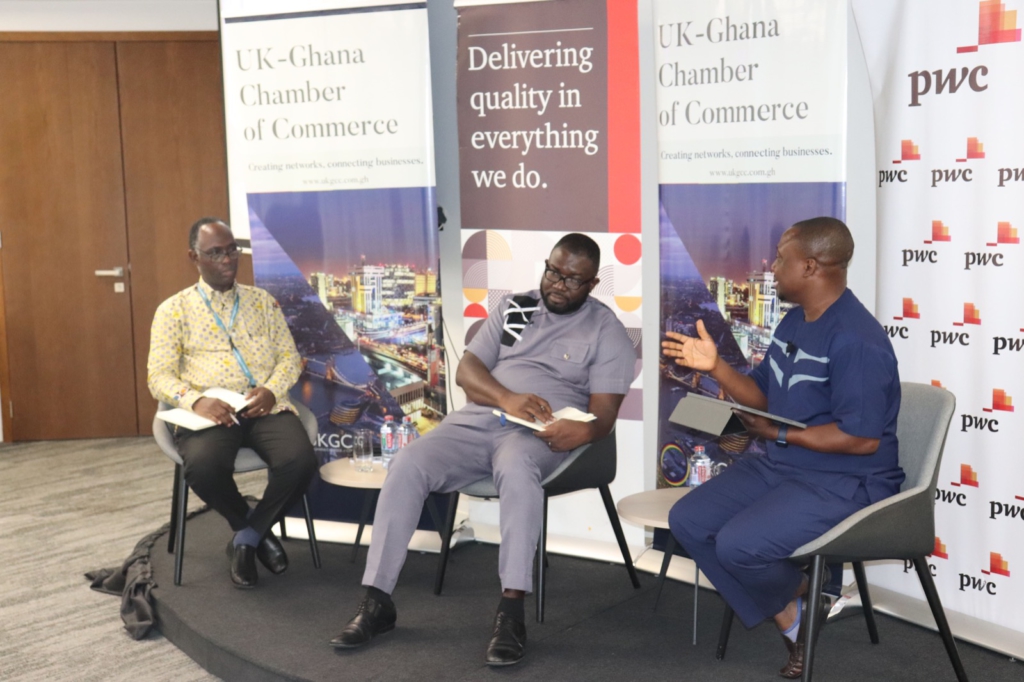
Mr. Acquah disclosed this during a Quarterly Tax Dialogue Seminar Series on the implication of the E-VAT on businesses in Ghana, hosted by the UK- Ghana Chamber of Commerce in partnership with PwC Ghana.
What is E-VAT?
According to Mr. Acquah, “E-VAT is just another term for the Electronic Invoicing system”. E-VAT transforms the manual invoice issuance process (paper-based) into an electronic format. It also allows for such invoices including debit and credit notes to be exchanged electronically.
“With E-Invoicing, GRA will authenticate and validate the invoices issued by taxpayers in real time".
He further remarked that “we are not introducing any new law …[or] rate. All we’re doing is we’re connecting the Commissioner General’s invoicing system to taxpayers’ invoicing system such as that now the issuance of electronic invoices is made a default”.
E-VAT will promote a fair and equitable tax regime
Mr. Acquah noted that the manual invoicing regimes was fraught with many challenges. These include issues of forgery, lack of data for effective compliance, ‘carding’ of invoices, and significant man hours on auditing among others.
He explained that the implementation of the electronic invoicing system will promote a fair and equitable VAT Regime, by eliminating bottlenecks militating against the current paper-based system.
Other benefits to businesses include improved documentation and record keeping, streamlining VAT refund processing, and reducing the compliance burden, amongst others.
Issues with the Electronic Invoicing System
Mr. Acquah admitted that issues regarding the efficiency of the system were reported, such as system downtime and lack of response.
While a pilot test of the system refined its capabilities, the GRA is also providing technical remote assistance to address the taxpayers’ issues in real time.
Change in the law
Clarifying an erroneous notion that the Ministry of Finance had sought and gotten an amendment to the VAT ACT to disadvantage businesses, Daniel Nuer, the Head of Tax Policy at the Ministry of Finance said “the change was not to create a problem for everybody… the idea was to spread the onboarding of [businesses] onto the system over a year. But the law that was passed wasn’t that clear, so it was assumed that everybody had a year to transition.
“…And so, the one year was taken off is not because it was changed to make everybody a ‘tax criminal’, but then to allow the Commissioner General to continue his duties”.
He mentioned that the Ministry of Finance is currently working with the first batch of businesses. After completion, another batch of businesses will be notified as to when their migration to the electronic system will begin.
Mr. Nuer added that the E-VAT system will improve revenue generation to reduce budget deficits and is leveraging technology to achieve this purpose. He believed that this system will make businesses efficient and compliant.
Tax Prosecution
Urging businesses to comply with the tax laws, Mr. Nuer reiterated that the non-payment of taxes is a criminal offence, and that government is enforcing the law through criminal prosecutions because civil prosecutions have not yielded the desired results.
Speakers at the seminar, held on the premises of PwC Ghana, discussed other pertinent topics such as publicisation of the migration guidelines and 3rd Party invoicing.
The first in the series of the Quarterly Tax Dialogues was moderated by Abeku Gyan-Quansah, a Tax Partner with PwC Ghana and UKGCC Executive Council Member.
Latest Stories
-
Edmond Boateng takes up secretary role at Honorary Consular Corps of Ghana
3 hours -
Gambia appoints British barrister to prosecute gruesome Jammeh-era crimes
4 hours -
Girl group Flo on entering into their ‘bombastic, confident, strong’ era
4 hours -
Germany suspends military approval for long stays abroad for men under 45
4 hours -
Liverpool face uphill Champions League task after PSG thrashing in Paris
4 hours -
‘Ketamine Queen’ sentenced to 15 years in Matthew Perry overdose death
4 hours -
Nigeria begins mass trial of 500 terrorism suspects
4 hours -
Atletico Madrid stun 10-man Barcelona to seize Champions League semi-final advantage
5 hours -
Black Stars coach to be announced by next week – Sports Minister
5 hours -
Chiefs, queen mothers and principal elders of Odau group denounce ‘rebellious Etweresohene’, pledges allegiance to Okyenhene
5 hours -
KNUST library dress code sparks online backlash over strict rules
5 hours -
Cultural Diplomacy in Action: Ghanaian youth leaders present symbolic smock to U.S. Chargé d’Affaires
5 hours -
Ghana Card payment activation under review – NIA breaks silence on financial integration
6 hours -
Ofori-Atta’s ICE release on bail positive; he poses no risk – Amanda Clinton
6 hours -
Ken Ofori-Atta’s passport seized after bail, set to reappear in US Court on April 27
6 hours