

Audio By Carbonatix
The Director-General of Cyber Security Authority, has urged the public, especially institutions, to take responsibility for their cybersecurity by investing in antivirus.
This, Dr Albert Antwi-Boasiako, explained, could be one of the surest ways to protect sensitive data from malicious programmes.
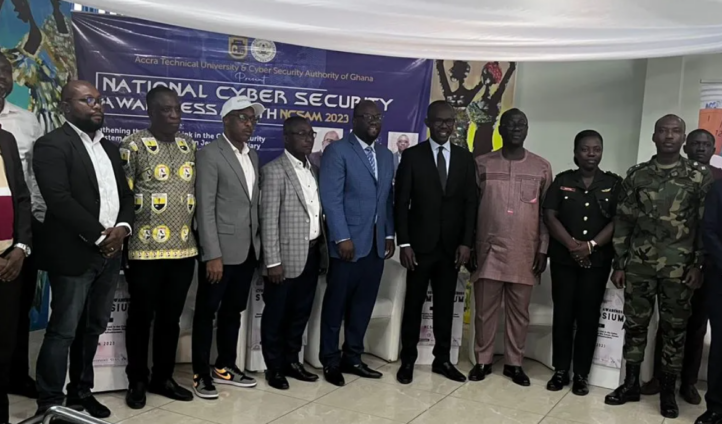
Dr Antwi-Boasiako who was speaking at a cybersecurity awareness symposium organized by the Accra Technical University (ATU), said the advancement of the cyber space exposed individuals and organisations to greater risk.
The event was part of the School’s activities to mark this year’s cybersecurity awareness month campaign, celebrated globally to remind people of the need to protect themselves, family, and business from online threats.
Their local theme was “Strengthening the weakest link in the Cyber Security Ecosystem to protect the crown jewels of tertiary education infrastructure.”
Dr Antwi-Boasiako said the weakest link in the space of cyber security was human beings’ ability to minimally safeguard their private information.
He advised organisations, especially educational institutions, to take adequate steps to protect sensitive information, including examination results, financial payments, and students data.
“It is not enough to invest in technologies to protect sensitive information, but it is important to build the capacity of the people to man the systems,” he said.
Professor Amavi Acakpovi, the Acting Vice-Chancellor of ATU, said the emergence of COVID-19, and the rise in the use of the internet for many activities, including e-campus, conducting examinations, and meetings heightened the need for cybersecurity.
“Today we run many information technology systems in the University, such as academic records management, human resource records, financial records, admission and certification,” he said.
The University, Prof Acakpovi said, was at the forefront of technological education, and had taken steps to be a beacon of knowledge and innovation.
“We recognise that, in the 21st century, our students, faculty, and the community at large must be well-versed in the art of cyber defence,” he said.
He said the future of the country’s digital society, the security of sensitive information, and the protection of critical infrastructure depended on collective efforts.
Prof Acakpovi said the School had invested in innovative technology, established state-of-the-art cybersecurity programmes, and forged collaborations with industry experts and government agencies to strengthen its defences.
He said, “The threats we face today may pale in comparison to those of tomorrow, hence, the need for continuous dialogue, the dissemination of knowledge, the exploration of emerging trends, and the sharing of best practices are not just a necessity; it is our moral and ethical obligation to future generations.”
Latest Stories
-
Trump seeks $152m to reopen notorious Alcatraz prison
2 hours -
Ex-Chelsea player Oscar retires with heart issue
2 hours -
CA Foundation drives constitutional literacy in Kpone Katamanso municipality
2 hours -
GPRTU to hold talks with Transport Ministry over rising fuel costs
2 hours -
CUTS International urges gov’t to halt sachet water price hike pending cost review
2 hours -
Chief Justice: Efficient Judiciary essential to reducing business costs
2 hours -
Bayern grabs 99th-minute winner to cap superb fightback
2 hours -
Ahmed Ibrahim urges Ghanaians to reflect Easter values in nation-building
2 hours -
ECG inefficiencies undermining power supply -Mahama outlines reforms
2 hours -
Lewandowski scores as Barca fight back to defeat Atletico
2 hours -
Lack of private sector consultation undermining economic growth – Jerry Ahmed Shaib
3 hours -
Real Madrid seven points adrift after Muriqi’s late Mallorca winner
3 hours -
Ghana must lead AfCFTA implementation by example – Trade Minister Ofosu-Adjare
3 hours -
Strong Judiciary key to business confidence – Chief Justice Baffoe-Bonnie
3 hours -
Mahama announces 60-Hectare irrigation project to boost tomato production
3 hours