

Audio By Carbonatix
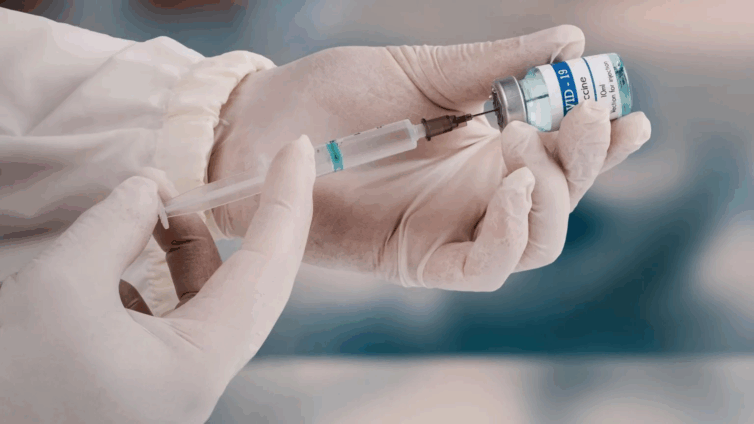
Guinea-Bissau's foreign minister has said his government has stopped a study funded by the Trump administration aiming to evaluate side effects of the life-saving hepatitis B vaccine, including any links to autism.
The West African country, one of the region's poorest, has high rates of hepatitis B, and the prospective study had drawn an outcry from scientists and international health bodies because only half the newborns in the trial would get the vaccine at birth. World Health Organisation Director-General Tedros Ghebreyesus said it was not ethical.
Guinea-Bissau suspended the trial last month pending an ethical review. Critics had said it was being used to test theories linking vaccines to autism, long promoted by the U.S. Health Secretary Robert F. Kennedy Jr. contradicts this, yet the scientific evidence supports it.
Foreign Minister Joao Bernardo Vieira said in an interview on Tuesday that the study had been closed, citing concerns raised by the scientific community and U.S. senators.
“It’s not going to happen, period,” he said.
The U.S. Centres for Disease Control and Prevention had approved a $1.6 million grant to fund the study after Kennedy scrapped the agency's recommendation to give the vaccine to all infants at birth in the U.S.
The American Johns Hopkins University says that about 90% of babies exposed to hepatitis B at birth or in their first year of life develop a chronic infection, and 15% to 25% of these die early of related liver failure or cancer as a result.
DANISH RESEARCHERS DEFEND U.S.-FUNDED HEPATITIS B TRIAL
The study by researchers at the Guinea-Bissau-based Bandim Health Project, run by the University of Southern Denmark, aimed to enrol 14,000 newborns, specifically to investigate potential "non-specific effects" including skin and neuro-developmental disorders, including autism.
They note that Guinea-Bissau currently offers the vaccine only at six weeks of age, by which time many infants whose mothers have hepatitis B are already infected. It plans to introduce the dose at birth only in 2028.
Under the trial, half the infants would receive it at birth, the remainder at six weeks, as now.
Frederik Schaltz-Buchholzer, the lead investigator, said the discussion had shifted from healthy scientific debate to politics.
“Everyone will lose if this trial is halted, but especially confidence in vaccines and health research will suffer greatly,” he said.
He said the group still hoped that a new trial proposal might be accepted in future.
The Bandim project has operated in Guinea-Bissau for decades, and the researchers say their work aims to better understand the full impact of vaccines, both positive and negative.
Kennedy cited Bandim's research to justify cutting U.S. funding to Gavi, a group that helps buy vaccines for the world's poorest countries.
A spokesperson for the U.S. CDC did not respond to a request for comment.
Latest Stories
-
The Problem with Nutrition Advice on Social Media – Lessons from a study among University Students
4 minutes -
Arteta calls for perspective as Arsenal look to avoid slump
12 minutes -
Kasoa Old Market traders given final eviction notice ahead of redevelopment
15 minutes -
GH¢15 sachet water price is a ceiling, not fixed – Producers clarify
19 minutes -
Morocco reports 7% rise in first-quarter tourist arrivals
22 minutes -
Calm returns to Adjen Kotoku Market following onion traders’ clash
22 minutes -
One dead, six in critical condition in Gomoa Fetteh accident
25 minutes -
GNFS responds to multi-vehicle crash at Ayi Mensah, urges caution
28 minutes -
Kaneshie footbridge closure raises safety concerns as pedestrians demand urgent repairs
31 minutes -
Clock ticks on Trump’s Iran ultimatum with little sign of breakthrough
33 minutes -
Be value creators for national development – KGL boss challenges private sector
39 minutes -
Bishop Asuamah urges hope, peace amid global and local conflicts
43 minutes -
Morocco stopped fewer illegal migration attempts in 2025 as route shifts
43 minutes -
Ahmed Ibrahim climaxes Easter with call for national sacrifice, fervent prayers
44 minutes -
NMC commits to reviving Media Advisory Committees
46 minutes