

Audio By Carbonatix
Once a vibrant and independent man, grandpa gradually began to show signs of frailty and dependency as he aged.
As his caregiver, I became intimately aware of the physical, emotional, and psychological struggles faced by the elderly, including the isolation and loneliness that often accompany ageing.
Caring for him was a transformative experience that deepened my understanding of the challenges faced by elderly persons.
Caring for the aged holds immense cultural significance in Ghana. It reflects deeply rooted values of respect, empathy, intergenerational harmony, and a customary show of filial piety.
Traditional Ghanaian society emphasizes the collective responsibility of the family in providing support and care for the elderly. As the old adage goes: Obi hwe wo ma wo se fifi a, wo nso wohwe no ma ne de tutu. Literally meaning those who take care of you while you develop your teeth, should be taken care of by you when they lose theirs. This notion fosters a sense of appreciation and humanity.
Care for the elderly faces significant challenges in Ghana due, in part, to rapid urbanization, migration, cultural shift, and evolving family structure. In the past decade, there has been a steady rise in old-age dependency ratio which places a strain on younger generations who may find it challenging to meet the complex needs of their elderly relatives while juggling other responsibilities.
My experience with grandpa inspired me to explore the field of elderly care more extensively, with the aim of understanding the intricacies of the ageing process and identifying best practices in the provision of high-quality care for the elderly. Additionally, I was curious to understand what constitutes a senior-friendly built environment that promotes the health and wellbeing of older adults. My investigation reveals several challenges that elderly persons face today. Also, it points out key factors that inhibit healthy ageing in Ghana.
Firstly, it was observed that older people are at increased risk for loneliness, social isolation, and sedentary behaviour which put them at high risk for cognitive decline, high blood pressure, Alzheimer's disease, and acute physiological deterioration. Also, they are likely to be financially insecure due to limited options for continued income. Besides, most family caregivers experience a burnout and compassion fatigue because of physical, mental and emotional exhaustion. In most cases, family caregivers have inadequate knowledge and skills to deliver proper care to older adults who may have special care needs. These problems are exacerbated by the lack of a conducive environment that supports healthy ageing. In fact, little consideration is given to the needs of the elderly in how we conceive and develop our cities and neighbourhoods. Altogether, these challenges are multifaceted with significant economic, social, and spatial implications.
As a student architect with particular interest in the nexus between spaces and wellness, the outcomes of this enquiry inspired me to explore various design strategies that can be applied to promote senior-friendly living environment. Indeed, the importance of the built environment for healthy ageing cannot be overemphasized. Evidence shows that an environment that encourages social interaction, accommodates nature, promotes active modes of transport (i.e., walking and cycling), and fosters a sense of place has strong positive impact on the physical and mental wellbeing of elderly persons. These spatial qualities promote active living and mitigate the health and psychological problems associated with ageing.

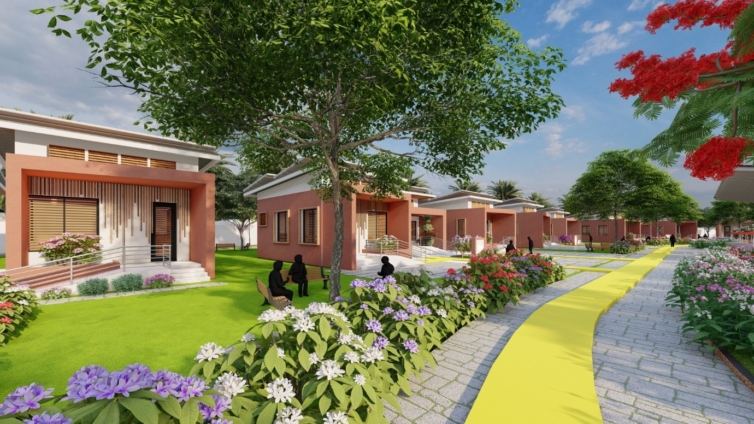
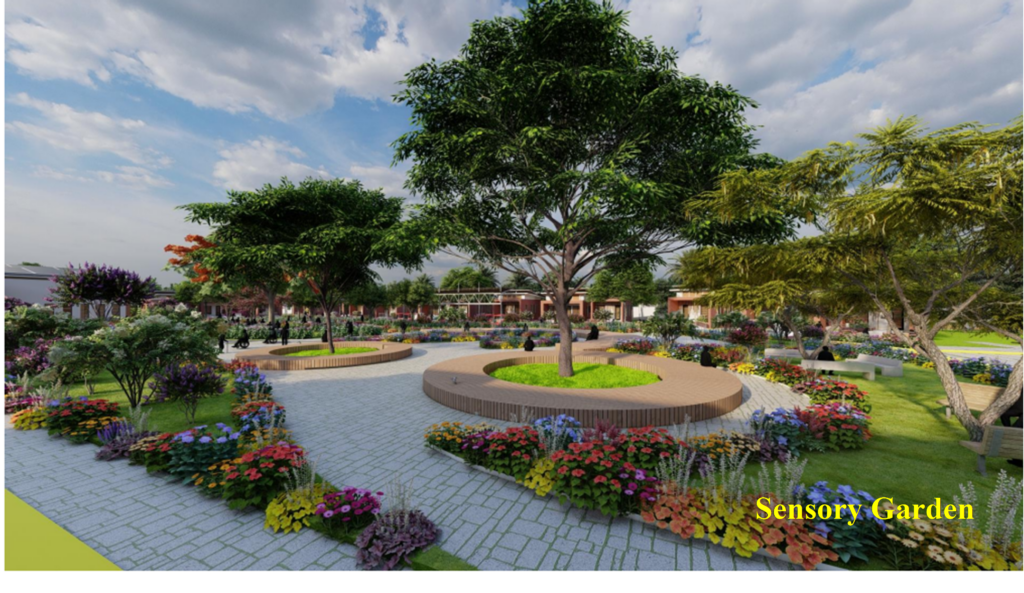
Informed by these findings, I developed a prototype for a senior-friendly community. The proposed community accommodates a sensory garden that stimulates our sense of taste, smell, sight, touch, and sound. The garden provides a calming and therapeutic environment where elderly persons can have sober reflections, relax, meditate, and interrelate. In addition, the community is designed to achieve a high degree of connectivity and optimise conditions for walking. Walkways are well shaded and interspersed with rest areas to minimize walking-induced fatigue in older adults.
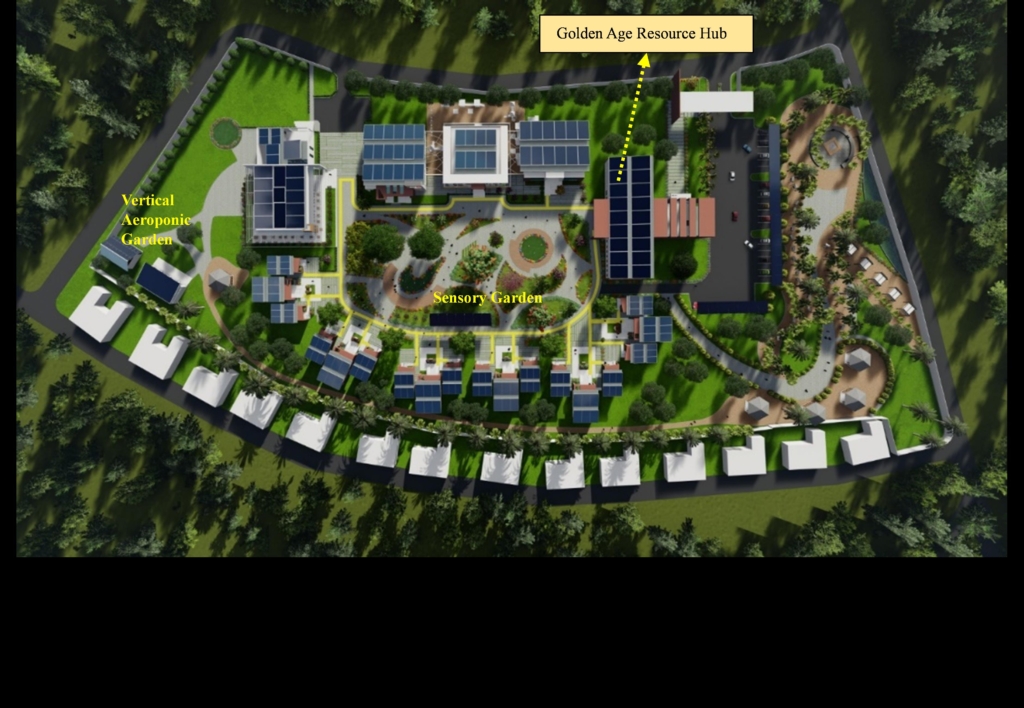
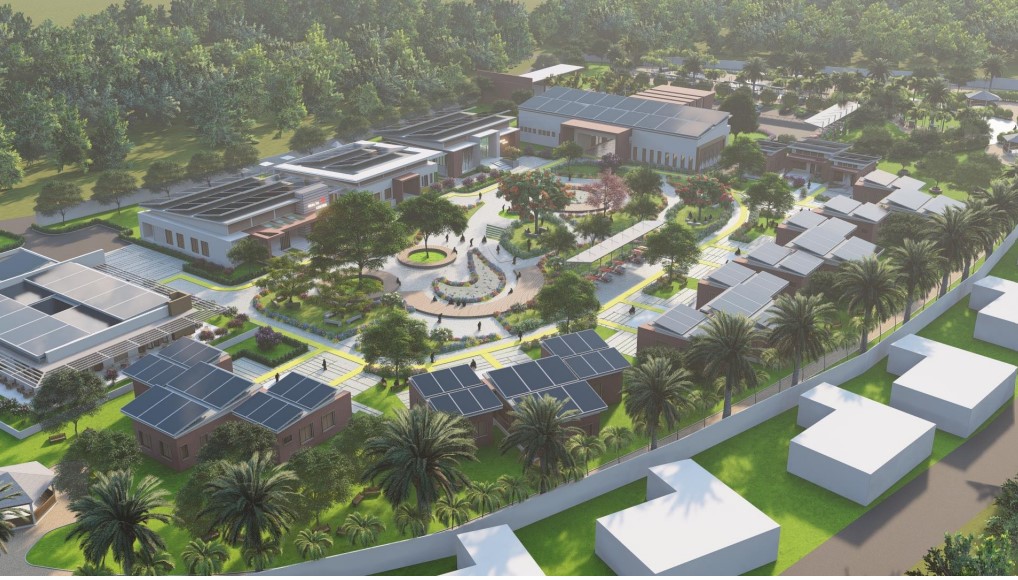
Furthermore, the community is designed to be barrier-free to ensure persons with mobility impairments are not disadvantaged. Other facilities provided include a physiotherapy center, a geriatric assessment and rehabilitation unit, and a vertical aeroponic garden which has been shown to be ideal for elderly persons. A unique feature we introduced to create an opportunity for continued income for the elderly is a Golden Age Resource Hub.
This hub is a place where elderly persons can leverage their knowledge, experiences and skills to earn extra money. This may include novel writing, career mentoring, provision of culinary training, handcrafting, and counselling among others. In addition to the financial benefits, these activities may help elderly persons to recognize their individual worth and improve their self-esteem.
I will conclude by saying that this prototype can serve as a baseline from which our existing communities and new developments can be re-envisioned to foster healthy ageing-in-place. As the Chinese adage goes: An elderly person at home is like a living golden treasure. Hence, due consideration should be given to the needs of the elderly in our socio-economic policies and spatial development plans.
This project was supervised by Dr Martin Larbi and Arc Isaac Annor under the auspices of the Head of Department of Architecture (KNUST) Prof. Rexford Assasie Oppong.
Latest Stories
-
Edmond Boateng takes up secretary role at Honorary Consular Corps of Ghana
1 hour -
Gambia appoints British barrister to prosecute gruesome Jammeh-era crimes
1 hour -
Girl group Flo on entering into their ‘bombastic, confident, strong’ era
2 hours -
Germany suspends military approval for long stays abroad for men under 45
2 hours -
Liverpool face uphill Champions League task after PSG thrashing in Paris
2 hours -
‘Ketamine Queen’ sentenced to 15 years in Matthew Perry overdose death
2 hours -
Nigeria begins mass trial of 500 terrorism suspects
2 hours -
Atletico Madrid stun 10-man Barcelona to seize Champions League semi-final advantage
3 hours -
Black Stars coach to be announced by next week – Sports Minister
3 hours -
Chiefs, queen mothers and principal elders of Odau group denounce ‘rebellious Etweresohene’, pledges allegiance to Okyenhene
3 hours -
KNUST library dress code sparks online backlash over strict rules
3 hours -
Cultural Diplomacy in Action: Ghanaian youth leaders present symbolic smock to U.S. Chargé d’Affaires
3 hours -
Ghana Card payment activation under review – NIA breaks silence on financial integration
3 hours -
Ofori-Atta’s ICE release on bail positive; he poses no risk – Amanda Clinton
3 hours -
Ken Ofori-Atta’s passport seized after bail, set to reappear in US Court on April 27
4 hours