

Audio By Carbonatix
Information Minister, Kojo Oppong Nkrumah has highlighted the key role played by the mass media and marketing communications in the country’s quest to achieve economic growth post-Covid-19.
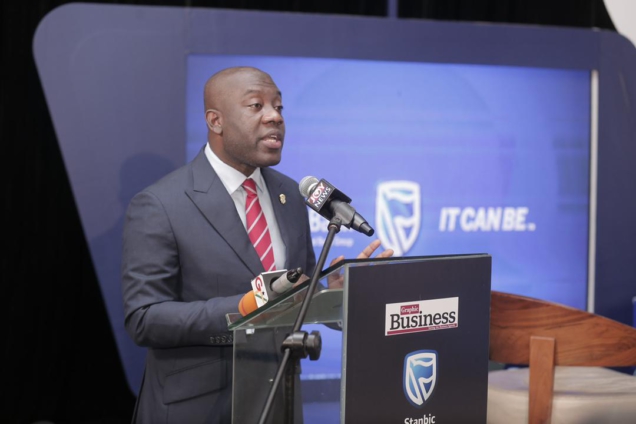
Speaking at the Graphic Business-Stanbic Bank Breakfast Meeting on Tuesday, Mr Oppong Nkrumah tasked the media to preach the importance of supporting the government in these critical times, particularly, those who refuse to pay taxes.
According to him, government is executing some policies to revamp the economy, however, it cannot achieve its objectives if the public fails to contribute its quota.
“Government will not even make an effort to pretend it is a walk in the park. They require difficult, unpopular decisions and a lot of public goodwill if they are to succeed.
“You [media] have to convince the 33,000 engineers, lawyers accountants and other professionals who are not known to the Tax database, yet demand that you fix everything around at a go, that they have to pay their due if we are to rake in the outstanding 10% of GDP that is not coming to the national treasury and reduce borrowing some more,” he said.
On government’s measures against Covid-19, the Minister charged the media to propagate the need for citizens to get vaccinated and abide by the safety protocols in order for the country to win the fight against the pandemic.
“In a robust media and democratic culture like ours, You have to convince the citizen who will not protect himself and could die if not vaccinated, yet who rightly holds you to live up to the full text of the law, that, you have to do all you can to procure a vaccine to protect his life?
“You have to convince the very person who refuses to wear the mask that the economy needs to be re-opened so he doesn’t go hungry,” Mr Oppong Nkrumah said.
Whilst recognizing that the media needs support to survive the effects of the Covid-19 pandemic, Mr Oppong-Nkrumah asked the media to deliver the right information that will make the country attractive to investors.
“How we report the aims the strategies and the evaluation of policy interventions can fuel or distort the picture of and for the general public. And in return becomes the new stimulus of how the economic actors, the general public, and even the governments further act in this recovery cycle.
“For any set of interventions to be successful as has been observed, it must gain the goodwill and support of the people,” he said.
Latest Stories
-
At least 30 feared dead in crush at Haitian tourist site
1 hour -
Four arrested over murder of Scottish businessman in Kenya
1 hour -
New Mainoo deal closer, says Man Utd boss Carrick
1 hour -
Sinner beats Alcaraz to return to world top spot
2 hours -
An inappropriate joke nearly ended his career. Now he’s back with more humour
2 hours -
GPL 2025/26: Dreams FC stage stunning comeback to hammer Eleven Wonders
3 hours -
Livestream: The Probe examines Kumasi’s looming water crisis
3 hours -
MTN Ghana gears up to lead Africa’s AI revolution
3 hours -
Philanthropist Alhaji FuZak donates Da’wah bus to Ambariya Sunni community
3 hours -
GUTA calls for suspension of Publican AI system over trade disruptions
3 hours -
TTAG raises alarm over proposed recruitment of 7,000 teachers, demands national posting roadmap
4 hours -
Civilians feared killed after reports of air strike on Nigerian market
4 hours -
Bishop Simon Kofi Appiah installed as new Jasikan Diocese Bishop
4 hours -
Trump’s Strait of Hormuz blockade threat raises risks and leaves predicaments unchanged
4 hours -
US Court backs extradition of former MASLOC CEO Sedina Tamakloe-Attionu to Ghana
4 hours