

Audio By Carbonatix
High lending rates: IEA blames government, BoG, banks
The debate over high lending rates in the country will not end anytime soon, as the Institute of Economic Affairs is blaming the high cost of credit on government, banks and the Bank of Ghana.
Though the institute believes the problem is multifaceted, it is attributing the high cost of loans to these three actors.
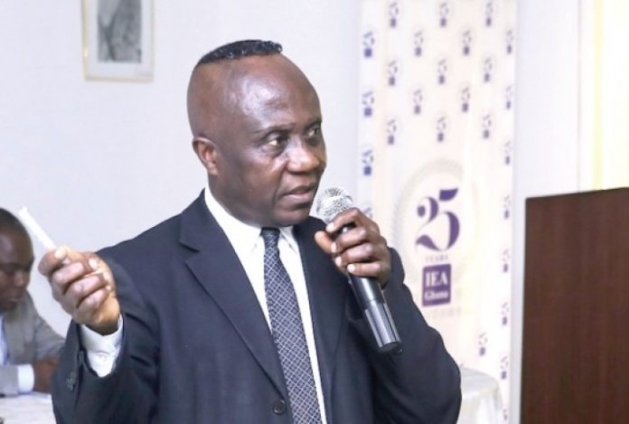
According to the Director of Research at the IEA and Senior Economist, Dr. John Kwakye, banks contribution to high lending rates which emanates from their inefficiencies, and government continuous borrowing from banks to finance the budget are major causes of the high cost of loans.
“Banks contribution to high lending rates emanates from their inefficiencies, high operating costs, poor appraisal of projects, collusive practices and customer capture”, the Senior Economist said are some causes of high lending rates.
For government, he said “government responsibility for high lending rates emanating from borrowing from banks to finance the budget, macroeconomic instability associated with high budget deficits, and high and multiple taxes imposed on banks.”
With regard to the Bank of Ghana, he attributed the causes of expensive loans to “the role of the monetary and regulatory authority in high lending rates emanating from the inherently upward bias of monetary policy on interest rates, cost of high and currency-differentiated reserve requirements and lack of well – functioning Credit Reference Bureaux”.
Whilst, the spread between lending rate and policy rate is about 7%, that of lending rate and savings rate is about 12%.
Studies have also shown that factors such as cost of funds, Treasury bills rate, non-performing loans and inflation are the major contributing factors to the high lending rates.
Also, the high lending rate inhibit investment and economic growth as well as contributing to the rising prices of goods and services in the country
IEA recommendations to address high lending rates
Dr. Kwakye made some recommendations in order to address the high lending rates in the country.
On the part of the banks, he urged the financial intermediaries to reduce their operating and overhead costs.
“Addressing operational inefficiencies to reduce costs so that they are not passed on to consumers. Improve working processes and systems through modernization and more digitization.”
“Strengthen customers’ project appraisal capacity to reduce incidence of loan defaults and the effect on costs”, he added.
For government, he called for the reduction in borrowing from the domestic market, but urged the Bank of Ghana to reduce the primary reserve ratio from the current level of 8% to 5% to reduce the associated costs to government.
Secondly, Dr. Kwakye urged government to streamline bank taxes to help reduce their costs, adding “provide a level playing field in respect of their corporate tax.”
With regard to the monetary and regulatory authority, the IEA Director of Research urged the Bank of Ghana to ensure that the fight against inflation does not itself fuel high lending rates. This requires a broader approach to fighting inflation, including paying attention to the supply – side causes, as overly emphasis on demand management tends to weigh on interest rates.
“Reduce the primary reserve ratio from the current level of 8% to 5% to reduce the associated costs to banks. Further, allow banks to cover their dollar deposits with dollar reserves to avoid their exposure to exchange risk and its passage on to lending rates”, he added.
Latest Stories
-
Seven African referees selected for World Cup 2026 as Ndala, Issa Sy miss out
7 seconds -
Why diaspora investors are using Accra real estate to hedge against global uncertainty in 2026
23 minutes -
GWL urges public support to stem water thefts
24 minutes -
Fire guts 2-storey apartment at Ashaley Botwe
26 minutes -
Come down and account, it’s a constitutional requirement – Martin Kpebu to Ofori-Atta
34 minutes -
The power of the private courtyard: How regalia is redefining resort-style living in Accra
46 minutes -
Beyond roads and bridges: Understanding the true role of your MP
47 minutes -
UK says Russia ran submarine operation over cables and pipelines
48 minutes -
NPRA recovers GH¢27m in 2025, 30% of defaulted pension contributions
51 minutes -
Power fluctuations slash Ashanti region water production by 959,000 cubic metres in March
56 minutes -
Beyond the festivities: Gomoa must turn visibility into development
1 hour -
DVLA clarifies it is not responsible for Toyota Voxy commercial operations
1 hour -
Calls for Ofori-Atta’s return a non-issue if trial proceeds in absentia – Pius Hadzide
1 hour -
France names Ghana first beneficiary of newly established National Health Compact
1 hour -
US Immigration, extradition outcomes likely to influence each other in Ofori-Atta case – Amanda Clinton
1 hour