

Audio By Carbonatix
As Ghana’s demand for electricity continues to rise, pressure on the country’s power system is increasing. Electricity consumption is growing steadily, driven by population growth and economic expansion, according to the International Energy Agency.
Much of the country’s electricity is generated from thermal power plants that burn fossil fuels such as natural gas and oil. Thermal generation accounts for about 64–66 percent of Ghana’s electricity mix, making it the dominant source of power. These plants contribute significantly to greenhouse gas emissions, as electricity generation from fossil fuels is a major source of carbon dioxide emissions globally.
But inside hotel rooms in northern Ghana, a small piece of plastic is helping to reduce that pressure. At Modern City Hotel in Tamale, a simple smart card system is changing how electricity is used, cutting waste, lowering costs, and offering a practical solution in the fight against climate change.
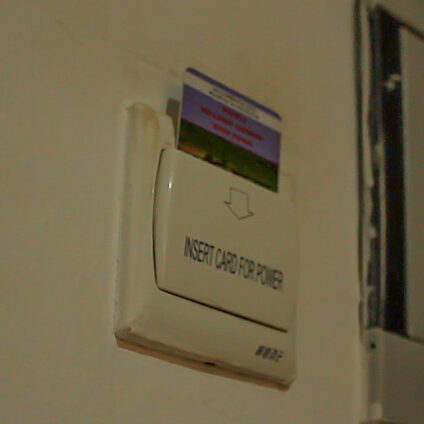
The system works in a simple way. When a guest enters the room, the card is inserted into a slot near the door. Immediately, the lights, air conditioner, television, chargers, and other connected appliances come on.
But the moment the guest leaves and removes the card, everything connected to the system automatically switches off within 10 to 15 seconds.
For the hotel’s General Manager, Abigail Adjei, this small change has made a big difference.

“Guests sometimes forget to switch off lights, ACs, TVs, and chargers when leaving the room. This system now takes care of that automatically, so it removes the human error,” she explains.
Before the system was introduced, many guests left appliances running for hours after leaving their rooms. These small actions, repeated daily across many rooms, led to high electricity consumption and rising costs.
Today, the impact is clear. The hotel’s monthly electricity bill has dropped from about GH¢150,000 to GH¢120,000. For Abigail, this automation works.
Beyond cost: safety, efficiency and why this matters for climate change
The benefits go beyond saving money. Abigail says the system also protects equipment and improves safety.
“Sometimes guests leave chargers, irons, or even the AC on when they step out. With this system, once they remove the card, the room powers down, and that improves both safety and efficiency.”
In a country where power fluctuations are common, reducing unnecessary load also helps protect devices and reduce fire risks. Every unit of electricity saved reduces the amount of fuel needed to generate power.
In Ghana, where a significant share of electricity comes from thermal plants, this means fewer greenhouse gas emissions entering the atmosphere.
Energy experts say reducing waste, even at small levels, can have a big impact when applied across many buildings.
This is where systems like smart cards become important. They do not require major infrastructure changes, yet they deliver immediate results.
Expert Insight: smarter systems for a complex reality
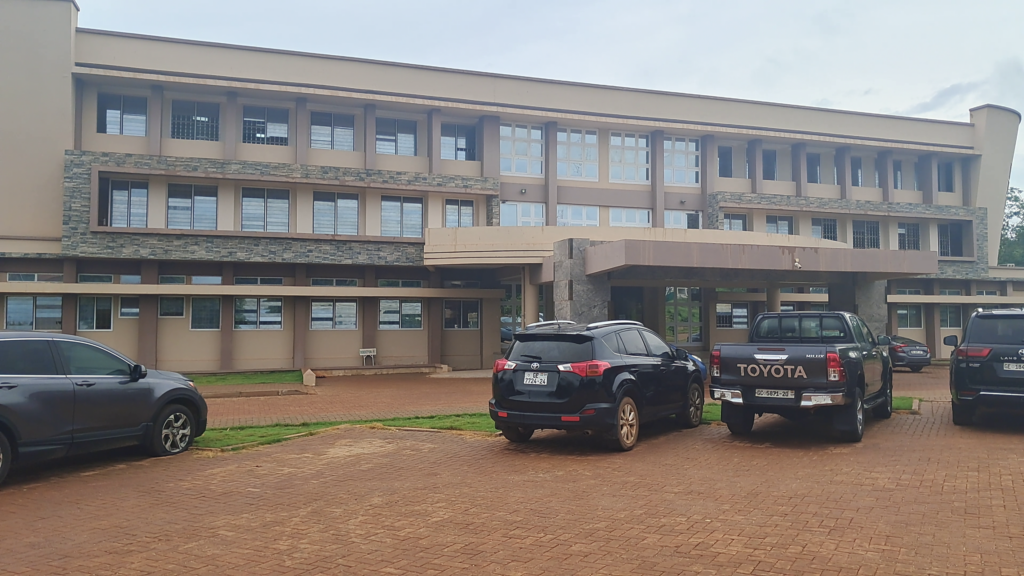
Giving deeper insight into the issue, Director of the Regional Centre for Energy and Environmental Sustainability at the University of Energy and Natural Resources, Professor Samuel Gyamfi, says energy use in homes is far more complex than in hotels.
“The behaviours in residential settings are much wider and more complex than what we have in hotels,” he explains.
Prof. Gyamfi, who specialises in energy efficiency and demand-side management for over 15 years, says while hotel systems are effective, households need more flexible solutions.
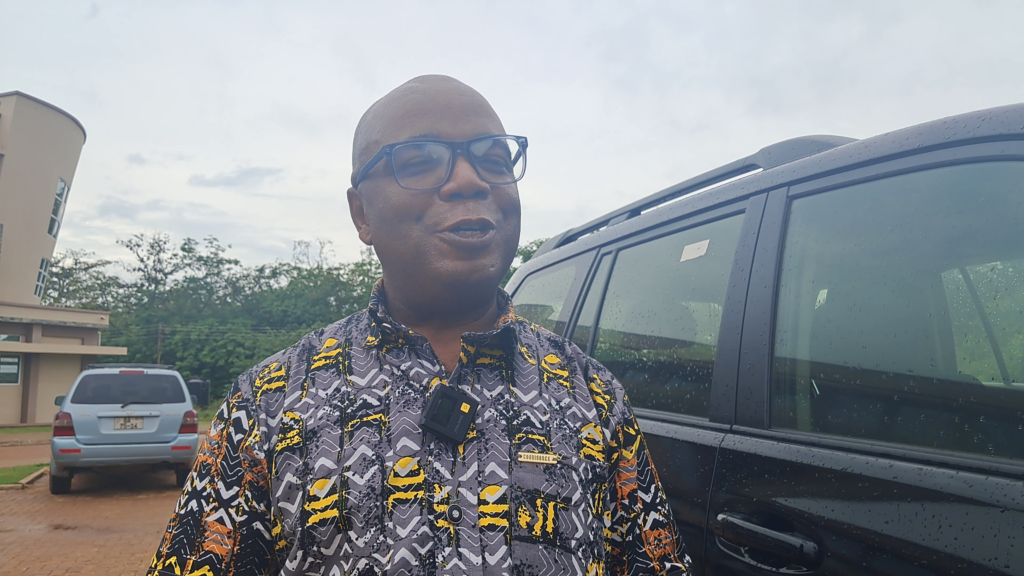
He points to smart meters and home energy management systems as the future. Instead of switching off everything, these systems allow users to track and control individual appliances.
“If you break down household energy use, you may find that only two or three appliances are causing your prepaid credit to finish quickly,” he says.
This kind of control helps families reduce waste without affecting essential appliances. “Refrigerators and freezers should remain powered, otherwise food can go bad before the family returns.”
Innovation from within Ghana
At the University of Energy and Natural Resources, research is already underway to adapt these technologies to Ghanaian homes.
A PhD student in Sustainable Energy Engineering and Management, William Asamoah, says the focus is now on local solutions.
“The issue is no longer whether the technology can work, but how it can be redesigned for our needs,” he says.
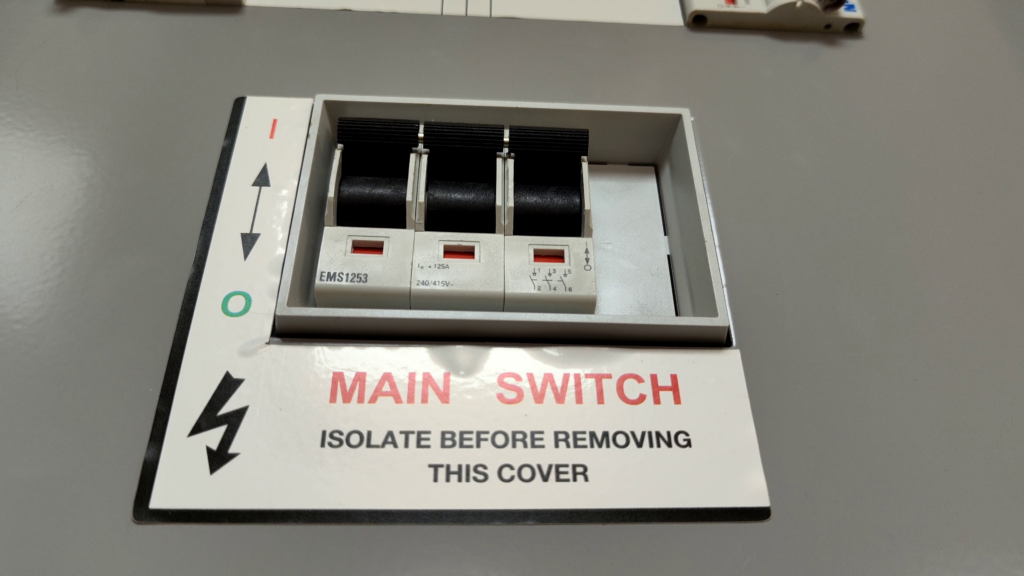
He points to common areas like washrooms and bathhouses, where lights often remain on all day despite being used for only short periods.
“If we had such smart technologies in our homes, it could reduce a lot of the energy we waste in those places.”
But his own experience in a hotel also highlights the need for better design. “I once removed the key card and returned to find my laptop uncharged and food in the fridge spoiled,” he recalls.
“There should be some sockets that always stay on, even when the card is removed.”
He says this is where Internet of Things (IoT) systems come in, allowing users to control specific devices through mobile phones.
“We are trying to build systems in Ghana where you can set rules on what gadget should stay on and who should have access to it.”
Reality check: will it work for everyone?
Not everyone is convinced the system can work the same way in homes. For Mawufemor Dzamposu Agakpe, a PhD Environmental Engineering and Management student, family structure matters.
“It will work perfectly in urban centres, but in rural homes where many people share rooms, it may not be ideal,” he says.
That concern is shared by his colleague, Patience Adongo, who points to the needs of everyday life. “If it can switch off only the bulbs while leaving the fridge on, then it will be a very good system,” she says.
Her concern reflects a common reality in Ghana, where many families cook in bulk and store food for later use.
The role of everyday behaviour
Technology alone is not enough. For Yussif Fuseini, a shop owner in Tamale, simple habits still play a major role.
“Sometimes we are outside and leave the fan on. Often, we leave lights and machines on when we are not using them,” he says.
He explains that prepaid meters make this waste visible, as every device left on continues to consume credit. “We should turn off devices when not needed to reduce electricity consumption.”
The combined voices, from hotels, experts, researchers, and households, point to the fact that, Ghana can significantly reduce electricity waste through a mix of smart technology, better system design, and simple behaviour change. And the climate benefits are just as important.
Reducing unnecessary electricity use lowers demand on power plants, cuts fuel consumption, and reduces greenhouse gas emissions.
As energy demand continues to grow, solutions like smart card systems show that climate action does not always require large investments or complex policies. Sometimes, it begins with a simple habit or a small piece of technology.
Inside hotel rooms, with the simple removal of a card, power shuts off. And in that small moment, Ghana moves one step closer to a more efficient and climate-friendly future.
This is a JoyNews-CDKN-University of Ghana C3SSproject with funding from CLARE R4I Opportunities Fund.
Latest Stories
-
Wa West Picnic: Peter Lanchene Toobu champions peace, health and unity in landmark celebration
11 minutes -
Dr Mensah Market flooded after downpour in Kumasi
18 minutes -
Armed men reportedly storm Adjen Kotoku Onion Market amid tensions
1 hour -
Tecco Mensah writes: Why football fans must look beyond statistics
2 hours -
Police recover stolen Honda CR-V in Kumasi within 48 hours
3 hours -
Apetorku Gbodzi 2026 Festival opens in Dagbamete with development focus
3 hours -
President Mahama arrives in Lyon to co-chair One Health Summit
3 hours -
Beverly View Plus Hotel draws crowds amid coastal Easter rush in Volta
3 hours -
Maiden Zongo Festival held in Wa amid calls to tackle drug abuse among the youth
3 hours -
FDA warns of fake HIV test kits on Ghanaian market
4 hours -
Africa urged to build resilient health systems as donor support tightens
4 hours -
Easter gesture: Ablakwa settles medical bills for 85 North Tongu constituents
6 hours -
Africa must harness its population strength—Titus-Glover
6 hours -
Visa-free access doesn’t mean unlimited stay – Lom Ahlijah
6 hours -
From Golgotha to Kwahu: The Easter Migration of the Faithful and the Faithless
7 hours