

Audio By Carbonatix
In Ghana, music has a substantial cultural, political, and social significance which is deeply entrenched in our rich and storied history.
From celebrations to times of mourning, you can always count on hearing a symphonic mix of percussive drums, traditional, and modern musical instruments making up a diverse range of music styles.
Springing from a time of fierce cultural pride and intense nationalism, Highlife is one of the most significant and widely popular styles of music to originate from Ghana in modern times and it’s profoundly connected to the country’s founding as the genre essentially provided the soundtrack to Ghana’s independence in the 1950s.
According to Kofi Agovi, professor of African literature and drama at the University of Ghana’s Institute of African Studies, Highlife was regarded as a symbolic barometer of public opinion in 1950s Ghana.
As such, the artists were seen as voices of the people, expressing ideas on social, cultural and political events, sharing a feeling of national unity and a yearning for freedom through the music they created.
Mixing Swing, Jazz, Rock, and traditional African music, legendary Highlife bands like Osibisa played a central role in taking Ghana’s creativity and aspirations to the global stage, particularly among European and North American audiences in the 1970s.
Formed in London in 1969, by three Caribbean musicians and three Ghanaians who were seasoned members of the Accra Highlife scene before moving to Britain, the band spent much of that decade touring the world and playing to large audiences in Japan, Australia, India, and Africa.
Strengthening the genre’s connection to liberation movements, Osibisa also performed at a special Zimbabwean independence celebration in 1980.
However, as is often the case with music, the genre underwent a significant evolution over time as new music styles emerged, globalisation increased, and Hip Hop entered Ghana’s youth scene.
The newer generation of musicians began to experiment and transform this style into something that spoke to new tastes. And thus, in the 1990s, Hiplife was born. Pioneered by musicians like Reggie Rockstone and Akyeame, Hiplife combined Hip hop with Highlife, layering rap lyrics over traditional dance tunes to convey humour, teaching and storytelling.
As music styles undergo metamorphosis, the legendary musicians of genres past - while beloved by those who’ve grown up listening to them - can often fade into the background as younger audiences seek out new music styles.
This is especially true in an age where radio stations largely only play a rotation of the same top trending songs which are usually accessible pop hits from major Western artists.
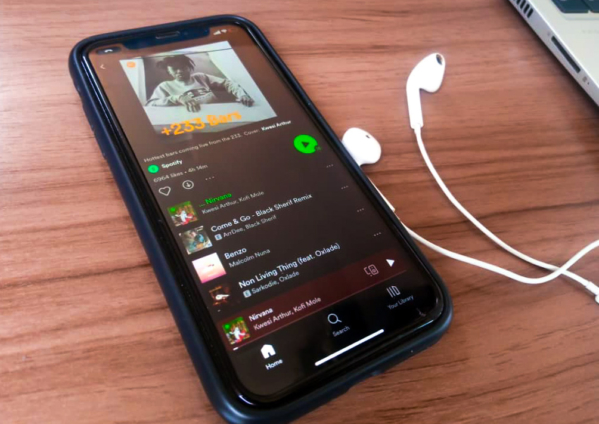
Fortunately, digital music streaming platforms are now playing a new role in exposing listeners to music styles and genres outside of the mainstream.
At Spotify, our algorithms provide listeners with custom and personalised playlists that are automatically generated based on users’ listening habits to match their musical tastes while introducing them to artists and genres they might not know or don’t already listen to.
At the same time, our editors and curators listen to songs across a variety of genres, taking into account cultural moments, artists who are pushing boundaries, and a myriad of musical characteristics like tempo and song structure.
Our teams then compile unique playlists like Ghana Throwback Party and African Heat to further drive visibility and discoverability on a global level for artists, particularly African creators.
In this way, they are helping a whole new generation of listeners discover older, but still impactful and beautiful styles of music, leading to established legendary artists like Osibisa finding completely new audiences.
Today, through playlisting, Osibisa’s music is streamed on the platform by listeners aged 18 to over 60, in cities like London, Amsterdam, Accra, Rotterdam and São Paulo, with songs like Sunshine Day, Ojah Awake, The Warrior, Dance the Body Music, and Woyaya claiming the highest number of plays.
As audiences continue to embrace the hits of decades past, a programme like Spotify for Artists, provides artists and their managers with a powerful free tool to build their presence on the platform.
It also provides data on how their music is travelling and being consumed.
The platform can help to ensure that the music made by distinguished and treasured musicians like Osibisa, continues to make a cultural impact for decades to come by reaching not only those listeners who already love them, but also those who have yet to discover these classics.
By Benewaah Boateng, Editor, Spotify, West Africa
Latest Stories
-
Health Ministry engages Ga Mantse ahead of Free Primary Healthcare launch
4 minutes -
We can tackle multiple priorities – Sam George defends Anti-LGBTQ Bill push
39 minutes -
Statement: Ghana Chamber of Mines’ Response to Claims in Joe Jackson’s “Ananse Stories about the Economy of Ghana”
40 minutes -
GES opens 2026 teacher recruitment for licensed B.Ed graduates
42 minutes -
Ghana must value skilled trades, build resilient learners — Ibn Chambas
50 minutes -
Ghana must rethink education around relevance, resilience and responsibility — Ibn Chambas
53 minutes -
Prince Harry faces defamation lawsuit from charity he co-founded
55 minutes -
South Korea deploys thermal cameras to track escaped zoo wolf
57 minutes -
Calls for royal meeting with Epstein survivors grow ahead of US visit
1 hour -
Ibn Chambas advocates blend of technology and human values in education
1 hour -
UMA improves healthcare access in Asutifi North with GH₵700k ‘Kim Taylor Legacy’ Walkway
1 hour -
Scholarships Authority and Fanaka University offer sponsorship for procurement and supply chain studies
1 hour -
Bisa Kdei drops new single ‘Go N Look’ featuring Medikal
1 hour -
Benin facing rising terrorism in north as French military presence faces growing criticism
1 hour -
UEW Public Lecture Series 2026: Education debate ‘about the soul of Ghana’s future’ — Dr Ibn Chambas
1 hour