

Audio By Carbonatix
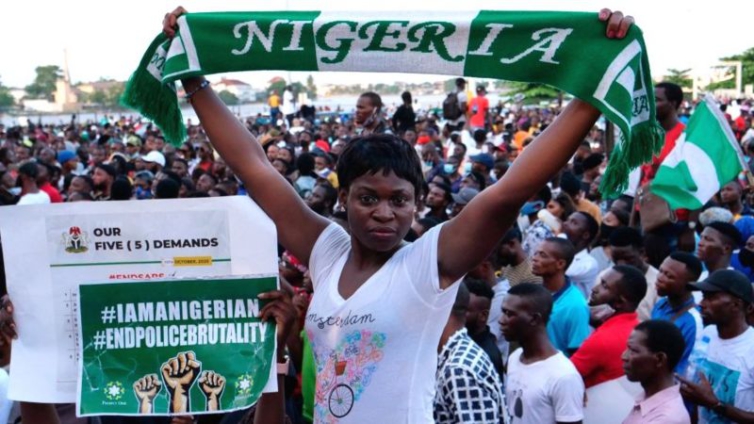
The anti-police brutality protests in Nigeria created a powerful movement that appeared to shake those in power, but after a turbulent fortnight, BBC Hausa editor Aliyu Tanko considers where it goes from here.
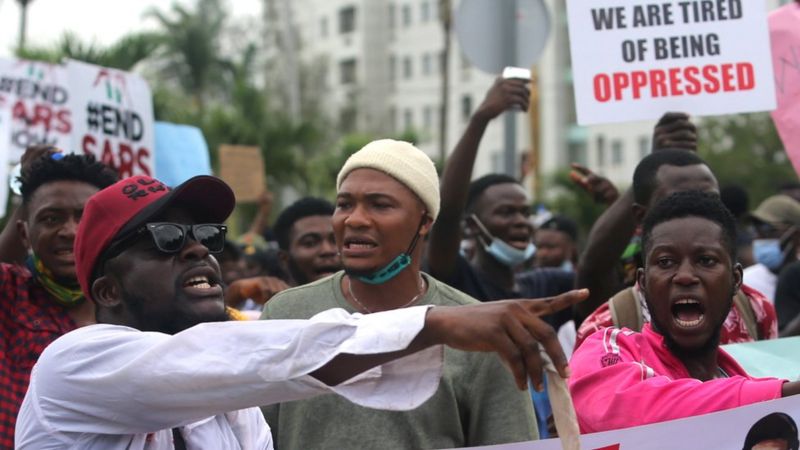
A potent mix of street protests and social media has given young Nigerians a voice that has shattered the country's culture of deference.
As the #EndSARS hashtag went viral, so did a defiance of the elite in Nigeria.
The trashing of the palace of the highly respected oba, or traditional ruler, of Lagos was symbolic of this mood.
The youths dragged his throne around, looted his possessions and swam in his pool.
What began as a protest against the hated police Special Anti-Robbery Squad (Sars) has become a conduit for the youth to vent their anger with the people who have been in charge of Nigeria for decades, and demand change.
Former President Olusegun Obasanjo warned in 2017 that "we are all sitting on a keg of gunpowder" when it comes to the young.
His comments were about the continent in general but they apply to Nigeria, Africa's most populous nation with 200 million people, more than 60% of whom are under the age of 24.
The majority of those of working age do not have formal employment and there are few opportunities to get a good education. Earlier this year, government statistics showed that 40% of Nigerians lived in poverty.
'Not usual mischief-making'
But those currently in power at first misunderstood what was going on this time, activist and writer Gimba Kakanda told the BBC.
"The #EndSARS protests were initially perceived as another of the youths' episodic mischief-making that would fizzle out if left unaddressed," he said.
"This mindset of the political class, almost overly condescending, was the reason for its slow response to this unprecedented movement and left them all on the edge."
The question is where does that movement go now?
The success of the protest in forcing concessions from the government - such as a promise to disband Sars, and wider police reform - has given Nigerian youths confidence and they believe that they can make a difference.
A few days into the protests, activists were able to establish a helpline that could respond to emergencies. They also provided legal services to those in need and even set up a radio station.
These were financed through crowdfunding and were cited as examples of how Nigeria could be better if it were not for the politicians who often seem more interested in what they can personally gain, rather than how they can improve the country.
But there has also been an ugly side.
While those who backed and came out in support of the #EndSARS movement were peaceful, another segment of the youth saw the protests as an opportunity.
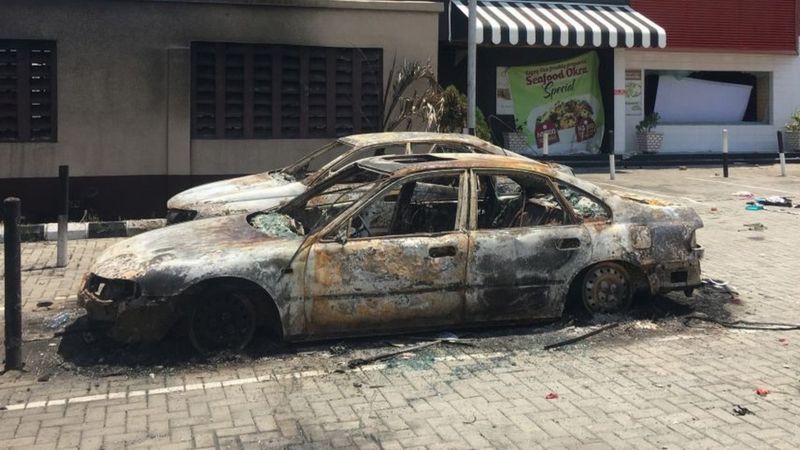
They vandalised shops, raided warehouses and targeted the businesses of prominent politicians.
Although the approach of these two groups is different, they do share one thing in common: a disdain for those in charge.
It is unlikely though that they can find common cause. Any move in that direction may affect the spread of the movement across the country because some will find it hard to sit at the same table as people with "questionable character".
'Buhari missed the point'
There is nevertheless an awareness on the part of the authorities that poverty and hardship are national security threats, activist Mr Kakanda said.
"The government has realised that it can no longer take such outrage for granted as it has done before," he added.
But it continued to make missteps in trying to quell the mood.
President Muhammadu Buhari's address to the nation on Thursday evening "missed the point by a wide margin", according to blogger and columnist Japheth Omojuwa.
Mr. Buhari called for an end to the protests and the beginning of a dialogue, but "he will be remembered for threatening Nigerians just because they asked their government to commit to justice".
Nevertheless, Mr Omojuwa believes that the #EndSARS movement can achieve something.
It should not focus on long-term ambitions of gaining political power, he argues, but rather should make sure that the authorities stick to their promise of reform and bringing errant policemen to justice.
It is these small steps that may eventually bring wider change.
Latest Stories
-
Sachet water price increase: Why Ghana urgently needs a competition law to address price fixing and cartel conduct
1 minute -
Ex-President Akufo-Addo visits President Mahama in Kwahu during Easter festivities
3 minutes -
There is no imminent fuel shortage – President Mahama assures Ghanaians amid Iran conflict
11 minutes -
Gov’t to expand Accra International Airport with new car park, retail spaces, and airport hotel
12 minutes -
President Mahama optimistic about Ghana’s economic progress at Kwahu Business Forum 2026
23 minutes -
Prof. Kpessa-Whyte writes: Understanding SIGA’s policy of encouraging inter-trading among specified entities
38 minutes -
President Mahama calls for emergency Cabinet Meeting over rising fuel prices
41 minutes -
Gov’t to construct new concourse at Accra International Airport to ease congestion
1 hour -
Day 3 of Gomoa Easter Carnival bursts with culture, music, and community spirit
1 hour -
Gender Ministry launches National Shock-Responsive Social Protection Strategy to strengthen Ghana’s crisis response
1 hour -
Photos: Zimbabwean President Mnangagwa departs Ghana after state visit
2 hours -
Gov’t procures over 24,000 medical equipment to support free primary healthcare rollout
2 hours -
“President has failed; his fight against galamsey a disgrace” – Kofi Tonto
2 hours -
Nine dead in fatal road traffic collision at Sronoase
2 hours -
Seven injured in Okanta road crash at Suhum
2 hours