

Audio By Carbonatix
One of Idris Elba’s grandfathers fought in World War II, but he doesn’t know what he endured. No pictures or stories survive.
“That part of my family’s history has been erased somewhat,” says Elba.
That helped fuel the actor’s push to narrate and executive produce the four-part National Geographic docuseries “Erased: WW2’s Heroes of Color,” which premieres Monday, days ahead of the 80th anniversary of D-Day, when the Allies landed on the coast of France, on June 6. Episodes will also later be available on Disney+ and Hulu.
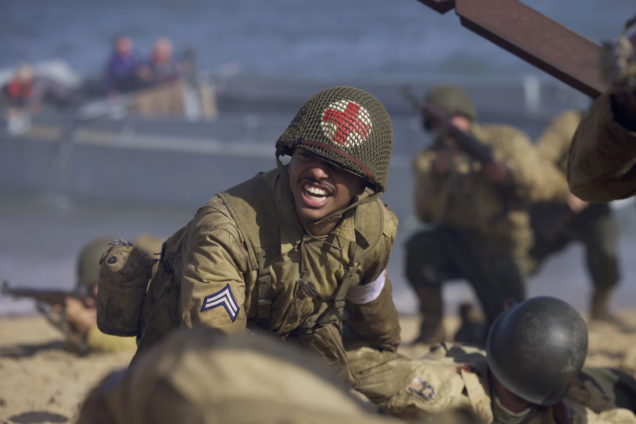
More than 8 million people of color served with the Allies, and the series digs deep to focus on how some fared at D-Day, Dunkirk, Pearl Harbor and the Battle of the Bulge.
It tells the story of the 320th Barrage Balloon Battalion, the only all-Black combat unit to fight on the D-Day beaches, and Force K6, a little-known Indian regiment of mule handlers from the British army trying to evacuate at Dunkirk.
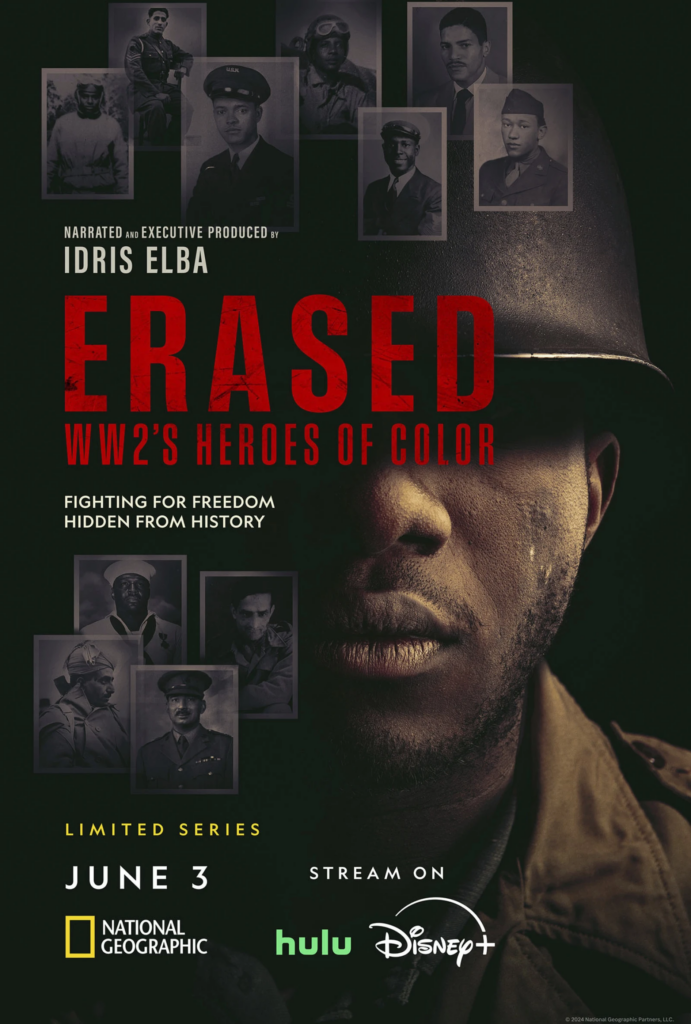
The series uses archival footage, descendant interviews, soldier journals and actor portrayals — a mix that Elba says he found visceral and moving.
“It really did actually impact me just in the narration booth, watching the imagery, looking at the faces, wondering about my own personal connect. Could my grandfather be one of the people in one of the pieces? That was what I thought about. So, it did definitely resonate with me.”
The series also highlights stories like that of Doris Miller, a mess attendant aboard the USS West Virginia who after the Japanese attack at Pearl Harbor raced to an unattended anti-aircraft gun and fired at the planes until forced to abandon ship.
He had never been trained to use the gun because Black sailors serving in the segregated steward’s branch of the Navy were not given the gunnery training received by white sailors. Miller’s bravery earned him the Navy Cross.
“It just feels like a privilege and an honour to be able to shed some light on their stories,” says director Shianne Brown, who helmed the D-Day episode.
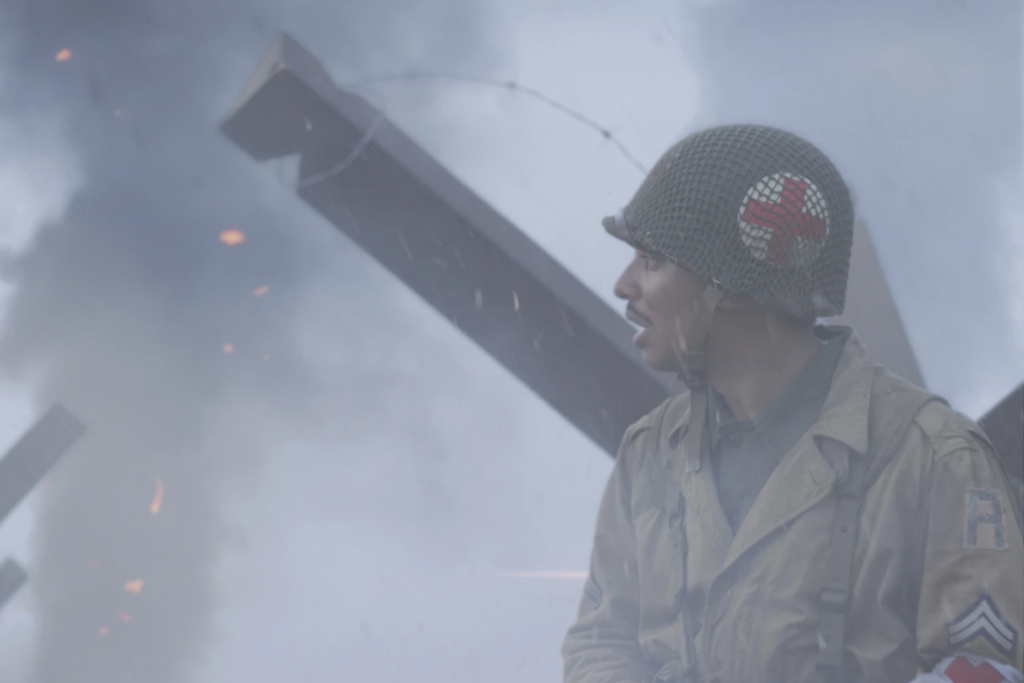
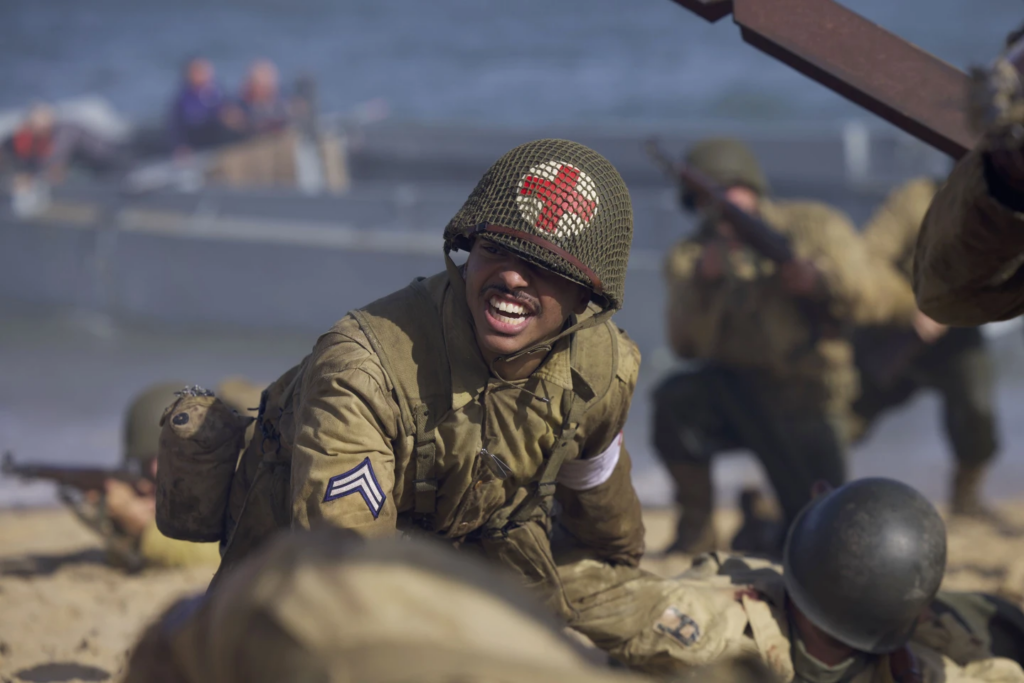
Her episode highlighted Waverly Woodson, Jr., a medic who was wounded by shrapnel during the landing but nevertheless spent the next 30 hours treating the wounded and the dying on Omaha Beach. He would note: “There’s no such thing as a colour barrier in action.”
Brown says that observation proved so powerful. “If your leg has just been blown off, you need a medic to help you. At that moment, you’re not going to say to Waverly, ‘No, I don’t want you to treat me.’”
Latest Stories
-
Global InfoAnalytics poll puts John Boadu, Justin Kodua and Titus Glover ahead in NPP executive race
4 minutes -
Ghana to establish skills development university with $50m from German support package
10 minutes -
Baffour Awuah under EOCO investigation over alleged financial loss and money laundering – Deputy AG
16 minutes -
How healthy is Ghana’s health sector?
21 minutes -
HACSA Tech4Girls graduates 80 young women with digital and technology skills
23 minutes -
Arrest of Manhyia South MP should involve Parliament, not police station – Kpebu
55 minutes -
Two Nigerians sentenced to 189 months in US prison over $2.4m cyber fraud
1 hour -
Cristiano Ronaldo leaves Portugal’s training camp after rift with Head Coach
1 hour -
Ghana Energy Awards opens nominations for landmark 10th anniversary edition
1 hour -
Aayalolo contra-flow: Are we treating the symptom instead of the disease?
1 hour -
GTEC orders Colleges of Education to begin 2026/2027 admissions despite fees approval delay
1 hour -
Legal reforms must solve real problems, improve justice – Bagbin
1 hour -
Ofori-Sarpong named Alumni President of the Year, honoured for PRESEC dormitory project
2 hours -
Germany commits $132m to Ghana for skills development and training university – Pelpuo
2 hours -
‘Influence should go beyond visibility’ – Taadi Banyinba GH launches The TB Impact
2 hours