

Audio By Carbonatix
Agricultural Policy Analyst Dr Joseph Opoku Gakpo is urging the government to work towards fulfilling financial commitments to the agricultural sector made in the 2026 budget.
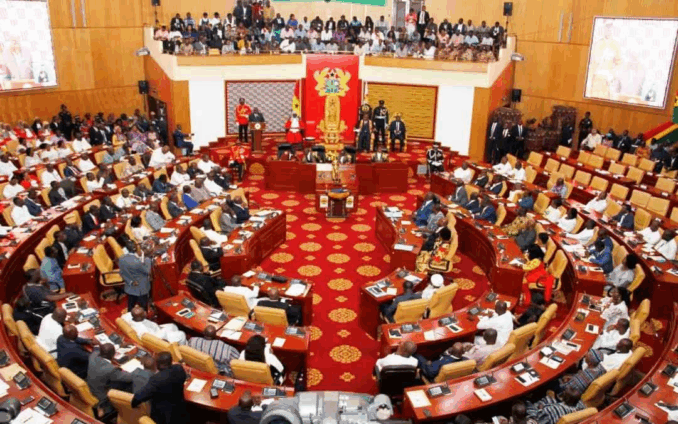
Speaking in an interview following parliament’s approval of a GH₵3 billion budget for the Ministry of Food and Agriculture (MOFA) for 2026, he said, “If the government walks the talk in the budget, 2026 will be a good agriculture year.”
“The budget contains a lot of bold plans and great ideas. But we need to match the talk with the necessary resource allocation in 2026 because we didn’t do well with that in 2025,” he said.
The Research Scholar in the Department of Agricultural and Human Sciences at North Carolina State University expressed concern that allocated amounts for 2025 weren’t disbursed to their full extent, and that must change in 2026.
“For the year 2025, parliament approved the allocation of GH₵2.9 billion to MOFA. As of November 2025, only GH₵925 million, which amounts to about 32% of the approved budget, had been released to MOFA. There is very little chance the full amount will be released before the end of December,” he said.
“And out of that amount, only about GH₵508 million has been expended. So, GH¢2.9 billion budgetary allocation. About GH₵500 million spent. Roughly 17% of the allocated amount. Many gains can’t be expected when there is an 83% deficit in expected expenditure,” he observed.
“If you followed the debate on the floor of parliament, Chairman of the Agric Committee Dr Godfred Jasaw rightly pointed out that many planned capital-intensive interventions under the Feed Ghana Programme could not be executed in 2025. And that resulted in reduced impact and diminished capacity. Things need to get better in 2026,” Dr Gakpo added.
He said that although concerns about low releases aren’t new and have been familiar to successive governments over the years, the new administration can do better. He acknowledged government’s explanation that the change in administration this year caused the situation, but says it is still a worrying development.
“The interesting thing is that the majority of the amount released was for payment of compensation, and also goods and services.
"When you look at CAPEX, that is capital expenditure, the allocation was GH¢665 million. Guess what, zero of that had been released as of the end of November. You can’t build agricultural infrastructure without money,” he said.
Government’s plan for the agricultural sector in 2026
In the 2026 budget statement, Finance Minister Dr Cassiel Ato Forson announced that the government has allocated GH¢245 million for the Nkoko Nketenkete, livestock and other related programmes. It has also allocated GH¢200 million to the National Food Buffer Stock Company to purchase excess food for storage.
A dedicated allocation of GH¢6.9 billion Oil Palm finance window has also been made to support the implementation of the National Policy on Integrated Oil Palm Development (2026–2032). To facilitate the transportation of farm produce to markets and reduce food inflation, the government has allocated GH¢828 million to construct 1,000km of agriculture-enclave roads.
An amount of GH¢690 million has also allocated to commence the operationalisation of the Farmer Service Centres.
Under the Farmer Service Centres initiative, the government says it will provide agricultural machinery to 50 agricultural districts, covering about 4,400 different types of machinery. Tractors, trailers, tillers, cultivators, ploughs, harrows, mowers, fertiliser spreaders, seed drills, boom sprayers, and combine harvesters, among others, will be brought in for the benefit of farmers.
The government also says it is installing 200 solar-powered boreholes in Ahafo, Eastern, Upper West, and Bono East regions, including 44 Senior High Schools. It will also complete 11 warehouses of 1,000 MT each, connect power to facilities, and provide 750,000 pallets and 50 steel sheds across 50 warehouses, to help reduce post-harvest losses and smoothing prices.
Dr Gakpo observes that the proposed plan for the agricultural year is very cash-intensive and that the government needs to prioritise the sector rather than rely on foreign aid.
“Where I am a little worried is the continuous over-dependence on foreign support to fund the sector. So, out of the GH¢3 billion budget, we expect 12.2% of that, roughly GH¢369 million, to come from foreign loans. Then we expect another 13%, roughly GH¢396 million, to come from foreign grants. I doubt that we will even be able to raise half of that money,” he cautioned.
“In 2025, for example, we were expecting our development partners to support us with GH¢715 million for capital expenditure in the agricultural sector. As of November 2025, only GH¢53 million had come through. We were expecting GH¢583 million in support from development partners for goods and services.
"As of November 2025, only GH¢157 million had come through,” he noted. “With everything happening with Western governments pulling back on foreign aid, we can expect shocks when we overly rely on them for funding support,” Dr. Gakpo cautioned.
The agricultural analyst also observes that the budgetary allocation to MOFA doesn’t meet expectations under the Comprehensive Africa Agriculture Development Programme (CAADP). CAADP has been the cornerstone framework for driving agricultural transformation across Africa for more than 20 years.
“Under the CAADP, the Maputo Declaration in 2003, the Malabo Declaration in 2014, and the Kampala Declaration in 2025, all urge African governments to invest at least 10% of their budgetary allocations to the agricultural sector,” he noted.
“It will be naive to expect any government to meet this. But Parliament approved GH¢357 billion in total for 2026. Of which GH¢3 billion is going to the agricultural ministry—only about 1%. Admittedly, there are other allocations to the fisheries sector, the environment, and all that, which will also support agriculture. But we can still do better, even if we can’t meet those AU targets,” Dr Gakpo added.
Outlook for 2026
Asked about his outlook for food security in 2026, Dr Gakpo said the projections look good. “If you’ve seen the recent Food Security Monitor report published by AGRA, the report actually says the average price of major food commodities in Ghana has dropped by 32.69% over the last year. The average decline in prices over the last six months is even better at 37.13%,” he observed.
“And the report says the rate of increase in the percentage of people in Ghana facing food insecurity has slowed over the last two years. Compared to two years ago, the percentage increased by 55.6%. Over the last year, the percentage has gone up by just 8.4%. It’s an indication that we are doing something right. So, we need to keep doing that,” Dr Gakpo noted.
Asked about his most important wish for the agricultural sector in 2026, Dr Gakpo highlighted investments in agricultural extension as a key area he hopes the government will prioritise.
“My area of specialisation is in agricultural extension, and so I am very passionate about that. In Ghana, the current extension agent-to-farmer ratio is about 1:1,700. The FAO recommended ratio is 1:500. We need to recruit more extension agents,” he said.
“Adequate extension services have brought enormous benefits to farmers worldwide, helping them increase production, find markets, among others.
"Because these extension folks have specialised knowledge that improves farming activities. My wish is to see more investments in bridging the current ratio in 2026 and beyond,” Dr Gakpo concluded.
Latest Stories
-
Nearly 2,000 displaced, schools damaged as windstorm wreaks havoc in Gushegu
7 minutes -
Ghana’s Derrick Kohn to work under Marie-Louise Eta as she becomes first woman to coach men’s Bundesliga team
11 minutes -
Accra Open Championships conclude with strong performances ahead of African Championships
18 minutes -
Ghana to begin camping with 12 athletes after Accra Open Championships – Bawa Fuseni
39 minutes -
Anthony Joshua declines showdown with Tyson Fury but admits they ‘probably’ clash next
53 minutes -
Tyson Fury dominates Makhmudov, calls out Joshua next
1 hour -
I have supported highway authority financially to fix roads in my constituency – A Plus
2 hours -
US, Iran fail to reach peace agreement after marathon talks in Pakistan
3 hours -
ECG kicks off Phase Two of transformer upgrades at Lashibi; brief outages expected
3 hours -
Port crises loom as 11,000 drivers threaten four-day strike
4 hours -
A source of excellence across generations – Vice President Opoku-Agyemang lauds Mfantsipim
5 hours -
(Photos) Mfantsipim School launches historic 150th anniversary
5 hours -
Knights and Ladies of Marshall group backs Catholic Bishops’ stance on anti-LGBTQ+
6 hours -
Bright Simons: All the Filla in the Ibrahim Mahama/E&P – Gold Fields Saga
7 hours -
Monetise Idiocy In Ghana
7 hours