

Audio By Carbonatix
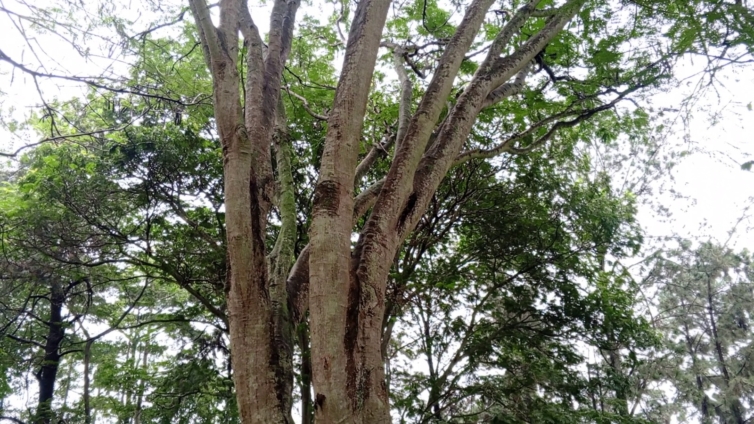
Ghana’s fight to salvage its threatened indigenous tree species continues to face major setbacks as tree conservationists battle the growing impacts of illegal mining operations and indiscriminate farming activities.
At least four indigenous trees are going extinct with 39 others currently threatened by the unabated operations of the miners and illegal loggers.
Foresters are distraught over the spate of encroachment on forest reserves harbouring these unique plant species that offer medicinal, ecological and economic benefits to the country.
Globally, at least 8,000 out of the 60,000 documented plant species have been classified to be endangered by human activities.
With growing environmental destruction through illegal mining and logging, and the fast expansion of agricultural activities, four of Ghana’s indigenous tree species are critically threatened, with 39 currently endangered.
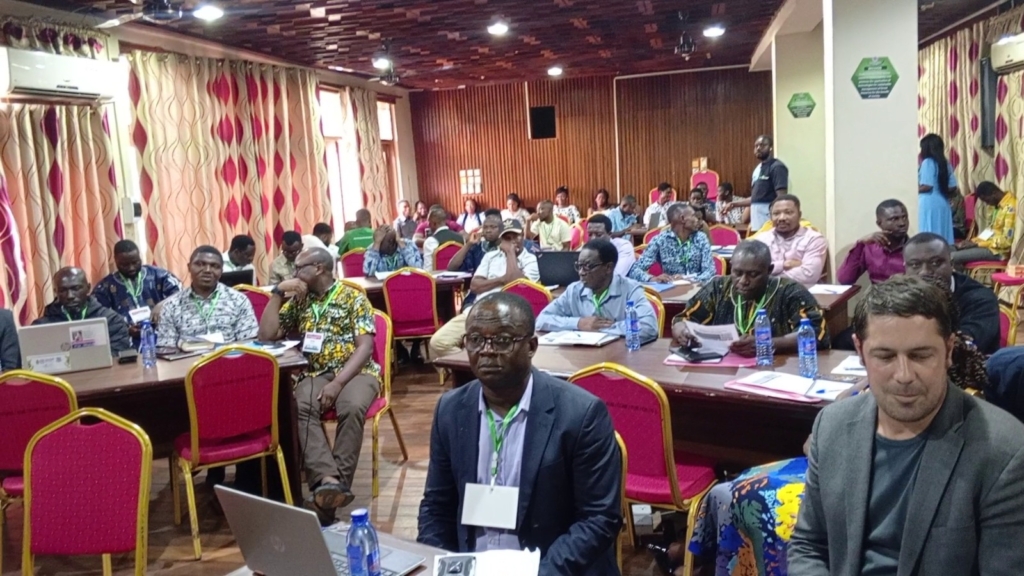
At the second national stakeholders’ workshop on threatened trees conservation, researchers, foresters and policy makers renewed calls for a concerted action to save the trees.
Project Coordinator, Dr. James Amponsah, highlighted the impacts of the illegal activities on the endangered species despite conservatory projects to protect forest reserves and rare tree species.
“Sometimes we earmark a tree for monitoring, only to return and find it destroyed,” he said.
The workshop assembled key players in the forest conservation sector to assess progress, discuss challenges, and chart new strategies for coordinated action.
The initiative seeks to strengthen collaboration among conservation partners while raising seedlings of endangered species to secure their survival.
Dr. Amponsah revealed plans by the research institute to develop a data portal on the threatened trees as he renewed 0their commitment to saving Ghana’s rapidly disappearing tree species.
“We are developing an information data portal on threatened trees which will be launched at this workshop,” he explained. “This will help us track and coordinate conservation actions more effectively across the country.”
He noted that since the first workshop, significant progress has been made in protecting endangered tree species such as Obregrenia thielensis, locally known as Atare Kese, which is critically endangered.
“Over the past five years, we’ve found only 27 individuals in isolated populations,” Dr. Amponsah revealed. “Without our intervention, these trees could have easily gone extinct.”
The Forestry Institute of Ghana’s conservation efforts have included engaging local communities to build their capacity to identify and protect endangered trees.
It also provided alternative livelihoods such as beekeeping to reduce pressure on forest resources.
“Community involvement is crucial. When locals understand the value of these trees, they become our strongest allies in conservation,” Dr. Amponsah noted.
Representing the project’s donor, Olivier Hasivier of Foundation Franklinia in Switzerland extolled Ghana’s conservation model, describing it as a benchmark for other African countries.
“Ghana has demonstrated strong collaboration among stakeholders, backed by good political will,” he said. “This approach could be replicated in other parts of Africa to protect biodiversity.”
He explained that Foundation Franklinia chose to focus on tree species because they are the backbone of ecosystems, emphasizing that the foundation has supported multiple projects in Ghana targeting 39 threatened tree species unique to the country.
“When you conserve trees, you protect entire ecosystems birds, insects, and animals all benefit,” Mr. Hasivier said.
Director of Science, Technology and Innovation at the Ministry of Environment, Science, Technology and Innovation, Kwamena Quaison reaffirmed Ghana’s commitment to protecting its forests through policy and collaboration.
“We have developed a strong national environmental policy and a climate change strategy that emphasize carbon sequestration and restoration of degraded habitats. However, no single institution can achieve this alone—we must work together,” he said.
Mr. Quaison added that the ministry is leveraging its network of 13 research institutions under the Council for Scientific and Industrial Research to translate scientific research into practical conservation policies.
“Our goal is to ensure environmental sustainability, restore degraded habitats, and build biodiversity resilience,” he said.
The second national stakeholders’ workshop marks another step forward in Ghana’s fight to protect its natural heritage.
With continued collaboration between research institutions, communities, and international partners, stakeholders remain hopeful that the country’s most threatened trees can be saved for generations to come.
Latest Stories
-
GPL 2025/26: Eleven Wonders earn 2-2 draw against Samartex
14 minutes -
Legal analysis of CAF Appeal Board decision on Morocco vs. Senegal AFCON final chaos
1 hour -
44 Ghanaians rescued from fraudulent recruitment network in Nigeria – Foreign Affairs Ministry
4 hours -
Odumasi Health Centre appeals for standby power plant to safeguard healthcare delivery
4 hours -
2025/26 Women’s FA Cup: Hasaacas Ladies beat Jonina to set up Army Ladies final
4 hours -
Journey to Destiny Ministries breaks ground for 90-bed dormitory for orphans at Journey Center – Ghana
4 hours -
Health Minister reaffirms commitment to ending ‘No Bed Syndrome’ after Korle Bu visit
4 hours -
Afram Plains youth rally behind Mahama’s Farmers’ Service Centre initiative
4 hours -
Investments underway to boost tomato production despite export concerns – Gov’t
4 hours -
2025/26 Women’s FA Cup: Army Ladies thump Samartex Ladies to reach final
4 hours -
Brazil backs Ghana’s UN push to recognise transatlantic slave trade as crime against humanity
5 hours -
Otokunor blames policy failures and import dependence for Ghana’s tomato shortage
5 hours -
Offinso North cocoa farmers brave heavy rains to petition Minority Caucus over cocoa crisis
5 hours -
Vivo Energy Ghana hosts ShePower Summit 2026 to inspire next generation of Women in STEM
5 hours -
Upper West Eid prayers: Leaders unite against youth drug abuse, call for educational reforms
5 hours