

Audio By Carbonatix
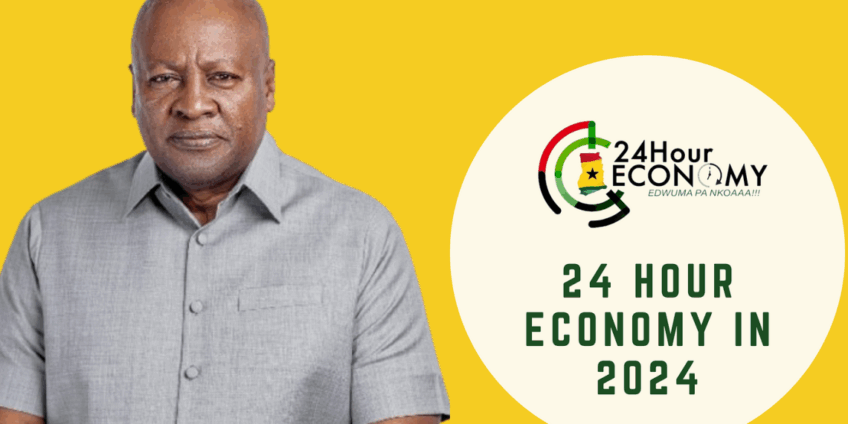
Last week, the Parliament of Ghana took a decisive step by passing the 24-HR Economy Authority Bill, establishing a corporate body to oversee and coordinate the government’s flagship 24-hour economy and accelerated export development programme.
On the surface, the move signals a serious commitment to economic transformation. However, a deeper look at Ghana's recent governance history suggests that we may be repeating a cycle of administrative bloat that often stalls the very policies it is meant to accelerate.
While the 24-hour economy is a necessary evolution for a modern Ghana, the approach of "building a new road for every new car" is fundamentally flawed. This path does not necessarily translate into success; rather, it often leads to a "logistics of lag." It will take months, if not years, to house, staff, and operationalize this new Authority. This startup phase does not just delay execution; it significantly inflates government expenditure at a time when fiscal discipline is paramount.
The ghost of zonal authorities
We have been here before. In a bid to implement flagship programs like the "one-constituency-one-million-dollars" promise, the previous administration established three separate zonal authorities: the Coastal (CODA), Middle Belt (MBDA), and Northern Development Authorities (NDA). The results were telling. Instead of accelerated development, we witnessed a landscape of stalled projects and uncompleted works.
The lesson is clear. Specialized authorities often struggle to transition from high-level "coordination" to actual "ground-level" delivery. The establishment of these bodies effectively bypassed our established Regional Coordinating Councils (RCCs) and District Assemblies, leading to a haphazard allocation of resources that rarely met specific local needs.
Evolution over invention
The argument that new policies require new bodies overlooks the natural capacity for our existing Ministries, Departments, and Agencies (MDAs) to evolve. Consider the Ministry of Communications, which successfully transitioned into the Ministry for Communications, Digital Technology, and Innovation to meet the demands of the digital age. This suggests that when foundational ministries exist, the most efficient path is to streamline their objectives toward new policy focuses, rather than creating multiple, centralized, and overlapping agencies.
By creating the 24-HR Economy Authority, we risk creating a "Super Ministry" that duplicates the functions of existing sectors. The policy is built on eight strategic pillars (including Make 24, Grow 24, and Connect 24), yet each of these pillars already falls under the mandate of the Ministries of Trade Agribusiness and Industry, Agriculture, Transport, or Labor. Creating an Authority to "coordinate" these sectors often add a layer of red tape that creates friction rather than synergy.
The decentralization deficit
Perhaps the most significant risk is the further erosion of local governance, yet we have assumed that all development is local. When development efforts are over-centralized, local District Assemblies often feel a lack of ownership. This "accountability vacuum" is why projects stall; if a local assembly is not part of the planning and oversight, they have little incentive—or power—to ensure completion once the contractors from Accra stop showing up.
If we are to truly transition to a round-the-clock economy, the focus should not be on hiring a new board of directors in the capital. It should be on empowering the District Assemblies to provide the security, lighting, and infrastructure that businesses need to operate at night.
Conclusion
The 24-hour economy is a bold vision, but it is currently being weighed down by an old governance playbook. We do not need a new corporate body to coordinate our growth; we need to optimize the institutions we already have.
To avoid the fate of the zonal authorities that came before it, the government must resist the urge to centralize and instead focus on integrating this policy into the DNA of our existing MDAs and local governments.
Success will be measured not by the establishment of an Authority, but by the light of a factory running at 3:00 AM in a district that was empowered to make it happen.
Latest Stories
-
Government to construct a FIFA category 2 stadium in the Volta Region – James Gunu
6 minutes -
CAF to introduce reforms to fix AFCON final controversies – Patrice Motsepe
6 minutes -
EOCO defends probe into Kwamigah-Atokple
8 minutes -
Fuel tanker accident at Breku Forest spills thousands of litres of diesel
14 minutes -
IEAG backs Publican AI system after concerns addressed
17 minutes -
No new taxes or charges- GRA boss assures importers over rollout of Publican AI system
17 minutes -
Egypt goalkeeper banned for striking referee
18 minutes -
Police restore calm following clashes between Asisiriwa and Brodekwano
20 minutes -
Education sector job seekers must submit certificates for verification – GTEC
21 minutes -
Volta Lake accident highlights lax safety regulations — Savannah Regional Minister
21 minutes -
UEW Vice-Chancellor calls for rethink of Ghana’s education system at 2026 Public Lecture
28 minutes -
Health expert urges enough sleep, rest to control hypertension
29 minutes -
Foreign Affairs Ministry alerts travellers as EU rolls out new biometric Entry/Exit System
30 minutes -
Publican AI system doesn’t determine values, it flags suspicious transactions – GRA Boss
40 minutes -
Balancing the scales: McDan Aviation, E&P, and politics of opportunity in Ghana’s economy
45 minutes