

Audio By Carbonatix
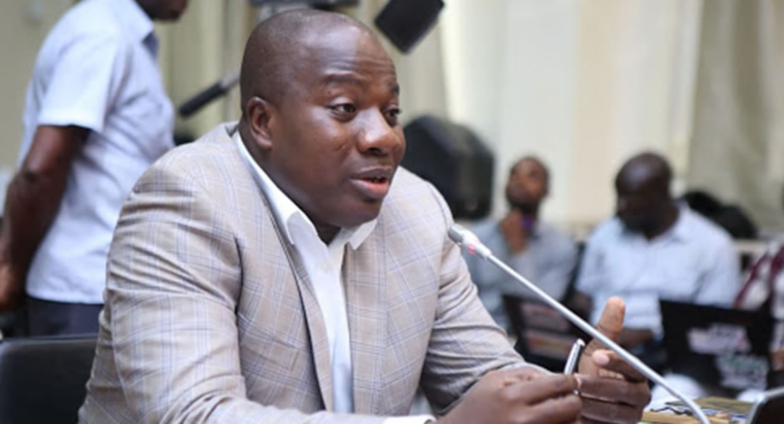
The Member of Parliament for Bawku Central, Mahama Ayariga, has expressed concerns over the Import Restrictions Bill proposed by the government through the Minister of Trade and Industry.
According to Mr Ayariga, the bill infringes upon certain provisions outlined in the government's agreement with the International Monetary Fund (IMF).
The legislator contends that if the bill is presented in Parliament, it could jeopardise the existing deal between the government and the IMF, a critical aspect of the country's financial commitments.
Mahama Ayariga, who once served as Minister of Information and Media Relations, questioned whether the Minister of Trade, K.T. Hammond, had consulted with his counterpart in the Finance Ministry before pursuing such a legislation.
He suggested that the lack of coordination within the government reflects a state of confusion, portraying the administration as being disorganised and lacking a cohesive approach.
“The proposed Export and Import (Restrictions on Importation of Selected Strategic Products) Regulations, 2023 offends clear provisions of the IMF Bailout Agreement.” he said in a press statement issued on Wednesday, November 29.
Already, six business associations have also submitted a petition to Parliament urging the house to reject the bill.
The Joint Business Consultative Forum, comprising the Ghana Union of Traders Associations (GUTA), Food and Beverages Association of Ghana (FABAG), Importers and Exporters Association of Ghana, Ghana Institute of Freight Forwarders (GIFF), Chamber of Automobile Dealership Ghana (CADEG), and Ghana National Chamber of Commerce and Industry (GNCCI), argue that the bill if enacted, would have detrimental effects on their businesses.
The petition, dated Sunday, November 26, outlined concerns that the legislation could negatively impact the prices of goods, disrupt the free flow of goods, and potentially harm businesses.
The Minister for Trade and Industry is seeking to pass an (L.I) to restrict the importation of some strategic products.
The 22 items considered for import restrictions are:
- Rice
- Guts, bladders and stomachs of animals (offal)
- Poultry
- Animal and vegetable oil
- Margarine
- Fruit juices
- Soft drink
- Mineral water
- Noodles and pasta
- Ceramic tiles
- Corrugated paper and paper board
- Mosquito coil and insecticides
- Soaps and detergents
- Motor cars
- Iron and steel
- Cement
- Polymers (Plastics and Plastic Products)
- Fish
- Sugar
- Clothing and apparel
- Biscuits
- Canned tomatoes
Latest Stories
-
Imagination Africa, Mentors Chess Academy to host second African Genius Chess Championship at Ghud Park
2 hours -
Nana B passport claims a diversionary tactic — Abu Jinapor
3 hours -
Pope Leo diagnosed with cancer as doctors remove lobe of lung, Vatican says
3 hours -
Legal Aid Commission takes free legal services to Techiman main lorry terminal
3 hours -
Nana B denies seeking passport favour, accuses Ablakwa of failing to account for GH¢16.4m
3 hours -
Young girls demand climate action, stronger protection against child marriage
3 hours -
Ex-gang boss sentenced to 40 years for orchestrating Tupac Shakur’s murder
3 hours -
From near-deferral to three awards: UMaT graduate’s academic journey
3 hours -
Atta Akyea denies seeking presidential pardon for Wontumi in galamsey case
4 hours -
Photos: Mahama commissions 85-bed Police Hospital ward, donates two ambulances
4 hours -
GTEC directs Ghana’s public universities to reopen by October 16 and begin lectures on October 19
4 hours -
Star Oil donates GH¢1million towards construction of new CID facility
4 hours -
Court hands Adjetey Sowah, two others lifetime bans after Amputee Football legal dispute
4 hours -
NDC appoints Julius Kwame Anthony as a Deputy Communications Director
4 hours -
Ghana repatriates 120 Nigerians rescued from suspected cybercrime centres
4 hours